• Fri frakt över 249 kr
  • •
  • Snabba leveranser
  • •
  • Billiga böcker
Kundservice

Du är på sajten för privatpersoner.

Företag, bibliotek eller offentlig verksamhet?

Du handlar på classic.bokus.com, där alla dina funktioner finns intakta.
Till classic.bokus.com
Bokus logotyp. Gå till startsidan.
  • Erbjudanden
  • Nyheter
  • Student
  • Topplistor
  • Barn & ungdom
  • Bokus Play
  • E-böcker
  • Pocketböcker
  • Spel & pussel

10% rabatt på allt med kod: NYSTART10 →

Sidfot

Mina sidor

    Hjälp

    • Kundservice
    • Vanliga frågor och svar
    • Frakt och leverans
    • Retur vid ångerrätt
    • Reklamera vara
    • Betalning
    • Köpvillkor
    • Allmänna villkor
    • Information om webbplatsens tillgänglighet

    Om Bokus

    • Om oss
    • Pressrum
    • För studenter
    • För företag
    • För bibliotek och offentlig verksamhet
    • För leverantörer
    • Hållbarhet

    Populärt

    • Aktuella erbjudanden
    • Presentkort
    • Studentlitteratur
    • Nya böcker
    • Topplistor
    • Signerade böcker
    • Engelska böcker

    Inspiration

    • Boktips
    • BookTok
    • Populära bokserier
    • Barnbokskaraktärer
    • Populära författare
    Logotyp för Bokus
    Följ oss på Facebook (extern länk)Följ oss på Instagram (extern länk)Följ oss på YouTube (extern länk)Följ oss på TikTok (extern länk)
    bokus @ CookiesAnpassa cookiesIntegritetspolicyKöpvillkor
    Till Citymail hemsida (extern länk)Till Budbee hemsida (extern länk)Till Postnord hemsida (extern länk)Till Schenker hemsida (extern länk)Till Early Bird hemsida (extern länk)Till Walleys hemsida (extern länk)
    1. Samhälle och politik
    2. Samhälle och kultur
    3. Kultur och medier
    4. Kulturvetenskap

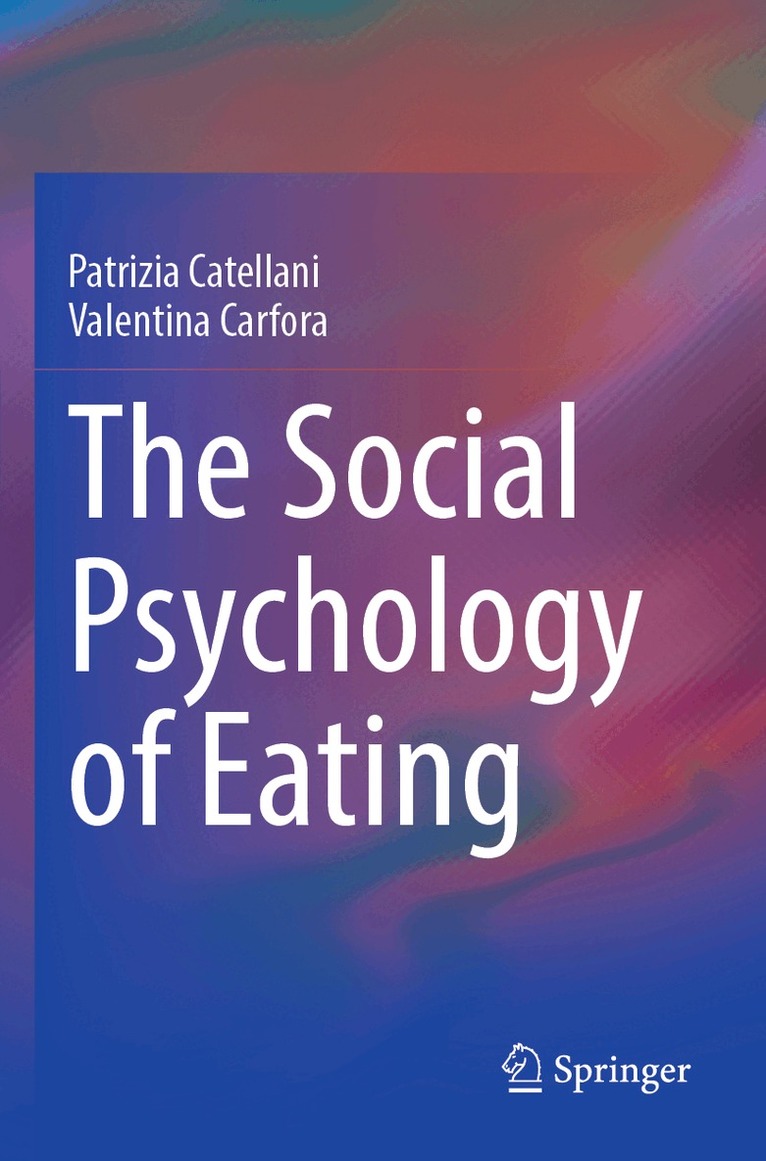
    Social Psychology of Eating

    AvPatrizia Catellani,Valentina Carfora

    Häftad, Engelska, 2024

    1 475 kr

    Beställningsvara. Skickas inom 10-15 vardagar. Fri frakt över 249 kr.

    Fler format och utgåvor

    Inbunden

    1 475 kr

    Beskrivning

    Our eating decisions are guided by several psychological dimensions: cognitive, emotional, value-based, social, and behavioural. The social psychology of eating helps us understand these dimensions and how we can promote healthy and sustainable eating to improve people's wellbeing. What is most important in deciding what we want to eat? What drives people to go vegan? Do we tend to eat more when we are nervous? Does it change our behavior when we sit at the table with others? Why do we put off starting the diet until the next week? How does online and offline communication influence our eating behaviour? Is it possible to help people change their eating habits thanks to artificial intelligence? These and other questions are answered in this book, with up-to-date literature references and pointers to the most promising developments in the field. An essential text for undergraduate and graduate students, as well as researchers in the fields of psychology and nutrition.

    Produktinformation

    • Utgivningsdatum:2024-07-01
    • Mått:155 x 235 x 11 mm
    • Vikt:283 g
    • Format:Häftad
    • Språk:Engelska
    • Antal sidor:164
    • Förlag:Springer International Publishing AG
    • ISBN:9783031350726

    Utforska kategorier

    • Kulturvetenskap inom Samhälle och politik
    • Socialpsykologi och gruppsykologi inom Psykologi och pedagogik
    • Psykologi inom Psykologi och pedagogik

    Mer om författaren

    Patrizia Catellani is a full professor of Social Psychology at the Catholic University of Milan, Italy. She is director of PsyLab (Psychology, Law and Policy Lab). She is a member of the Scientific Advisory Board of the European Social Survey (ESS) and of the PNRR Fostering Open Science in Social Science (FOSSR) research infrastructure. Her research focuses on reasoning, decision making, and communication in different social and political contexts. She has explored how food and health communication can be made more effective in promoting healthy and sustainable purchasing and consumption decisions. An extension of this research direction focuses on the integration of social psychology and artificial intelligence. The goal is to develop digital communication systems that promote health, well-being, and sustainability through personalized framing. Quick profiling is used to identify optimal communication strategies for behaviour change, taking into account individuals’ resources and motivations. Related research areas have explored the impact of prefactual communication aimed at promoting public policy, for example on climate change mitigation and adaptation, by strategically framing possible future scenarios to appeal to and persuade audiences. Other research areas explore how people develop different representations and alternative explanations of events with political, legal, or personal relevance. The focus is on counterfactual reasoning and communication (“If... then...”), and on the conditions that can promote a complete and truthful analysis of events or, conversely, a strategic representation of the past that highlights possible better or worse alternatives that are compatible with one’s own worldview. She is the author of some one hundred and thirty publications, including journal articles and books. The detailed profile and all activities can be found at www.patriziacatellani.comValentina Carfora is a researcher in Social Psychology at the Catholic University of Milan, Italy, and a cognitive behavioural therapist. Her research activity focuses on predicting and promoting healthy and sustainable behaviours, especially related to food choices (e.g., reduced meat consumption, regular consumption of fruits and vegetables). Her main activity is concerned with: socio-cognitive models to explain healthy, environmental and purchasing behaviour; persuasive communication, with particular reference to assessing its effectiveness in changing behaviour (affective messages, cognitive messages, normative messages, self-monitoring messages); personal and social identity, by examining the processes of identity construction and their power to support behaviour change; the role of anticipatory emotions in predicting behaviour change; the role of social norms in promoting sustainable eating habits; the use of artificial intelligence to design tailored communication to promote healthy and sustainable behaviours. She has participated in and coordinated several research projects funded by the European Union, the Lombardy Region, the University of Naples "Federico II", and the Catholic University of Milan. She is the author of about 40 scientific publications, including journal articles and book chapters. She edited the eBook "Mind the Sustainable Food: New Insights in Food Psychology" published by Frontiers in Psychology (2021). She is also a member of the Associazione Italiana Psicologia (AIP) and the Associazione SIPSA (Società Italiana di Psicologia della Salute).

    Innehållsförteckning

    • Chapter 1. Introduction.- Chapter 2. Food Choice.- Chapter 3. Cognitive Factors.- Chapter 4. Emotional Factors.- Chapter 5. Norms, Identities, and Values .- Chapter 6. Habits and Behaviour Change.- Chapter 7. Habits and Behaviour Change.- Chapter 8. Types of Messages.- Chapter 9. Characteristics of Recipients.- Chapter 10. Digital Communication and Artificial Intelligence.