• Fri frakt över 249 kr
  • •
  • Snabba leveranser
  • •
  • Billiga böcker
Kundservice

Du är på sajten för privatpersoner.

Företag, bibliotek eller offentlig verksamhet?

Du handlar på classic.bokus.com, där alla dina funktioner finns intakta.
Till classic.bokus.com
Bokus logotyp. Gå till startsidan.
  • Erbjudanden
  • Nyheter
  • Student
  • Topplistor
  • Barn & ungdom
  • Bokus Play
  • E-böcker
  • Pocketböcker
  • Spel & pussel

10% rabatt på allt med kod: NYSTART10 →

Sidfot

Mina sidor

    Hjälp

    • Kundservice
    • Vanliga frågor och svar
    • Frakt och leverans
    • Retur vid ångerrätt
    • Reklamera vara
    • Betalning
    • Köpvillkor
    • Allmänna villkor
    • Information om webbplatsens tillgänglighet

    Om Bokus

    • Om oss
    • Pressrum
    • För studenter
    • För företag
    • För bibliotek och offentlig verksamhet
    • För leverantörer
    • Hållbarhet

    Populärt

    • Aktuella erbjudanden
    • Presentkort
    • Studentlitteratur
    • Nya böcker
    • Topplistor
    • Signerade böcker
    • Engelska böcker

    Inspiration

    • Boktips
    • BookTok
    • Populära bokserier
    • Barnbokskaraktärer
    • Populära författare
    Logotyp för Bokus
    Följ oss på Facebook (extern länk)Följ oss på Instagram (extern länk)Följ oss på YouTube (extern länk)Följ oss på TikTok (extern länk)
    bokus @ CookiesAnpassa cookiesIntegritetspolicyKöpvillkor
    Till Citymail hemsida (extern länk)Till Budbee hemsida (extern länk)Till Postnord hemsida (extern länk)Till Schenker hemsida (extern länk)Till Early Bird hemsida (extern länk)Till Walleys hemsida (extern länk)
    1. Samhälle och politik
    2. Samhälle och kultur
    3. Kultur och medier
    4. Medievetenskap

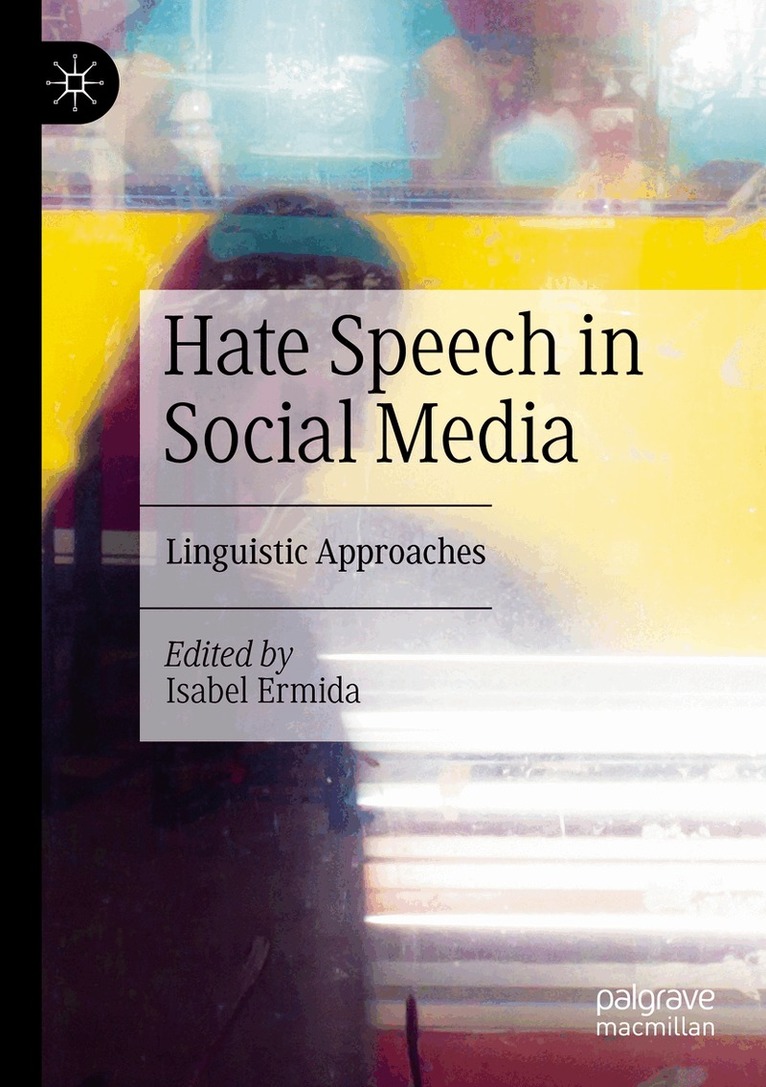
    Hate Speech in Social Media

    Linguistic Approaches

    AvIsabel Ermida

    Häftad, Engelska, 2024

    1 684 kr

    Beställningsvara. Skickas inom 10-15 vardagar. Fri frakt över 249 kr.

    Beskrivning

    This edited book offers insight into the linguistic construction of prejudice and discrimination in social media. Drawing on the outputs of a three-year research project, NETLANG, involving scholars from five European countries (Portugal, Czech Republic, Estonia, Finland and Poland), as well as on external contributions from participants in the project’s final conference, the collection brings together a variety of linguistic approaches to the study of online hate speech, ranging from pragmatic to syntactic, morphological, and lexical analyses, with a considerable focus on Natural Language Processing and Corpus Linguistics. Data from English, Portuguese, Danish, Lithuanian, Persian, Polish, and Slovenian are examined, along with various geopolitical contexts for hate speech, especially anti-refugee and anti-immigrant discourse. The authors explore a continuum of overt to covert textual data, namely: (i) structural elements, such as syntactic and morphological patterns which recur throughout the texts; (ii) lexical and stylistic elements, revealing the often implicit ways in which vocabulary choices and rhetorical devices signal the expression of hate; and (iii) interactional elements, concerning the pragmatic relationships established in online communicative exchanges. The chapters cover numerous types of prejudice, such as sexism, racism, nationalism, antisemitism, religious intolerance, ageism, and homo/transphobia. The book will be of interest to an academic readership in Linguistics, Media Studies, Communication Studies, and Social Sciences.

    Produktinformation

    • Utgivningsdatum:2024-12-14
    • Mått:148 x 210 x 25 mm
    • Vikt:595 g
    • Format:Häftad
    • Språk:Engelska
    • Antal sidor:443
    • Förlag:Springer International Publishing AG
    • ISBN:9783031382505

    Utforska kategorier

    • Medievetenskap inom Samhälle och politik
    • Psykologi inom Psykologi och pedagogik
    • Språkvetenskap och lingvistik inom Språk och ordböcker

    Mer om författaren

    Isabel Ermida is Professor of Linguistics at the Department of English Studies, University of Minho, Portugal. She has dedicated her research to the pragmatic analysis of forms of indirectness and implicitness in language, with a key interest in humour, on which she has published extensively (The Language of Comic Narratives, 2008; Language and Humour in the Media, co-edited, 2012). Her latest work explores the language of hate speech, focusing on the expression of power and the ideological construction of identity and belonging. Drawing on impoliteness studies and speech act scholarship, she has analysed the prejudiced and discriminatory representation of social variables such as gender, nationality, ethnicity, age, and social class in public discourse. Her latest international financed project (NETLANG) delves into the language of hate speech on social media.

    Innehållsförteckning

    • INTRODUCTION: ONLINE HATE SPEECH – OBJECT, APPROACHES, ISSUES.- Chapter 1. Building and Analysing a Hate Speech Corpus: The NETLANG Experience and Beyond.- Chapter 2: Distinguishing Hate Speech from Aggressive Speech: A Five-Factor Annotation Model.- PART I. STRUCTURAL PATTERNS IN HATE SPEECH.- Chapter 3. Improving NLP Techniques by Integrating Linguistic Input to Detect Hate Speech in CMC Corpora.- Chapter 4. First-person Aggression Verbs in YouTube Comments.- Chapter 5. Emotional Deixis in Online Hate Speech.- Chapter 6. Derogatory Linguistic Mechanisms in Online Hate Speech.- PART II. LEXICAL AND RHETORICAL STRATEGIES IN THE EXPRESSION OF HATE SPEECH.- Chapter 7. Humorous Use of Figurative Language in Religious Hate Speech .-Chapter 8. Rhetorical Questions as Conveyors of Hate Speech.- Chapter 9. Enabling Concepts in Hate Speech: The Function of the Apartheid Analogy in Antisemitic Online Discourse about Israel.- Chapter 10. Hate Speech in Poland in the Context of the War in Ukraine.- PART III. THE INTERACTIONAL DIMENSION OF HATE SPEECH: NEGOTIATING, STANCE-TAKING, COUNTERING.- Chapter 11. Stance-taking and Gender: Hateful Representations of Portuguese Women Public Figures in the NETLANG Corpus .-Chapter 12. Negotiating Hate and Conflict in Online Comments: Evidence from the NETLANG Corpus.- Chapter 13. Linguistic Markers of Affect and the Gender Dimension in Online Hate Speech.- Chapter 14. Counteracting Homophobic Discourse in Internet Comments: Fuelling or Mediating Conflict?