
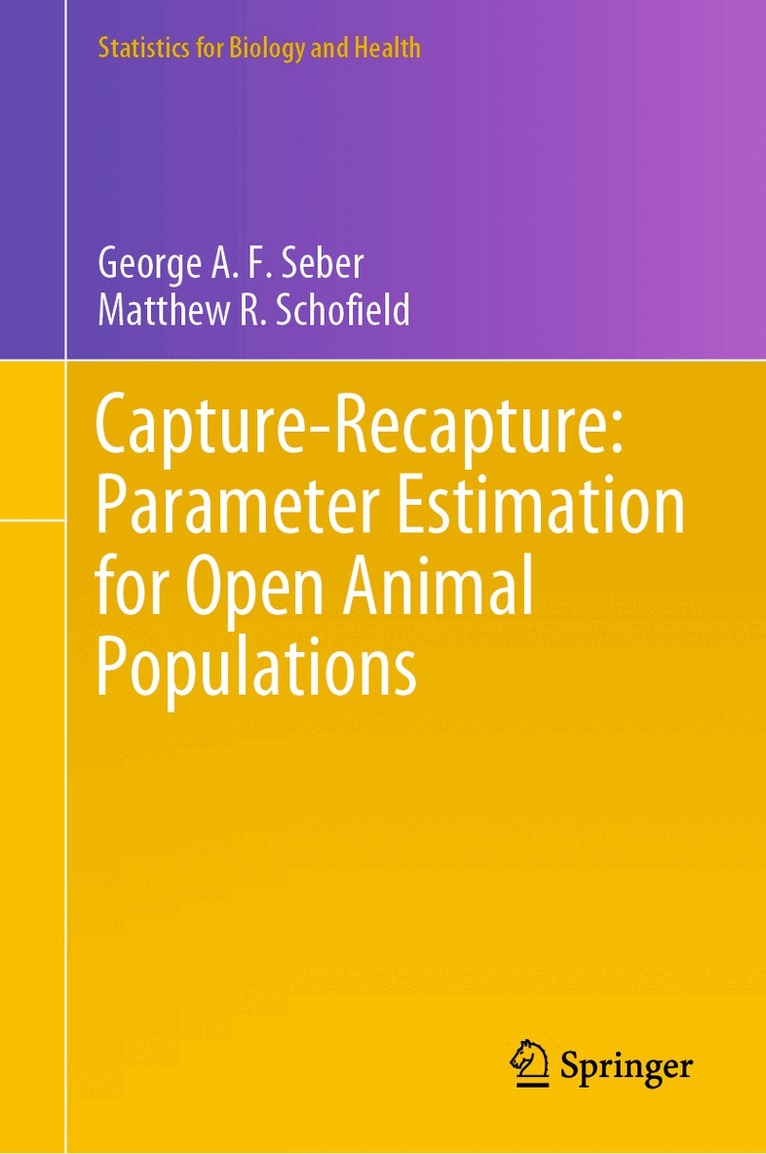
Capture-Recapture: Parameter Estimation for Open Animal Populations
George A. F. Seber, Matthew R. Schofield
Inbunden, 2019
1 216 kr
AvMatthew R. Schofield,George A. F. Seber
1 276 kr
Läs direkt i Bokus Reader – eller ladda ned till din enhet
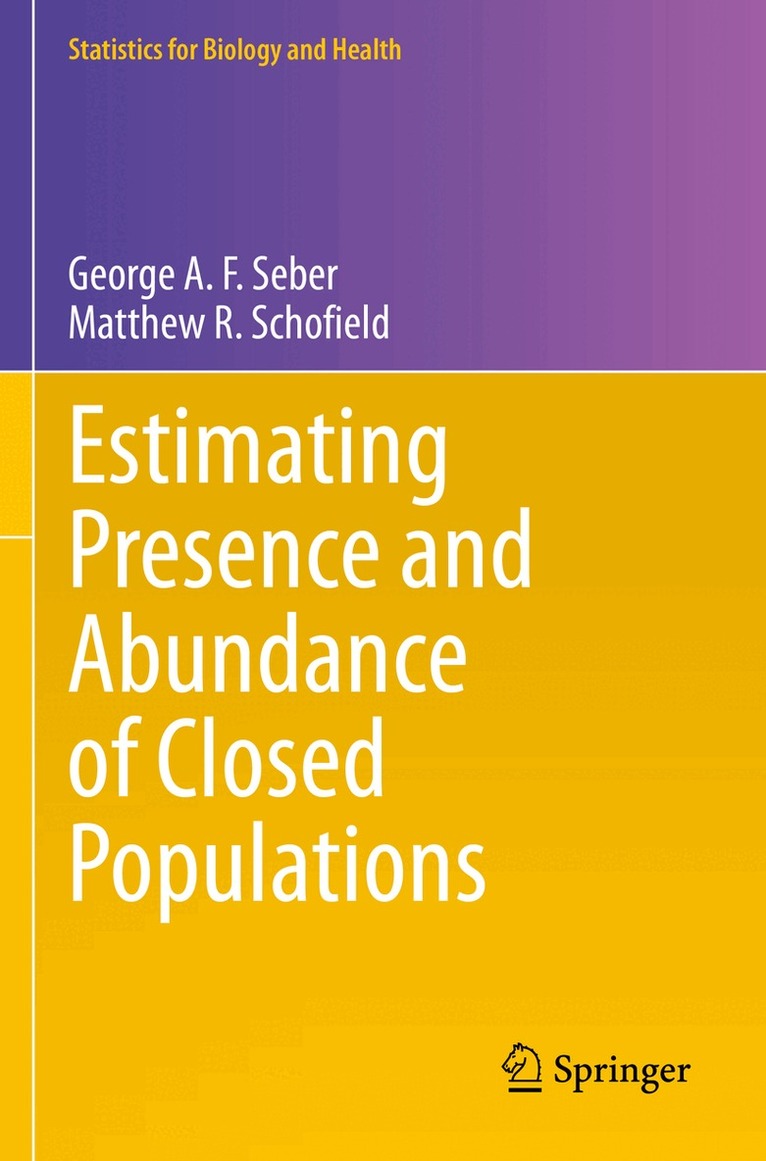
This comprehensive book covers a wide variety of methods for estimating the sizes and related parameters of closed populations. With the effect of climate change, and human territory invasion, we have seen huge species losses and a major biodiversity decline. Populations include plants, trees, various land and sea animals, and some human populations. With such a diversity of populations, an extensive variety of different methods are described with the collection of different types of data. For example, we have count data from plot sampling, which can also allow for incomplete detection. There is a large chapter on occupancy methods where a major interest is determining whether a particular species is present or not. Citizen and opportunistic survey data can also be incorporated. A related topic is species methods, where species richness and species'' interactions are of interest.
A variety of distance methods are discussed. One can use distances from points and lines, as wellas nearest neighbor distances. The applications are extensive, and include marine, acoustic, and aerial surveys, using multiple observers or detection devices. Line intercept measurements have a role to play such as, for example, estimating parameters relating to plant coverage.
An increasingly important class of removal methods considers successive “removals" from a population, with physical removal or "removal" by capture-recapture of marked individuals. With the change-in-ratio method, removals are taken from two or more classes, e.g., males and females. Effort data used for removals can also be used.
A very important method for estimating abundance is the use of capture-recapture data collected discretely or continuously and can be analysed using both frequency and Bayesian methods. Computational aspects of fitting Bayesian models are described. A related topic of growing interest is the use of spatial and camera methods.
With the plethora of models there has been a corresponding development of various computational methods and packages, which are often mentioned throughout. Covariate data is being used more frequently, which can reduce the number of unknown parameters by using logistic and loglinear models. An important computational aspect is that of model selection methods. The book provides a useful list of over 1400 references.
George A. F. Seber, Matthew R. Schofield
Inbunden, 2019
1 216 kr
Matthew R. Schofield, George A. F. Seber
1 266 kr
George A. F. Seber, Matthew R. Schofield
Häftad, 2020
996 kr
George A. F. Seber, Matthew R. Schofield
Inbunden, 2023
996 kr
George A. F. Seber, Matthew R. Schofield
Häftad, 2024
996 kr
George A. F. Seber, Matthew R. Schofield
Inbunden, 2019
1 216 kr
George A. F. Seber, Matthew R. Schofield
Häftad, 2024
996 kr
Matthew R. Schofield, George A. F. Seber
1 266 kr
George A. F. Seber, Matthew R. Schofield
Inbunden, 2023
996 kr
George A. F. Seber, Matthew R. Schofield
Häftad, 2020
996 kr



AvMatthew R. Schofield,George A. F. Seber
1 276 kr
Läs direkt i Bokus Reader – eller ladda ned till din enhet
This comprehensive book covers a wide variety of methods for estimating the sizes and related parameters of closed populations. With the effect of climate change, and human territory invasion, we have seen huge species losses and a major biodiversity decline. Populations include plants, trees, various land and sea animals, and some human populations. With such a diversity of populations, an extensive variety of different methods are described with the collection of different types of data. For example, we have count data from plot sampling, which can also allow for incomplete detection. There is a large chapter on occupancy methods where a major interest is determining whether a particular species is present or not. Citizen and opportunistic survey data can also be incorporated. A related topic is species methods, where species richness and species'' interactions are of interest.
A variety of distance methods are discussed. One can use distances from points and lines, as wellas nearest neighbor distances. The applications are extensive, and include marine, acoustic, and aerial surveys, using multiple observers or detection devices. Line intercept measurements have a role to play such as, for example, estimating parameters relating to plant coverage.
An increasingly important class of removal methods considers successive “removals" from a population, with physical removal or "removal" by capture-recapture of marked individuals. With the change-in-ratio method, removals are taken from two or more classes, e.g., males and females. Effort data used for removals can also be used.
A very important method for estimating abundance is the use of capture-recapture data collected discretely or continuously and can be analysed using both frequency and Bayesian methods. Computational aspects of fitting Bayesian models are described. A related topic of growing interest is the use of spatial and camera methods.
With the plethora of models there has been a corresponding development of various computational methods and packages, which are often mentioned throughout. Covariate data is being used more frequently, which can reduce the number of unknown parameters by using logistic and loglinear models. An important computational aspect is that of model selection methods. The book provides a useful list of over 1400 references.
George A. F. Seber, Matthew R. Schofield
Inbunden, 2019
1 216 kr
Matthew R. Schofield, George A. F. Seber
1 266 kr
George A. F. Seber, Matthew R. Schofield
Häftad, 2020
996 kr
George A. F. Seber, Matthew R. Schofield
Inbunden, 2023
996 kr
George A. F. Seber, Matthew R. Schofield
Häftad, 2024
996 kr
George A. F. Seber, Matthew R. Schofield
Inbunden, 2019
1 216 kr
George A. F. Seber, Matthew R. Schofield
Häftad, 2024
996 kr
Matthew R. Schofield, George A. F. Seber
1 266 kr
George A. F. Seber, Matthew R. Schofield
Inbunden, 2023
996 kr
George A. F. Seber, Matthew R. Schofield
Häftad, 2020
996 kr