• Fri frakt över 249 kr
  • •
  • Snabba leveranser
  • •
  • Billiga böcker
Kundservice

Du är på sajten för privatpersoner.

Företag, bibliotek eller offentlig verksamhet?

Du handlar på classic.bokus.com, där alla dina funktioner finns intakta.
Till classic.bokus.com
Bokus logotyp. Gå till startsidan.
  • Erbjudanden
  • Nyheter
  • Student
  • Topplistor
  • Barn & ungdom
  • Bokus Play
  • E-böcker
  • Pocketböcker
  • Spel & pussel

10% rabatt på allt med kod NYSTART10 →

Sidfot

Mina sidor

    Hjälp

    • Kundservice
    • Vanliga frågor och svar
    • Frakt och leverans
    • Retur vid ångerrätt
    • Reklamera vara
    • Betalning
    • Köpvillkor
    • Allmänna villkor
    • Information om webbplatsens tillgänglighet

    Om Bokus

    • Om oss
    • Pressrum
    • För studenter
    • För företag
    • För bibliotek och offentlig verksamhet
    • För leverantörer
    • Hållbarhet

    Populärt

    • Aktuella erbjudanden
    • Presentkort
    • Studentlitteratur
    • Nya böcker
    • Topplistor
    • Signerade böcker
    • Engelska böcker

    Inspiration

    • Boktips
    • BookTok
    • Populära bokserier
    • Barnbokskaraktärer
    • Populära författare
    Logotyp för Bokus
    Följ oss på Facebook (extern länk)Följ oss på Instagram (extern länk)Följ oss på YouTube (extern länk)Följ oss på TikTok (extern länk)
    bokus @ CookiesAnpassa cookiesIntegritetspolicyKöpvillkor
    Till Citymail hemsida (extern länk)Till Budbee hemsida (extern länk)Till Postnord hemsida (extern länk)Till Schenker hemsida (extern länk)Till Early Bird hemsida (extern länk)Till Walleys hemsida (extern länk)
    1. Naturvetenskap och teknik
    2. Geovetenskap
    3. Miljövetenskap och miljöpolitik

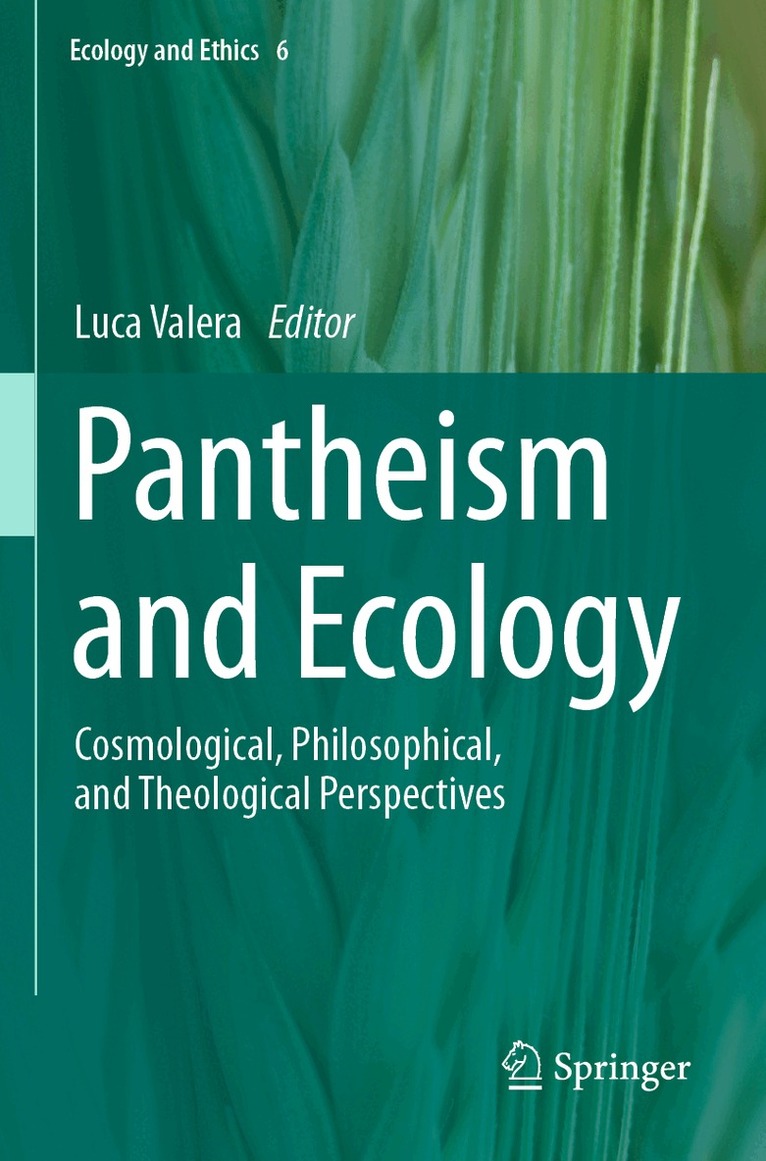
    Pantheism and Ecology

    Cosmological, Philosophical, and Theological Perspectives

    AvLuca Valera

    Häftad, Engelska, 2024

    Del 6 i serien Ecology and Ethics

    1 947 kr

    Beställningsvara. Skickas inom 10-15 vardagar. Fri frakt över 249 kr.

    Beskrivning

    This book provides a comprehensive overview of the relationship between pantheism and ecology, particularly considering different cultural approaches and diverse religious, theological, and philosophical traditions. Environmental ethics arises from the dangerousness and harmfulness of human beings with respect to nonhuman species and, more generally, with respect to the environment. A common starting point for environmental ethics standpoints is that human beings are responsible for damaging nature. The famous four laws of ecology drafted by Barry Commoner precisely express this guilt on the part of human beings, who very often voluntarily violate the behavioral indications that emerge from nature itself. These aspects concern environmental ethics outlooks. Eco-theology, then, takes a further step: not only do we damage the ecosystem but also, as many authors suggest, when we humans destroy the natural world, we are wounding God. Such an idea implies a possible coincidence of God with the natural world –or the ecosystem. From this assumption, different questions may emerge: what is the kind of coincidence between God and the natural world? Are God and the ecosystem coextensive? If so, are we re-sacralizing the natural world and grounding intrinsic values in theological postulates and statements? These questions lead us to reconsider the cosmological assumptions that ground our environmental judgements, from theology to different religious traditions and cultures to philosophical worldviews. In particular, we will focus on the cosmological assumptions of pantheism (considering its differences with panentheism), discussing the symmetrical (or asymmetrical) relationships between God and the finite ways in which God manifests Godself.In this regard, the book is divided into three main parts: in the first part, the question of pantheism is approached from different traditions and with a special focus on the main thinkers in the history of thought, from Greek Stoicism to the present day. In the second part, some current ecological concerns are considered in relation to pantheistic cosmology: the authors will deepen issues from the discussion of the different “pan-conceptions” to the problem of evil, to Anthropocene. Finally, in the third part, the different chapters will focus on ethical issues in the field of the current environmental crisis with a huge connection with the pantheistic cosmologies. This book is oriented to a wide public, interested in environmental issues and looking for an approach from different cultures and traditions. Evidently, due to its “academic” nature, this book is also intended to be a great support for researchers interested in eco-theology and, more specifically, in the relationship between pantheism and ecology.It is not, in this sense, a “classic” book on environmental ethics, but a book that delves into the fundamentals of environmental philosophy, privileging the Ibero-American approach.

    Produktinformation

    • Utgivningsdatum:2024-11-15
    • Mått:155 x 235 x 21 mm
    • Vikt:587 g
    • Format:Häftad
    • Språk:Engelska
    • Serie:Ecology and Ethics
    • Antal sidor:366
    • Förlag:Springer International Publishing AG
    • ISBN:9783031400421

    Utforska kategorier

    • Miljövetenskap och miljöpolitik inom Naturvetenskap och teknik
    • Biovetenskap inom Naturvetenskap och teknik

    Mer om författaren

    Luca Valera studied Philosophy (B.A. and M.A.) at the Università Cattolica del Sacro Cuore di Milano (Italy). He holds a PhD in Bioethics and Philosophy from the Università Campus Bio-Medico di Roma (Italy). His thesis was on the topic of human ecology, in the field of environmental ethics. He has been a Professor at the Pontificia Universidad Católica de Chile since 2015, and he was the Director of the Bioethics Centre from 2018 to 2021. He is now an Associate Professor at the Universidad de Valladolid (Spain), Department of Philosophy and an Associate Researcher at the Cape Horn International Center (CHIC, Chile).

    Innehållsförteckning

    • Part I. Pantheism, Ecology, and Cosmology. Different Perspectives and Traditions.- Chapter 1. Brief History of the Organism and the Relationship between the Whole and its Parts.- Chapter 2. Stoic Pantheism and Environmental Ethics in Pliny the Elder.- Chapter 3. The Presence of God in Creation: The Medieval Motifs of Ontological Continuity, Light and Sympathy for Creatures.- Chapter 4. Nature, Venustas, and Harmony.- Chapter 5. Spinoza: Ecosystemic Consequences of the Intersections between Pantheism, Panentheism, and Aacosmism.- Chapter 6. Schleiermacherean Panentheism and Ecology.- Chapter 7. Rumi and Tagore on Being-with-Nature.- Chapter 8. The Withdrawal of God and Man as Co-creator in Hans Jonas’ Cosmogonic Conjecture.- Chapter 9. Hans Jonas And Pantheism: On Ecology and the Problematic Relationship between God, World, and Man.- Chapter 10. The Evolutionary Process Leading up to the Anthropocene as Seen Through Pierre Teilhard de Chardin’s Cosmic Christology.- Chapter 11. Influences of the Spinozian Philosophy in the Environmental Activism of Arne Naess.- Part II. Current Ecological Concerns and Cosmologies: Exploring Pantheism.- Chapter 12. Raimon Panikkar’s Sacred Secularity: An Advaita Interpretation to Understand the Sacredness of Nature.- Chapter 13. Spinozism and Native Americans on Pantheism and Panentheism.- Chapter 14. Ground of Being: The panentheism of Paul Tillich, Earth Care, and Intercultural Dialogue.- Chapter 15. God, Home, and Thinking in the Place: What kind of pantheism did Thoreau Endorse?.- Chapter 16. Genesis 1 as Ecosophy.- Chapter 17. Panentheism in Christian Ecotheology.- Chapter 18. Theism Versus Pancomprehensions.- Chapter 19. The Hidden Theology in the New Naturalisms.- Chapter 20. Towards a Speculative Ecology. Monads, Habits, and the Non-otherness of the World.- Chapter 21. Anthropocene Narratives and New Cosmologies.- Chapter 22. System as Paradigm for a New World View.- Part III. From Pantheism to Ethics and Politics.- Chapter 23. Pantheism: Destruction of Boundaries?.- Chapter 24. Intrinsic Values, Pantheism, and Ecology: Where Does Value Come From?.- Chapter 25. Humans are Humus: An Analysis of Boff’s Panentheistic Ecotheology in the Framework of the Biocultural Ethic.- Chapter 26. On the Compatibility Between Panentheism and Fragmentation: An Experimental Ecofeminist Loosening of the “in” in Allingottlehre.- Chapter 27. Hossein Nasr on the Environmental Crisis.- Chapter 28. Francis Hallé’s Project for a Large Primary Forest in Western Europe and a New Understanding of Our Relationship with the Biosphere.