• Fri frakt över 249 kr
  • •
  • Snabba leveranser
  • •
  • Billiga böcker
Kundservice

Du är på sajten för privatpersoner.

Företag, bibliotek eller offentlig verksamhet?

Du handlar på classic.bokus.com, där alla dina funktioner finns intakta.
Till classic.bokus.com
Bokus logotyp. Gå till startsidan.
  • Erbjudanden
  • Student
  • Topplistor
  • Barn & ungdom
  • Bokus Play
  • E-böcker
  • Ljudböcker
  • Pocketböcker
  • Spel och pussel

5% studentrabatt – använd koden KURSBOK27 →

Sidfot

Mina sidor

    Hjälp

    • Kundservice
    • Vanliga frågor och svar
    • Frakt och leverans
    • Retur vid ångerrätt
    • Reklamera vara
    • Betalning
    • Köpvillkor
    • Allmänna villkor
    • Information om webbplatsens tillgänglighet

    Om Bokus

    • Om oss
    • Pressrum
    • För studenter
    • För företag
    • För bibliotek och offentlig verksamhet
    • För leverantörer
    • Hållbarhet

    Populärt

    • Aktuella erbjudanden
    • Presentkort
    • Studentlitteratur
    • Nya böcker
    • Topplistor
    • Signerade böcker
    • Engelska böcker

    Inspiration

    • Boktips
    • BookTok
    • Barnbokskaraktärer
    • Populära författare
    Logotyp för Bokus
    Följ oss på Facebook (extern länk)Följ oss på Instagram (extern länk)Följ oss på YouTube (extern länk)Följ oss på TikTok (extern länk)
    bokus @ CookiesAnpassa cookiesIntegritetspolicyKöpvillkor
    Till Citymail hemsida (extern länk)Till Budbee hemsida (extern länk)Till Postnord hemsida (extern länk)Till Schenker hemsida (extern länk)Till Early Bird hemsida (extern länk)Till Walleys hemsida (extern länk)
    1. Medicin
    2. Andra medicinska specialiteter
    3. Farmakologi

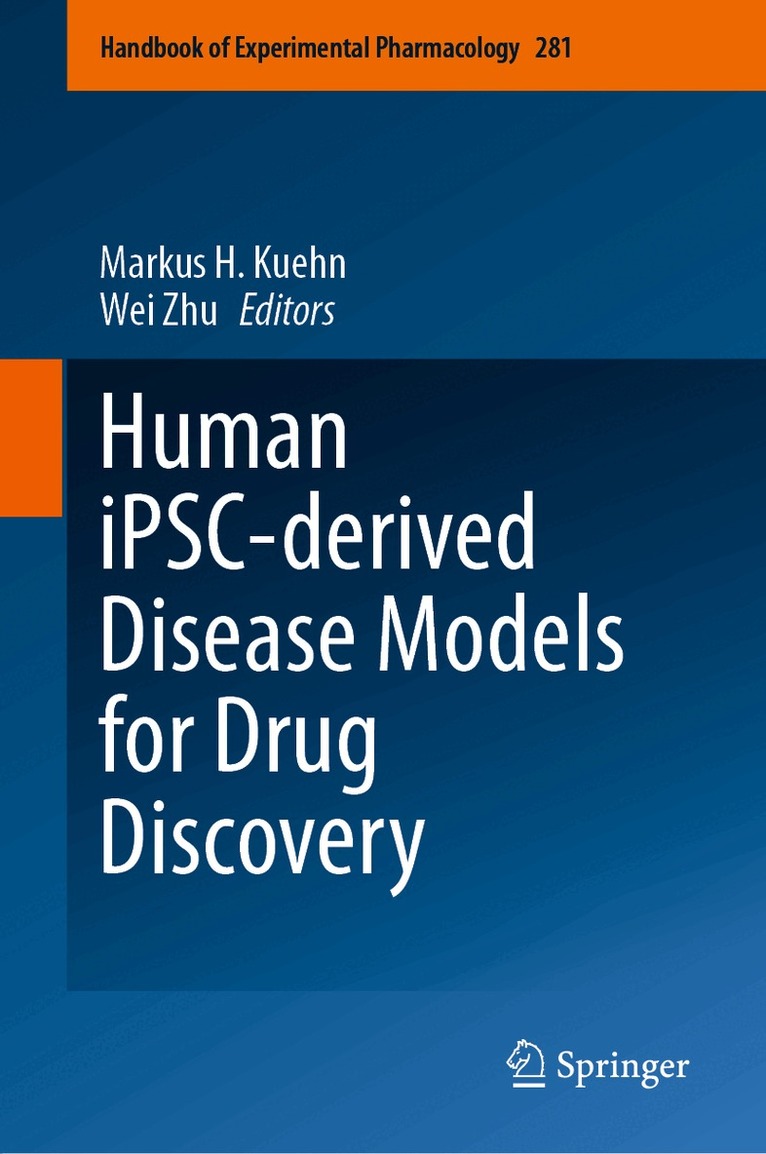
    Human iPSC-derived Disease Models for Drug Discovery

    AvMarkus H. Kuehn,Wei Zhu

    Inbunden, Engelska, 2023

    Del 281 i serien Handbook of Experimental Pharmacology

    1 883 kr

    Beställningsvara. Skickas inom 10-15 vardagar. Fri frakt över 249 kr.

    Beskrivning

    Since their development a decade ago, human induced pluripotent stem cells (iPSC) have revolutionized the study of human disease, given rise to regenerative medicine technologies, and provided exceptional opportunities for pharmacologic research. These cells provide an essentially unlimited supply of cell types that are difficult to obtain from patients, such as neurons or cardiomyocytes, or are difficult to maintain in primary cell culture. iPSC can be obtained from patients afflicted with a particular disease but, in combination with recently developed gene editing techniques, can also be modified to generate disease models. Moreover, the new techniques of 3 Dimensional printing and materials science facilitate the generation of organoids that can mirror organs under disease conditions. These properties make iPSC powerful tools to study how diseases develop and how they may be treated. In addition, iPSC can also be used to treat conditions in which the target cell population has beenlost and such regenerative approaches hold great promise for currently untreatable diseases, including cardiac failure or photoreceptor degenerations.

    Produktinformation

    • Utgivningsdatum:2023-11-24
    • Mått:155 x 235 x 23 mm
    • Vikt:738 g
    • Format:Inbunden
    • Språk:Engelska
    • Serie:Handbook of Experimental Pharmacology
    • Antal sidor:332
    • Förlag:Springer International Publishing AG
    • ISBN:9783031423482

    Utforska kategorier

    • Farmakologi inom Medicin
    • Biokemisk teknik inom Naturvetenskap och teknik
    • Regenerativ medicin inom Medicin

    Innehållsförteckning

    • Part 1 General considerations.- Human iPS for clinical applications and cellular products.- 3D-printed iPS disease models.- Part 2 CNS iPSC and organoids.- iPS-derived neurons and brain organoids from patients (brain).- iPS-derived RGCs (eye).- iPS-derived glia (brain).- iPSC to model blood-brain barrier endothelial cells.- Part 3 iPSC-derived nociceptive neurons.- IPSC-based peripheral nerve modeling.- Part 4 Non-neuronal specialized cell types.- iPSC-based drug screening of differentiated cardiomyocyte subtypes.- iPSC-based cardiac disease modeling: from cell to tissue.- iPSC-derived corneal endothelial cell.- iPSC-derived trabecular meshwork (eye).- iPSC for in vitro disease modeling of diabetes.