Markus H. Kuehn – författare
Visar alla böcker från författaren Markus H. Kuehn. Handla med fri frakt och snabb leverans.
3 produkter
3 produkter
Del 281 - Handbook of Experimental Pharmacology
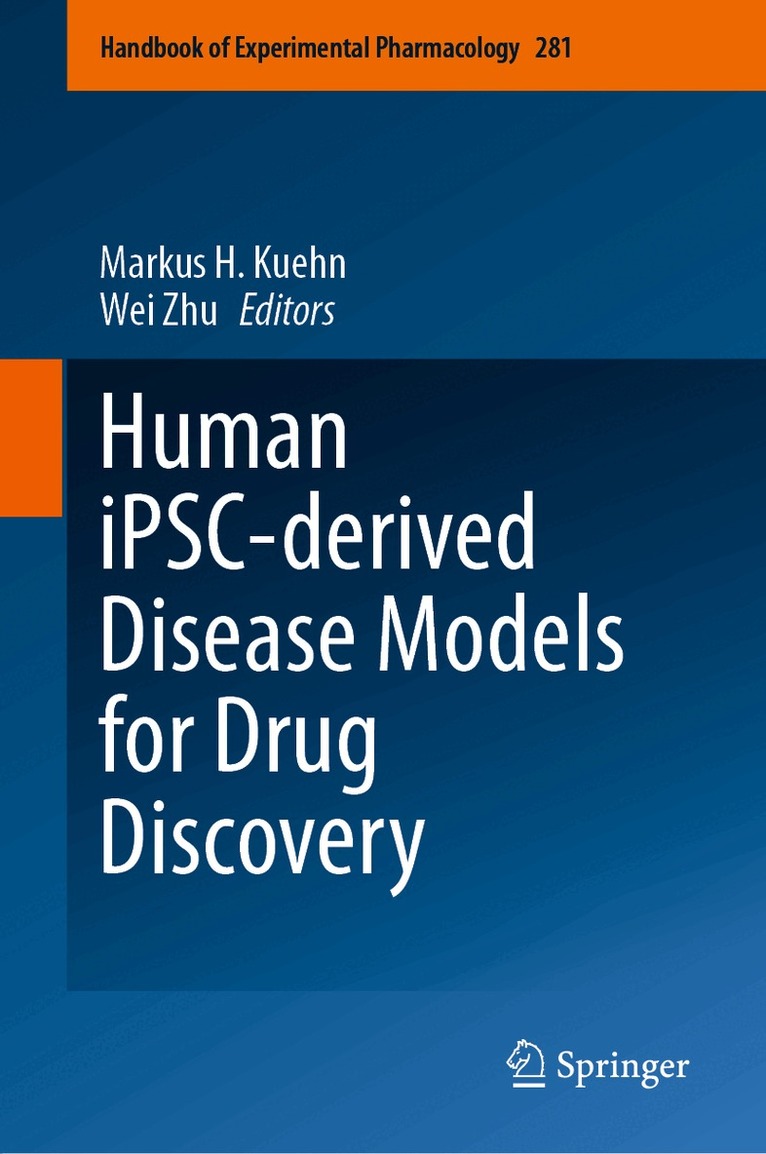
Human iPSC-derived Disease Models for Drug Discovery
Inbunden, Engelska, 2023
1 904 kr
Skickas inom 10-15 vardagar
Since their development a decade ago, human induced pluripotent stem cells (iPSC) have revolutionized the study of human disease, given rise to regenerative medicine technologies, and provided exceptional opportunities for pharmacologic research. These cells provide an essentially unlimited supply of cell types that are difficult to obtain from patients, such as neurons or cardiomyocytes, or are difficult to maintain in primary cell culture. iPSC can be obtained from patients afflicted with a particular disease but, in combination with recently developed gene editing techniques, can also be modified to generate disease models. Moreover, the new techniques of 3 Dimensional printing and materials science facilitate the generation of organoids that can mirror organs under disease conditions. These properties make iPSC powerful tools to study how diseases develop and how they may be treated. In addition, iPSC can also be used to treat conditions in which the target cell population has beenlost and such regenerative approaches hold great promise for currently untreatable diseases, including cardiac failure or photoreceptor degenerations.
E-bok
Engelska, 20232 444 kr
Läs direkt efter köp
Since their development a decade ago, human induced pluripotent stem cells (iPSC) have revolutionized the study of human disease, given rise to regenerative medicine technologies, and provided exceptional opportunities for pharmacologic research. These cells provide an essentially unlimited supply of cell types that are difficult to obtain from patients, such as neurons or cardiomyocytes, or are difficult to maintain in primary cell culture. iPSC can be obtained from patients afflicted with a particular disease but, in combination with recently developed gene editing techniques, can also be modified to generate disease models. Moreover, the new techniques of 3 Dimensional printing and materials science facilitate the generation of organoids that can mirror organs under disease conditions. These properties make iPSC powerful tools to study how diseases develop and how they may be treated. In addition, iPSC can also be used to treat conditions in which the target cell population has beenlost and such regenerative approaches hold great promise for currently untreatable diseases, including cardiac failure or photoreceptor degenerations.
Del 281 - Handbook of Experimental Pharmacology
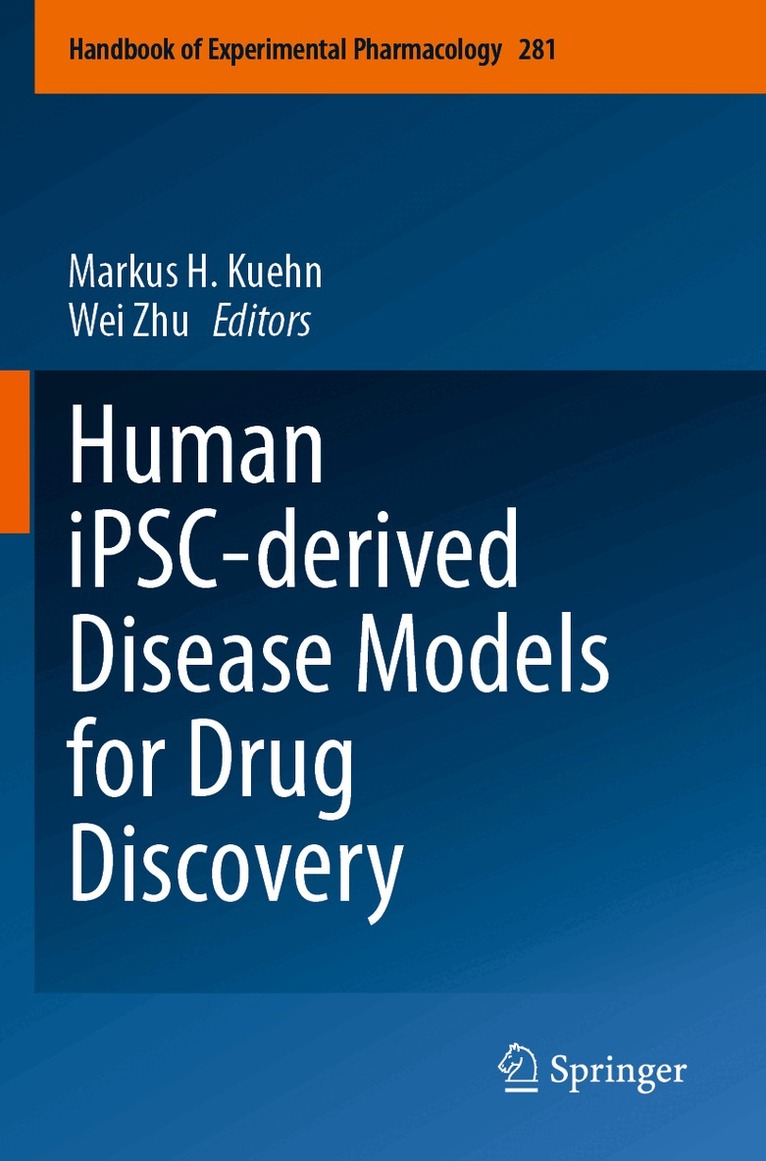
Human iPSC-derived Disease Models for Drug Discovery
Häftad, Engelska, 2024
1 904 kr
Skickas inom 10-15 vardagar
Since their development a decade ago, human induced pluripotent stem cells (iPSC) have revolutionized the study of human disease, given rise to regenerative medicine technologies, and provided exceptional opportunities for pharmacologic research. These cells provide an essentially unlimited supply of cell types that are difficult to obtain from patients, such as neurons or cardiomyocytes, or are difficult to maintain in primary cell culture. iPSC can be obtained from patients afflicted with a particular disease but, in combination with recently developed gene editing techniques, can also be modified to generate disease models. Moreover, the new techniques of 3 Dimensional printing and materials science facilitate the generation of organoids that can mirror organs under disease conditions. These properties make iPSC powerful tools to study how diseases develop and how they may be treated. In addition, iPSC can also be used to treat conditions in which the target cell population has beenlost and such regenerative approaches hold great promise for currently untreatable diseases, including cardiac failure or photoreceptor degenerations.