• Fri frakt över 249 kr
  • •
  • Snabba leveranser
  • •
  • Billiga böcker
Kundservice

Du är på sajten för privatpersoner.

Företag, bibliotek eller offentlig verksamhet?

Du handlar på classic.bokus.com, där alla dina funktioner finns intakta.
Till classic.bokus.com
Bokus logotyp. Gå till startsidan.
  • Erbjudanden
  • Nyheter
  • Student
  • Topplistor
  • Barn & ungdom
  • Bokus Play
  • E-böcker
  • Pocketböcker
  • Spel & pussel

10% rabatt på allt med kod: NYSTART10 →

Sidfot

Mina sidor

    Hjälp

    • Kundservice
    • Vanliga frågor och svar
    • Frakt och leverans
    • Retur vid ångerrätt
    • Reklamera vara
    • Betalning
    • Köpvillkor
    • Allmänna villkor
    • Information om webbplatsens tillgänglighet

    Om Bokus

    • Om oss
    • Pressrum
    • För studenter
    • För företag
    • För bibliotek och offentlig verksamhet
    • För leverantörer
    • Hållbarhet

    Populärt

    • Aktuella erbjudanden
    • Presentkort
    • Studentlitteratur
    • Nya böcker
    • Topplistor
    • Signerade böcker
    • Engelska böcker

    Inspiration

    • Boktips
    • BookTok
    • Populära bokserier
    • Barnbokskaraktärer
    • Populära författare
    Logotyp för Bokus
    Följ oss på Facebook (extern länk)Följ oss på Instagram (extern länk)Följ oss på YouTube (extern länk)Följ oss på TikTok (extern länk)
    bokus @ CookiesAnpassa cookiesIntegritetspolicyKöpvillkor
    Till Citymail hemsida (extern länk)Till Budbee hemsida (extern länk)Till Postnord hemsida (extern länk)Till Schenker hemsida (extern länk)Till Early Bird hemsida (extern länk)Till Walleys hemsida (extern länk)
    1. Samhälle och politik
    2. Samhälle och kultur
    3. Kultur och medier
    4. Kulturvetenskap

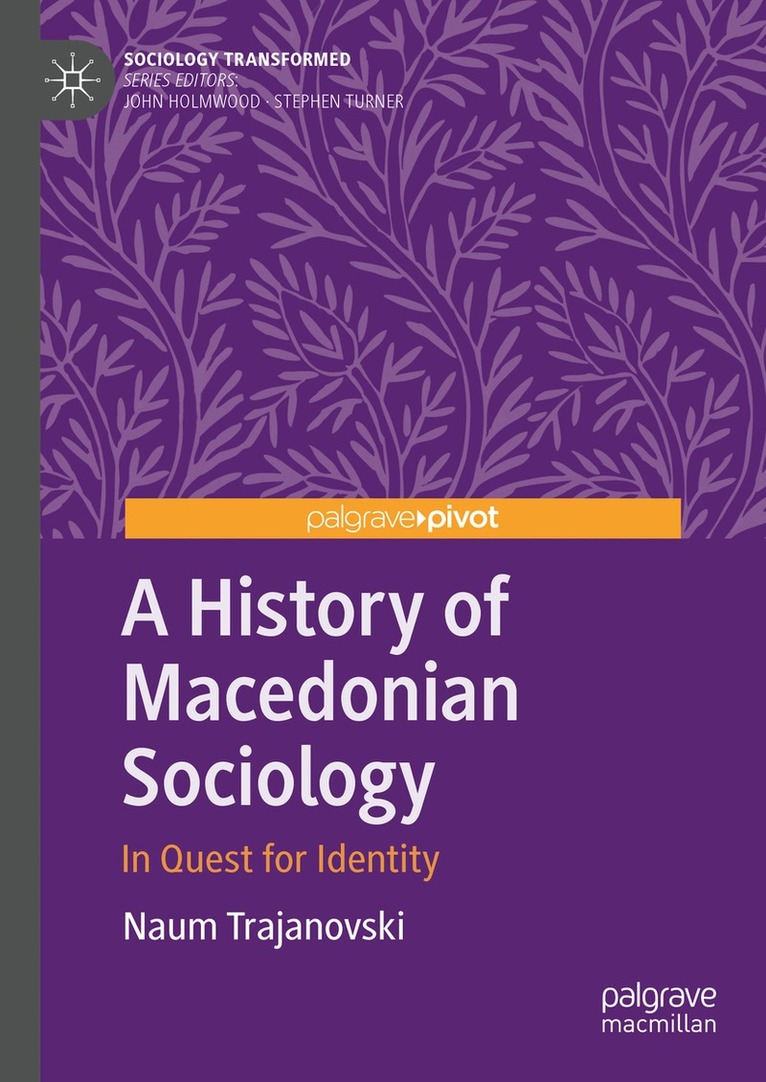
    History of Macedonian Sociology

    In Quest for Identity

    AvNaum Trajanovski

    Inbunden, Engelska, 2024

    Del i serien Sociology Transformed

    429 kr

    Beställningsvara. Skickas inom 5-8 vardagar. Fri frakt över 249 kr.

    Fler format och utgåvor

    E-bok

    537 kr

    Beskrivning

    This book is the first English-language monograph about the institutional development of sociology in (North) Macedonia. It maps and discusses the contexts, goals, and merits of the pioneering attempts for sociological research in the interwar period, early post-war educational and publishing politics, the institutionalization of sociology in socialist Macedonia in the course of the 1960s, its cross-national exchanges, as well as its major trajectories and debates up until the present days. Against the backgrounds of the political and intellectual histories of Yugoslav and post-Yugoslav Macedonia, it argues that the development of the sociological activities, themes, and arguments is entwined with the Macedonian nation- and state-building.

    Produktinformation

    • Utgivningsdatum:2024-05-07
    • Mått:148 x 210 x 16 mm
    • Vikt:378 g
    • Format:Inbunden
    • Språk:Engelska
    • Serie:Sociology Transformed
    • Antal sidor:174
    • Upplaga:2024
    • Förlag:Springer International Publishing AG
    • ISBN:9783031488689

    Utforska kategorier

    • Kulturvetenskap inom Samhälle och politik
    • Sociologi inom Samhälle och politik
    • Historia inom Historia och arkeologi

    Mer om författaren

    Naum Trajanovski, an adjunct at the Faculty of Sociology at the University of Warsaw, holds a PhD in sociology from the Polish Academy of Sciences. In the past few years, he coordinated a research project about the history of the social survey in post-earthquake Skopje (1964–65) and authored and edited books about the Macedonian and Balkan sociology and politics of memory.

    Innehållsförteckning

    • 1. Introduction: In Quest for Identity.- 2. Walking a Fine Line: The Skopje University in the Early Post-War Period (1945–1950s).- 3. The Leap Forward: The Benefits and Challenges of the Institutionalization of Macedonian Sociology (1960s–Early 1970s).- 4. The Voices of the Double-Periphery: The Crisis Years and the Inertia of Macedonian Sociology (1970s–1980s).- 5. A New Beginning, Anew: The Macedonian Sociology in a New Era (1990s–2010s).- 6. Conclusion.