• Fri frakt över 249 kr
  • •
  • Snabba leveranser
  • •
  • Billiga böcker
Kundservice

Du är på sajten för privatpersoner.

Företag, bibliotek eller offentlig verksamhet?

Du handlar på classic.bokus.com, där alla dina funktioner finns intakta.
Till classic.bokus.com
Bokus logotyp. Gå till startsidan.
  • Erbjudanden
  • Student
  • Topplistor
  • Barn & ungdom
  • Bokus Play
  • E-böcker
  • Ljudböcker
  • Pocketböcker
  • Spel & pussel

Upp till 25% på utvalda nyheter →

Sidfot

Mina sidor

    Hjälp

    • Kundservice
    • Vanliga frågor och svar
    • Frakt och leverans
    • Retur vid ångerrätt
    • Reklamera vara
    • Betalning
    • Köpvillkor
    • Allmänna villkor
    • Information om webbplatsens tillgänglighet

    Om Bokus

    • Om oss
    • Pressrum
    • För studenter
    • För företag
    • För bibliotek och offentlig verksamhet
    • För leverantörer
    • Hållbarhet

    Populärt

    • Aktuella erbjudanden
    • Presentkort
    • Studentlitteratur
    • Nya böcker
    • Topplistor
    • Signerade böcker
    • Engelska böcker

    Inspiration

    • Boktips
    • BookTok
    • Populära bokserier
    • Barnbokskaraktärer
    • Populära författare
    Logotyp för Bokus
    Följ oss på Facebook (extern länk)Följ oss på Instagram (extern länk)Följ oss på YouTube (extern länk)Följ oss på TikTok (extern länk)
    bokus @ CookiesAnpassa cookiesIntegritetspolicyKöpvillkor
    Till Citymail hemsida (extern länk)Till Budbee hemsida (extern länk)Till Postnord hemsida (extern länk)Till Schenker hemsida (extern länk)Till Early Bird hemsida (extern länk)Till Walleys hemsida (extern länk)
    1. Data och IT
    2. Systemvetenskap och AI

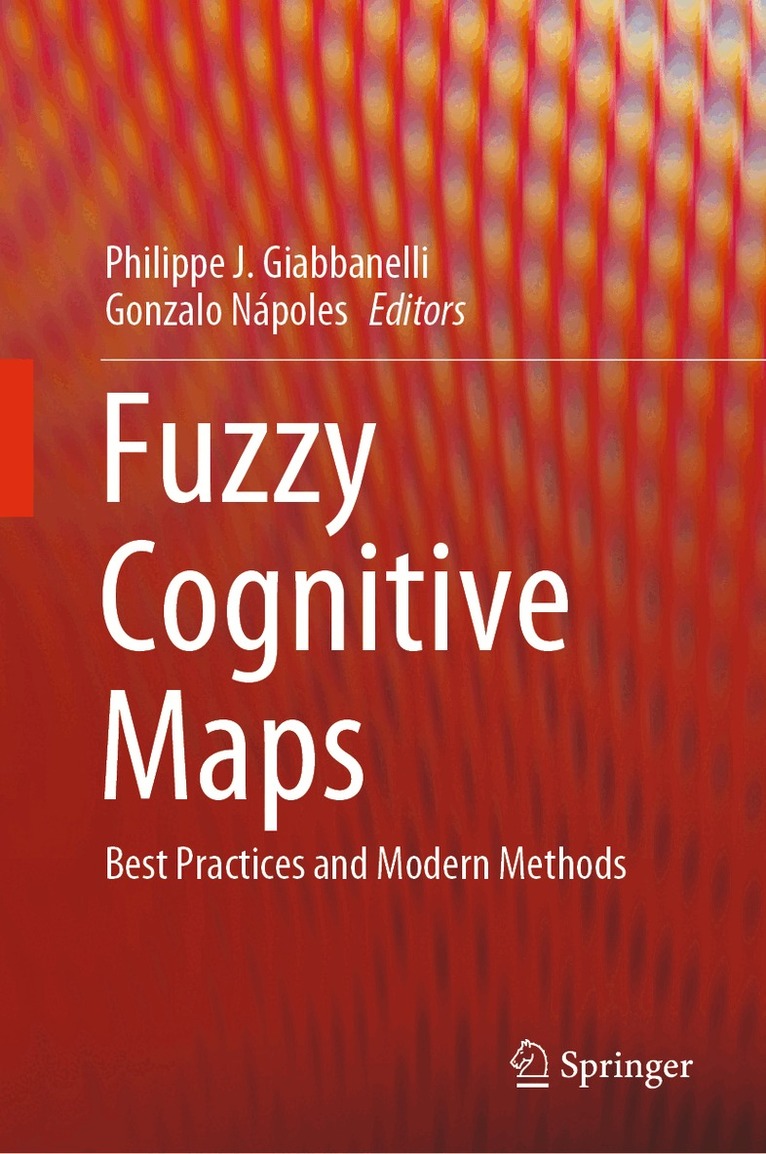
    Fuzzy Cognitive Maps

    Best Practices and Modern Methods

    AvPhilippe J. Giabbanelli,Gonzalo Nápoles

    Inbunden, Engelska, 2024

    1 671 kr

    Beställningsvara. Skickas inom 5-8 vardagar. Fri frakt över 249 kr.

    Beskrivning

    This book starts with the rationale for creating an FCM by contrast to other techniques for participatory modeling, as this rationale is a key element to justify the adoption of techniques in a research paper. Fuzzy cognitive mapping is an active research field with over 20,000 publications devoted to externalizing the qualitative perspectives or “mental models” of individuals and groups. Since the emergence of fuzzy cognitive maps (FCMs) back in the 80s, new algorithms have been developed to reduce bias, facilitate the externalization process, or efficiently utilize quantitative data via machine learning. It covers the development of an FCM with participants through a traditional in-person setting, drawing from the experience of practitioners and highlighting solutions to commonly encountered challenges. The book continues with introducing principles of simulations with FCMs as a tool to perform what-if scenario analysis, while extending those principles to more elaborated simulation scenarios where FCMs and agent-based modeling are combined. Once an FCM model is obtained, the book then details the analytical tools available for practitioners (e.g., to identify the most important factors) and provides examples to aid in the interpretation of results. The discussion concerning relevant extensions is equally pertinent, which are devoted to increasing the expressiveness of the FCM formalism in problems involving uncertainty. The last four chapters focus on building FCM models from historical data. These models are typically needed when facing multi-output prediction or pattern classification problems. In that regard, the book smoothly guides the reader from simple approaches to more elaborated algorithms, symbolizing the noticeable progress of this field in the last 35 years. Problems, recent references, and functional codes are included in each chapter to provide practice and support further learning from practitioners and researchers.

    Produktinformation

    • Utgivningsdatum:2024-01-30
    • Mått:155 x 235 x 19 mm
    • Vikt:524 g
    • Format:Inbunden
    • Språk:Engelska
    • Antal sidor:219
    • Förlag:Springer International Publishing AG
    • ISBN:9783031489624

    Utforska kategorier

    • Systemvetenskap och AI inom Data och IT
    • Tillämpad matematik inom Naturvetenskap och teknik
    • Ledarskap och motivation inom Ekonomi och Ledarskap

    Mer om författaren

    ​Dr. Philippe J. Giabbanelli received his B.S. from Université Côte d'Azur (France) and his M.Sc. and Ph.D. from Simon Fraser University (Canada). He worked as a researcher at the University of Cambridge (UK) and as a tenure-track faculty at several nationally ranked American universities, where he developed a variety of courses on predictive modeling and artificial intelligence. He taught fuzzy cognitive maps (FCMs) from the perspective of AI, as an object of study for network science, or as a tool in modeling and simulation. His research focuses on developing and applying AI to support population health interventions. He has published about 130 articles (mostly with his students), covering multiple aspects of FCM research from the elicitation and aggregation of causal maps to their structural validation or their combination with other techniques such as agent-based modeling. Dr. Gonzalo Nápoles received his B.S. and M.Sc. from the Central University of Las Villas (Cuba) and his Ph.D. from Hasselt University (Belgium) and Maastricht University (the Netherlands). Currently, he is a tenured assistant professor at the Department of Cognitive Science and Artificial Intelligence, Tilburg University (the Netherlands). He has taught fuzzy cognitive maps (FCMs) in several courses, including the First Summer School on Fuzzy Cognitive Mapping held in Volos (Greece). His research focuses on developing learning algorithms for FCM models, understanding their mathematical properties, and exploiting their potentialities in pattern classification and time series forecasting settings. He was a recipient of the Cuban Academy of Science Award for his contributions to the FCM field. More recently, his research efforts have shifted toward developing fair machine learning algorithms that can intrinsically be explained (to a large extent) and methods to mitigate implicit and explicit bias.

    Innehållsförteckning

    • 1. Fuzzy Cognitive Maps: Best Practices and Modern Methods.- 2. Creating an FCM with participants in an interview or workshop setting.- 3. Principles of simulations with FCMs.- 4. Hybrid Simulations.- 5. Analysis of Fuzzy Cognitive Maps.- 6. Extensions of Fuzzy Cognitive Maps.- 7. Creating FCM models from quantitative data with evolutionary algorithms.- 8. Advanced learning algorithm to create FCM models from quantitative data.- 9. Introduction to Fuzzy Cognitive Map-based classification.- 10. Addressing accuracy issues of Fuzzy Cognitive Map-based classifiers.- Index.