Häftad, Engelska, 2025
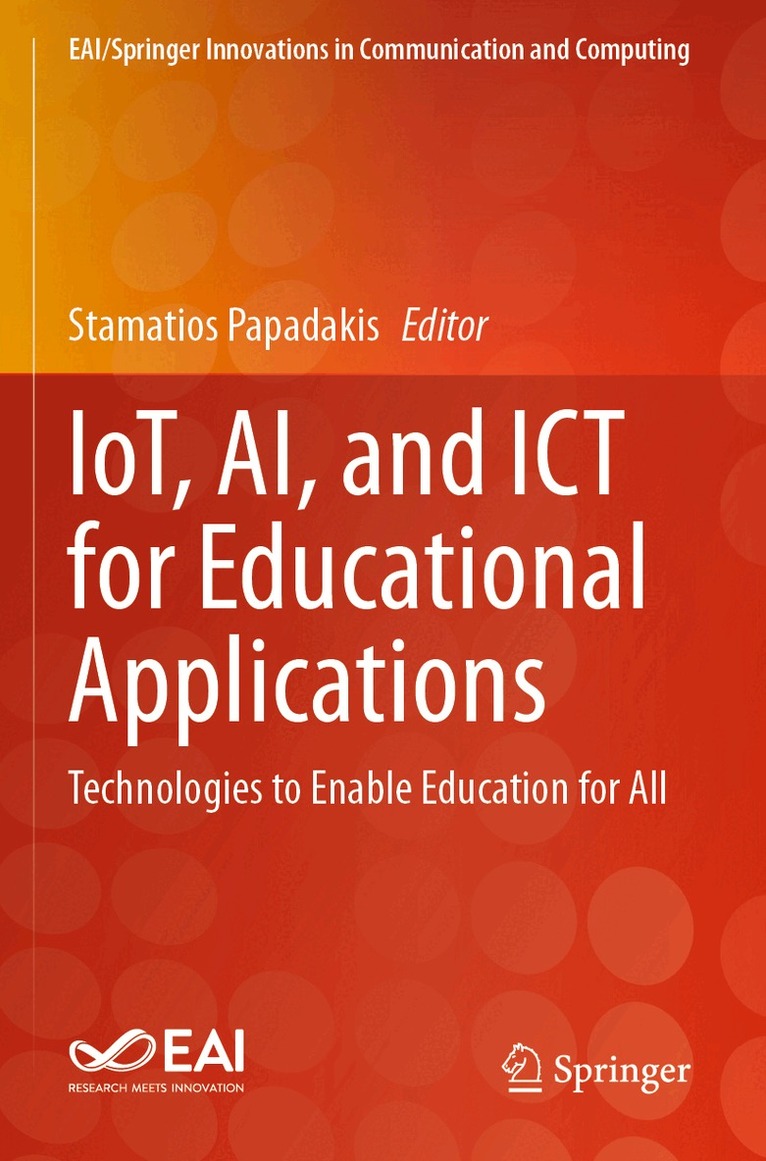
IoT, AI, and ICT for Educational Applications
1748 kr
Beställningsvara. Skickas inom 10-15 vardagar. Fri frakt över 249 kr.
Beskrivning
This book provides insight into the importance of advanced innovative technologies such as the Internet of Things (IoT), artificial intelligence (AI), and Metaverse as part of information and communication technology (ICT) solutions in education. Key features of this book include the recent and emerging developments in various specializations in education and finding their solutions by incorporating IoT, AI and ICT. This book presents useful applications, interventions, and case studies that cater to their improved requirements. Topics include formal and services based on IoT; AI technology for IoT-based educational delivery; interfacing devices to IoT; smart educational services; ChatGPT; Smartbots; and more. The authors include several practical solutions and applications of IoT and ICT in education. The book applies to researchers, academics, students, educators and practitioners around the world.
Produktinformation
- Utgivningsdatum: 2025-01-19
- Mått: 155 x 235 x 20 mm
- Vikt: 414 g
- Format: Häftad
- Språk: Engelska
- Serie: EAI/Springer Innovations in Communication and Computing
- Antal sidor: 249
- Förlag: Springer International Publishing AG
- ISBN: 9783031501418
Utforska kategorier
Betyg & recensioner
0 recensioner
Inga recensioner tillgängliga.