• Fri frakt över 249 kr
  • •
  • Snabba leveranser
  • •
  • Billiga böcker
Kundservice

Du är på sajten för privatpersoner.

Företag, bibliotek eller offentlig verksamhet?

Du handlar på classic.bokus.com, där alla dina funktioner finns intakta.
Till classic.bokus.com
Bokus logotyp. Gå till startsidan.
  • Erbjudanden
  • Nyheter
  • Student
  • Topplistor
  • Barn & ungdom
  • Bokus Play
  • E-böcker
  • Pocketböcker
  • Spel & pussel

10% studentrabatt med kod TERM26

Sidfot

Mina sidor

    Hjälp

    • Kundservice
    • Vanliga frågor och svar
    • Frakt och leverans
    • Retur vid ångerrätt
    • Reklamera vara
    • Betalning
    • Köpvillkor
    • Allmänna villkor
    • Information om webbplatsens tillgänglighet

    Om Bokus

    • Om oss
    • Pressrum
    • För studenter
    • För företag
    • För bibliotek och offentlig verksamhet
    • För leverantörer
    • Hållbarhet

    Populärt

    • Aktuella erbjudanden
    • Presentkort
    • Studentlitteratur
    • Nya böcker
    • Topplistor
    • Signerade böcker
    • Engelska böcker

    Inspiration

    • Boktips
    • BookTok
    • Populära bokserier
    • Barnbokskaraktärer
    • Populära författare
    Logotyp för Bokus
    Följ oss på Facebook (extern länk)Följ oss på Instagram (extern länk)Följ oss på YouTube (extern länk)Följ oss på TikTok (extern länk)
    bokus @ CookiesAnpassa cookiesIntegritetspolicyKöpvillkor
    Till Citymail hemsida (extern länk)Till Budbee hemsida (extern länk)Till Postnord hemsida (extern länk)Till Schenker hemsida (extern länk)Till Early Bird hemsida (extern länk)Till Walleys hemsida (extern länk)
    1. Samhälle och politik
    2. Samhälle och kultur
    3. Sociala och etiska frågor
    4. Diskriminering och rättvisa

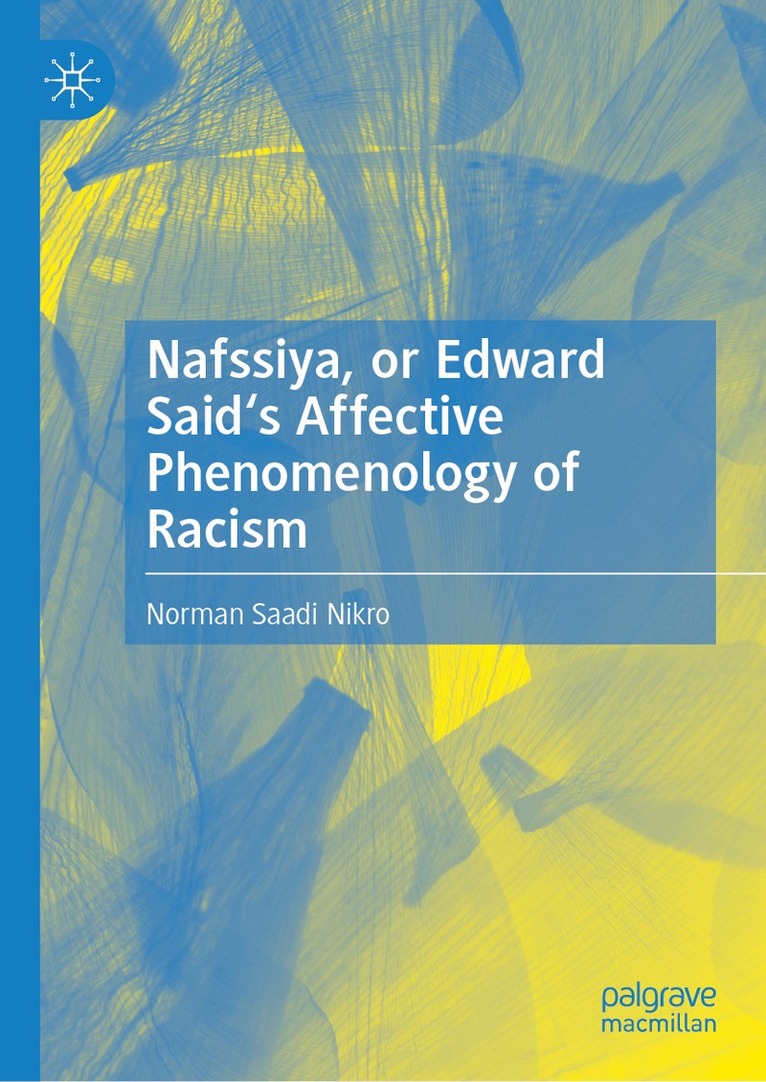
    Nafssiya, or Edward Said's Affective Phenomenology of Racism

    AvNorman Saadi Nikro

    Inbunden, Engelska, 2024

    1 315 kr

    Beställningsvara. Skickas inom 10-15 vardagar. Fri frakt över 249 kr.

    Fler format och utgåvor

    E-bok

    1 720 kr

    Häftad

    1 315 kr

    Beskrivning

    This book adapts the Arabic term nafsiyya to trace the phenomenological contours of Edward Said’s analysis of the affective dimensions of colonial and imperial racism. Reflecting on what he called his “colonial education,” Said rendered his Palestinian/Arab background and experience of racism an enabling component of his academic work. The argument focuses on his “personal dimension” section in his introduction to his famous volume Orientalism, discussing key notions of Said’s oeuvre—such as ‘elaboration,’ ‘circumstance,’ ‘humanism,’ ‘worldliness,’ ‘inventory,’ and ‘critical consciousness.’ Providing a lengthy study of his earlier and somewhat neglected Beginnings: Intention and Method, the book discusses the significance of the style of the essay as a key component of what the author calls Said’s interventionist brand of scholarship. The final chapter outlines how Said’s oeuvre can be situated in a genealogy of a radical phenomenology of racism that emerged from the colonies.

    Produktinformation

    • Utgivningsdatum:2024-03-31
    • Mått:148 x 210 x 17 mm
    • Vikt:393 g
    • Format:Inbunden
    • Språk:Engelska
    • Antal sidor:199
    • Upplaga:2024
    • Förlag:Springer International Publishing AG
    • ISBN:9783031517686

    Utforska kategorier

    • Diskriminering och rättvisa inom Samhälle och politik
    • Filosofiska discipliner inom Filosofi och religion
    • Litteraturteori inom Skönlitteratur

    Mer om författaren

    Norman Saadi Nikro is a research fellow at the Leibniz-Zentrum Moderner Orient. Having Australian and Lebanese backgrounds, he served as an Australian Volunteer Abroad in Ramallah, and was later an Assistant Professor of Humanities at Notre Dame University in Lebanon, before moving to Berlin.

    Innehållsförteckning

    • Chapter 1. Introduction: The Strange Disjunction.- Chapter 2. Inventorying the Self: Nafssiya, Elaboration, Recursive Humanism.- Chapter 3. Archival Repositories, Embodied Repertoires, Marxism.- Chapter 4. Beginnings: Said’s Interventionist Scholarship.- Chapter 5. Giving an Account of Himself.- Chapter 6. Towards a Phenomenology of Racism.