Häftad, Engelska, 2024
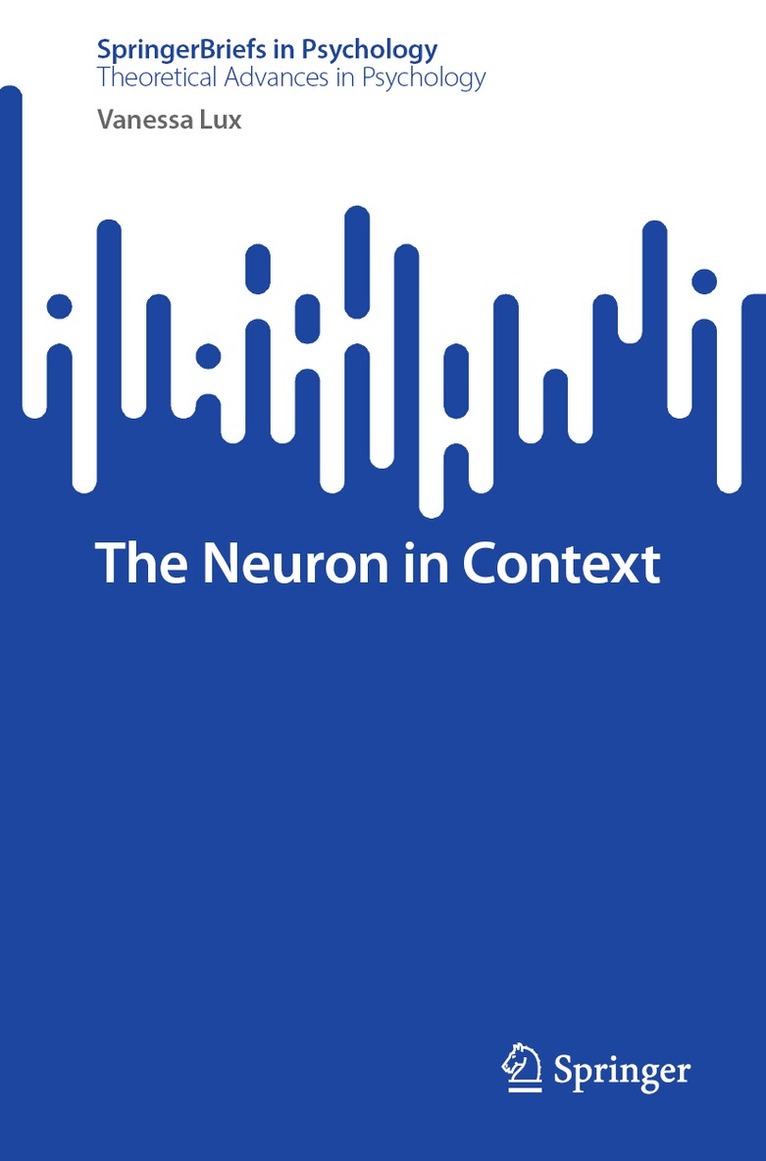
Neuron in Context
Av Vanessa Lux
550 kr
Beställningsvara. Skickas inom 10-15 vardagar. Fri frakt över 249 kr.
Beskrivning
Neuroscience has largely abandoned its localizationist and mechanistic framework of the 20th century. The plastic, embodied, and network character of our nervous system is widely acknowledged and systems theory approaches to consciousness dominate the field. However, the underlying neuron theory has not changed. The neuron doctrine, conceptualizing the single neuron as atomistic, one-directional source of neural function, still provides the template for our understanding of these basic elements of our nervous system and the material foundation of consciousness. Yet, the single neuron does not exist as an isolated unit. It is embedded within multiple cellular, structural, and functional contexts, and highly depends on them for its development, neural activity, and survival. The book discusses the constraints of the neuron doctrine and its pragmatic reductionism in the light of the growing knowledge about the brain’s connectivity, plasticity, and systemic and embodied nature.To overcome these constraints, the author argues for a new neuron theory, depicting the neuron as bidirectional hub which is at the same time source and product of neural function. This bidirectionality is further characterized by spatial and time dimensions, placing the neuron within a multi-level pathway model of psychobiological development from the perspective of Developmental Embodiment Research. Furthermore, the author discusses the potential of neuroepigenetic markers to characterize the neuron and its range of plasticity within this developmental perspective.With its focus on neuroepigenetics, the book addresses a knowledge gap in the current study of the neural foundations of psychological functions. The multi-level and bidirectional perspective is already realized in approaches coming from developmental systems theory, which model neural function at the connectome level, and it also fits with approaches investigating feedback loops underlying neural activity at the single cell level. At both these levels, the spatial and the time dimensions are well characterized, either as changing connectivity patterns across different age groups, or as synaptic feedback loops underlying neural activation patterns. However, for the intermediate level of small neural populations, which is currently the main target for studies investigating the neural basis of specific psychological functions, this characterization turned out to be more challenging. Multi-cell recordings have provided a first glimpse into the complex interaction patterns of these small neural networks, but they are limited to the recording period and do not provide information about the long-term developmental and activation history. Here, neuroepigenetic markers could be of use. Due to their relative stability and, at the same time, environmental sensitivity, neuroepigenetic markers represent an additional layer of information in which, to a certain degree, the cell’s metabolic and activation history is aggregated over time. This information is available at the single neuron level but could also be modeled as aggregated information for small neural populations and the supporting cellular context. Looking through this “epigenetic lens” adds to our understanding of the neuron as bidirectional hub by emphasizing the molecular correlates of functional stabilization and their contextual prerequisites. These prerequisites reach from the immediate cellular context to the social-cultural contexts which shape the culturally specific modes of acquisition of psychological functions throughout the lifespan. Accounting for this multilayered contextuality of the neuron and its function affords to repositions the relationship between neuroscience and psychology in their joint effort to unravel the material basis of consciousness. This provides new challenges but also new perspectives for theoretical psychology. The book presents these current developments and debates to researchers, graduate students, and interested professionals and practitioners working in neuroscience, epigenetics, psychiatry, psychology and psychotherapy. It also provides a basic introduction into neuroepigenetics, its mechanisms, and first findings for graduate students as well as interested professionals and practitioners working in psychiatry, psychology, and psychotherapy.
Produktinformation
- Utgivningsdatum: 2024-10-01
- Mått: 155 x 235 x 12 mm
- Vikt: 312 g
- Format: Häftad
- Språk: Engelska
- Serie: SpringerBriefs in Psychology
- Antal sidor: 184
- Förlag: Springer International Publishing AG
- ISBN: 9783031552311
Utforska kategorier
Betyg & recensioner
0 recensioner
Inga recensioner tillgängliga.