• Fri frakt över 249 kr
  • •
  • Snabba leveranser
  • •
  • Billiga böcker
Kundservice

Du är på sajten för privatpersoner.

Företag, bibliotek eller offentlig verksamhet?

Du handlar på classic.bokus.com, där alla dina funktioner finns intakta.
Till classic.bokus.com
Bokus logotyp. Gå till startsidan.
  • Erbjudanden
  • Nyheter
  • Student
  • Topplistor
  • Barn & ungdom
  • Bokus Play
  • E-böcker
  • Pocketböcker
  • Spel & pussel

10% rabatt på allt med kod: NYSTART10 →

Sidfot

Mina sidor

    Hjälp

    • Kundservice
    • Vanliga frågor och svar
    • Frakt och leverans
    • Retur vid ångerrätt
    • Reklamera vara
    • Betalning
    • Köpvillkor
    • Allmänna villkor
    • Information om webbplatsens tillgänglighet

    Om Bokus

    • Om oss
    • Pressrum
    • För studenter
    • För företag
    • För bibliotek och offentlig verksamhet
    • För leverantörer
    • Hållbarhet

    Populärt

    • Aktuella erbjudanden
    • Presentkort
    • Studentlitteratur
    • Nya böcker
    • Topplistor
    • Signerade böcker
    • Engelska böcker

    Inspiration

    • Boktips
    • BookTok
    • Populära bokserier
    • Barnbokskaraktärer
    • Populära författare
    Logotyp för Bokus
    Följ oss på Facebook (extern länk)Följ oss på Instagram (extern länk)Följ oss på YouTube (extern länk)Följ oss på TikTok (extern länk)
    bokus @ CookiesAnpassa cookiesIntegritetspolicyKöpvillkor
    Till Citymail hemsida (extern länk)Till Budbee hemsida (extern länk)Till Postnord hemsida (extern länk)Till Schenker hemsida (extern länk)Till Early Bird hemsida (extern länk)Till Walleys hemsida (extern länk)
    1. Kultur
    2. Arkitektur

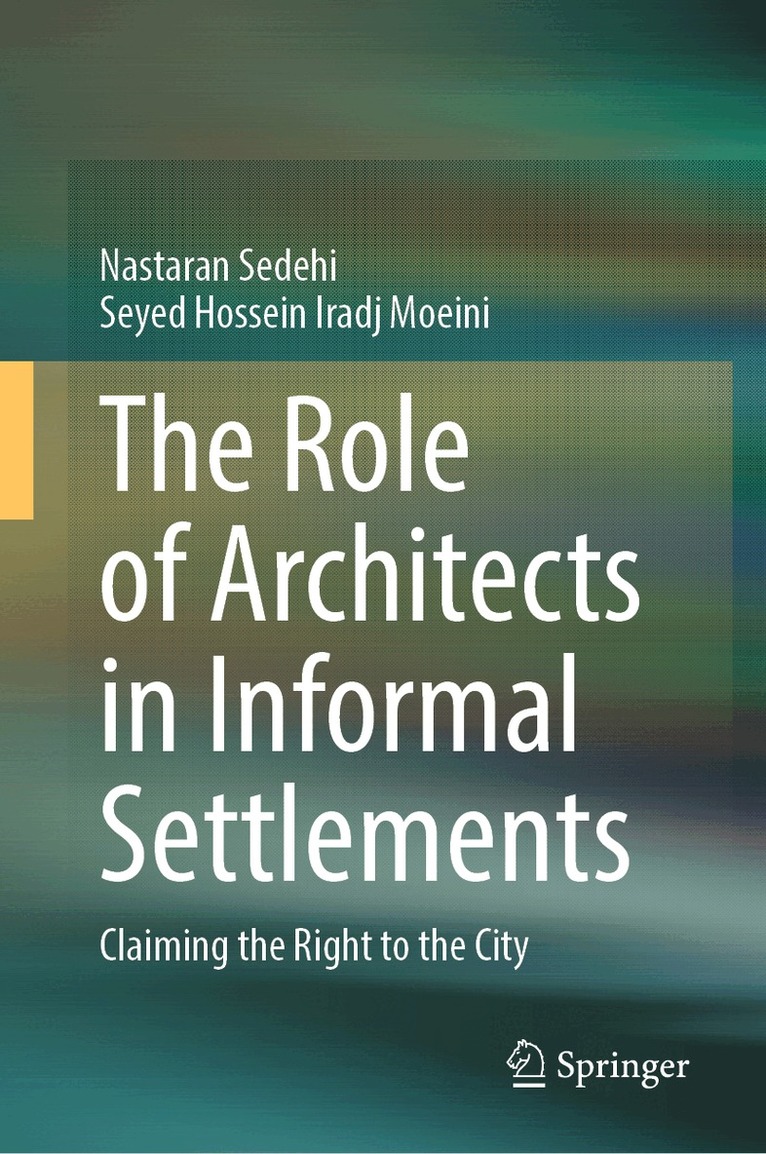
    Role of Architects in Informal Settlements

    Claiming the Right to the City

    AvNastaran Sedehi,Seyed Hossein Iradj Moeini

    Inbunden, Engelska, 2024

    1 341 kr

    Beställningsvara. Skickas inom 10-15 vardagar. Fri frakt över 249 kr.

    Fler format och utgåvor

    Häftad

    1 341 kr

    Beskrivning

    With over one billion people worldwide living in informal settlements and enduring substandard housing conditions, these areas present one of the greatest urban challenges of our time. The existence of informal settlements is deeply intertwined with global issues such as climate change, war-induced displacement, and colonialism. As sustainability becomes a central focus in various disciplines, including architecture, the path to sustainable urban development lies in addressing the problems of informal settlements. Architecture's relevance to this discourse is paradoxically highlighted by its perceived 'irrelevance'. Informal settlements are often overlooked as legitimate sites for architectural practice. This neglect stems from two assumptions: first, architecture's traditional dependence on power and capital, isolating the marginalised who rarely have the chance to receive architectural services; and second, architecture's perceived incapability to address urban-scale infrastructural problems, and thereby its reduction to aesthetic creativity and form making. This book challenges architecture's focus on the 'centre' and its lack of ambition for creating a pervasive impact on cities. Instead, it highlights the profession's potential to serve the common good and address urban-scale infrastructural issues and proposes the effective engagement of architects in informal settlements. Drawing on Henri Lefebvre’s dichotomy of margin versus centre in urban spaces, informal settlements are interpreted as spaces on the city’s periphery, created by the marginalised with limited access to power, capital, and authority. By revisiting interrelated concepts such as the production of space, the right to the city, social architecture, and spatial agency within the context of informal settlements, the book claims a space for architectural practice in these areas. It incorporates discussions on insurgent citizenship and critiques of the self-help approach, contextualising its arguments with architectural intervention precedents from around the world. The book concludes with a brief manifesto on practising architecture in informal settlements. The book aspires to inspire architecture students, practitioners, and researchers to explore the profession’s potential in social problem-solving and to push the boundaries of practice towards inclusiveness for all urban inhabitants.

    Produktinformation

    • Utgivningsdatum:2024-10-18
    • Mått:155 x 235 x 13 mm
    • Vikt:348 g
    • Format:Inbunden
    • Språk:Engelska
    • Antal sidor:100
    • Förlag:Springer International Publishing AG
    • ISBN:9783031671241

    Utforska kategorier

    • Arkitektur inom Kultur
    • Arkitekturhistoria inom Kultur
    • Sociologi inom Samhälle och politik

    Mer om författaren

    Nastaran Sedehi holds a Master of Architecture degree, practised architecture for three years, and is currently a graduate student and researcher at the School of Architecture and Landscape Architecture, the University of British Columbia. She is passionate about activist-oriented interdisciplinary practice in architecture and its potential for problem-solving in underprivileged and marginalised communities. In the capacity of a student researcher, she contributed to the ‘Not for Sale’ exhibition organised by the Architects Against Housing Alienation Collective, which represented Canada at the 18th Venice Architecture Biennale. The exhibition showcased projects at the intersection of research, design, activism, and advocacy, offering innovative responses to the escalating housing crisis in Canada.She enjoys skateboarding, cycling, painting, and watching live music. Iradj Moeini is a senior lecturer in architecture in Shahid Beheshti University (SBU), Tehran―where he has obtained his MArch―and a practising architect in London. Having obtained his PhD from the Bartlett School of Graduate Studies, UCL, on contemporary architecture theory and criticism, he is the author and co-author of numerous papers and four books, has also taught in Yazd, Tehran Azad, and Shariati universities, and worked in a range of Iranian and British practices in a professional capacity. A member of the Royal Institute of British Architects (RIBA), he is also an amateur photographer and musician.

    Innehållsförteckning

    • The problem: Architecture disengagement from informal settlements.- The position: Engaging architects in informal settlements.- Precedents: Architects in informal settlements.- A manifesto for practising architecture in informal settlements.