Häftad, Engelska, 2026
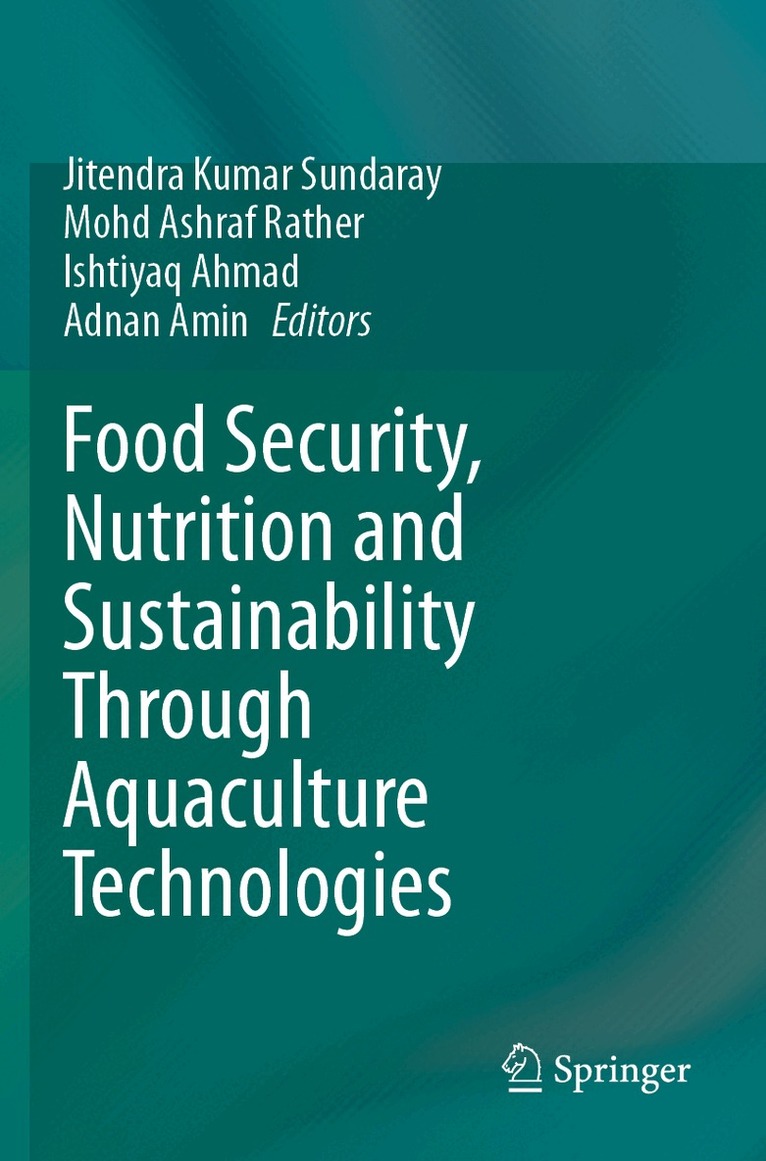
Food Security, Nutrition and Sustainability Through Aquaculture Technologies
Av Jitendra Kumar Sundaray, Mohd Ashraf Rather, Ishtiyaq Ahmad, Adnan Amin
2398 kr
Beställningsvara. Skickas inom 10-15 vardagar. Fri frakt över 249 kr.
Beskrivning
Aquaculture is the farming of aquatic organisms such as fish, crustaceans, mollusks and aquatic plants. It is a rapidly growing industry that plays a significant role in providing food security, improving nutrition and promoting sustainability. Food security is a major global concern, with millions of people around the world suffering from malnutrition and hunger. Food security, nutrition and sustainability are global challenges that need urgent attention to achieve a better and more sustainable future. Aquaculture technologies can help to address this problem by increasing the availability and accessibility of fish and other aquatic foods, providing a source of protein-rich food, improving nutrition, enhancing sustainability, generating income and improving food safety. In addition, aquaculture technologies play an important role in promoting nutrition. Fish and other aquatic foods are a good source of essential nutrients that are important for human health, including omega-3 fatty acids, vitamin D and minerals like iron and zinc. By increasing access to these foods, aquaculture can help to improve nutrition and reduce the incidence of diet-related diseases. Fish and shellfish are rich in omega-3 fatty acids, which have been linked to improved heart health, brain function and other health benefits. By incorporating fish and shellfish into their diets, people can improve their overall nutritional intake and reduce the risk of chronic diseases. Food Security, Nutrition and Sustainability Through Aquaculture Technologies shines a light on how aquaculture technologies contribute to sustainability by providing a more efficient and environmentally friendly way of producing food. Compared to traditional fishing practices, aquaculture can reduce pressure on wild fish populations and minimize the negative impact of fishing on marine ecosystems. Additionally, advances in aquaculture technology have led to the development of more sustainable and efficient production systems, including recirculating aquaculture systems and integrated multi-trophic aquaculture. As the global population continues to grow, demand for protein-rich foods like fish is increasing. Aquaculture provides a sustainable way to meet this demand, as it can produce more protein per unit of feed than traditional livestock farming. This book discusses aquaculture practiced in areas where traditional agriculture is not feasible, such as regions that are unsuitable for crop production. In addition to providing a source of protein, aquaculture can also improve nutrition. Aquaculture can be practiced in asustainable manner, with minimal impact on the environment. Unlike traditional fishing, which can deplete wild fish populations and damage marine ecosystems,aquaculture allows for the controlled cultivation of fish and other aquatic organisms. Properly managed aquaculture operations can also minimize waste and pollution and caneven contribute to ecosystem restoration by providing habitat for marine species. This book includes chapters on various aspects of aquaculture technologies that address a range of important global challenges including food security, nutrition and sustainability and are likely to play an increasingly important role in meeting the world's growing demand for food.
Produktinformation
- Utgivningsdatum: 2026-01-02
- Mått: 155 x 235 x 29 mm
- Vikt: 803 g
- Format: Häftad
- Språk: Engelska
- Antal sidor: 505
- Förlag: Springer International Publishing AG
- ISBN: 9783031758324
Utforska kategorier
Betyg & recensioner
0 recensioner
Inga recensioner tillgängliga.