• Fri frakt över 249 kr
  • •
  • Snabba leveranser
  • •
  • Billiga böcker
Kundservice

Du är på sajten för privatpersoner.

Företag, bibliotek eller offentlig verksamhet?

Du handlar på classic.bokus.com, där alla dina funktioner finns intakta.
Till classic.bokus.com
Bokus logotyp. Gå till startsidan.
  • Erbjudanden
  • Nyheter
  • Student
  • Topplistor
  • Barn & ungdom
  • Bokus Play
  • E-böcker
  • Pocketböcker
  • Spel & pussel

10% rabatt på allt med kod: NYSTART10 →

Sidfot

Mina sidor

    Hjälp

    • Kundservice
    • Vanliga frågor och svar
    • Frakt och leverans
    • Retur vid ångerrätt
    • Reklamera vara
    • Betalning
    • Köpvillkor
    • Allmänna villkor
    • Information om webbplatsens tillgänglighet

    Om Bokus

    • Om oss
    • Pressrum
    • För studenter
    • För företag
    • För bibliotek och offentlig verksamhet
    • För leverantörer
    • Hållbarhet

    Populärt

    • Aktuella erbjudanden
    • Presentkort
    • Studentlitteratur
    • Nya böcker
    • Topplistor
    • Signerade böcker
    • Engelska böcker

    Inspiration

    • Boktips
    • BookTok
    • Populära bokserier
    • Barnbokskaraktärer
    • Populära författare
    Logotyp för Bokus
    Följ oss på Facebook (extern länk)Följ oss på Instagram (extern länk)Följ oss på YouTube (extern länk)Följ oss på TikTok (extern länk)
    bokus @ CookiesAnpassa cookiesIntegritetspolicyKöpvillkor
    Till Citymail hemsida (extern länk)Till Budbee hemsida (extern länk)Till Postnord hemsida (extern länk)Till Schenker hemsida (extern länk)Till Early Bird hemsida (extern länk)Till Walleys hemsida (extern länk)
    1. Naturvetenskap och teknik
    2. Matematik och naturvetenskap
    3. Biologi
    4. Biovetenskap

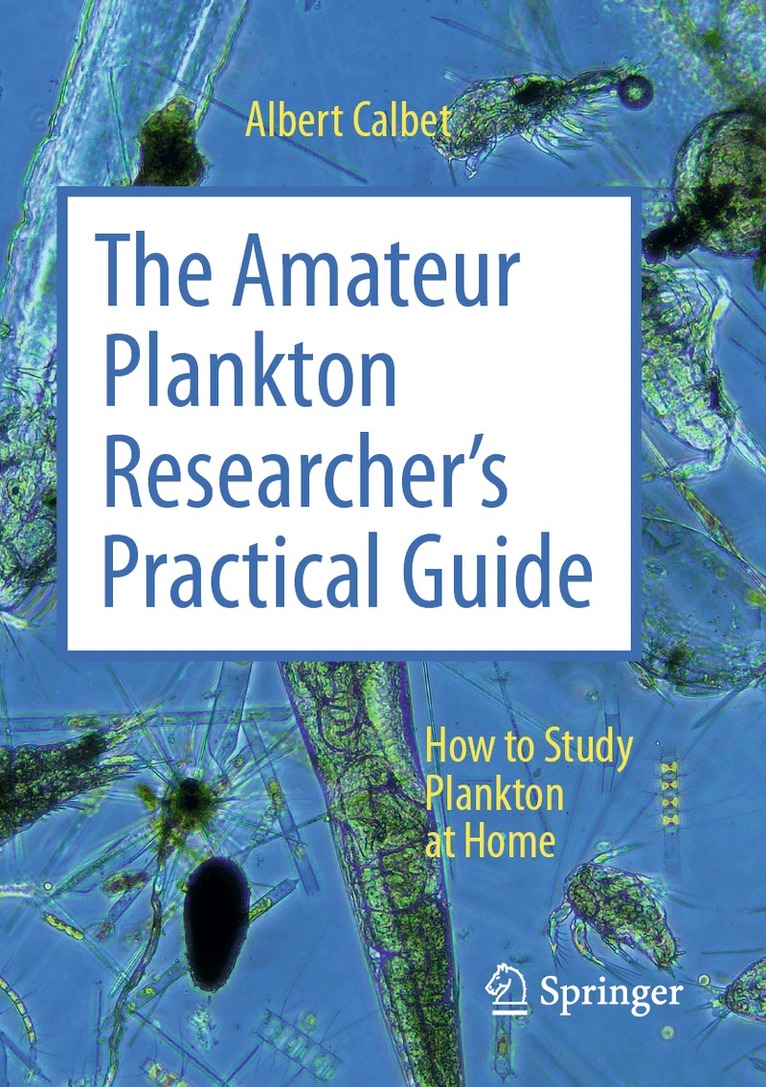
    Amateur Plankton Researcher's Practical Guide

    How to Study Plankton at Home

    AvAlbert Calbet

    Häftad, Engelska, 2026

    254 kr

    Beställningsvara. Skickas inom 10-15 vardagar. Fri frakt över 249 kr.

    Fler format och utgåvor

    Inbunden

    305 kr

    E-bok

    363 kr

    Beskrivning

    Explore the captivating world of plankton with this hands-on guide, perfect for students, educators, hobbyists, and citizen scientists alike. Designed to take you through every step of the process, from collecting samples in local waters to observing them under a microscope and conducting basic experiments, this guide will equip you with the tools and knowledge needed to study plankton at home. You will gain an understanding of the different groups of plankton, their ecological significance, and the environmental challenges they face. With practical advice on gathering and preserving samples, using essential equipment, and identifying common groups, the book also introduces simple experimental techniques to investigate plankton behavior and ecology. For those looking for further knowledge, it briefly covers advanced methods like DNA barcoding and environmental DNA analysis. An image guide, at the end of the book, for easy identification makes this a comprehensive resource. By the end of the reading, you will be ready to deepen your exploration of these vital organisms and perhaps even contribute to their study.

    Produktinformation

    • Utgivningsdatum:2026-01-02
    • Mått:200 x 14 x 145 mm
    • Vikt:230 g
    • Format:Häftad
    • Språk:Engelska
    • Antal sidor:142
    • Förlag:Springer International Publishing AG
    • ISBN:9783031802508

    Utforska kategorier

    • Biovetenskap inom Naturvetenskap och teknik
    • Växtböcker inom Djur och Natur
    • Botanik inom Naturvetenskap och teknik

    Mer om författaren

    My passion for plankton began when I was just ten years old. It all changed for me on December 31st when I received a simple plastic microscope as a birthday present from my parents. I can still vividly recall observing my first protists—it remains one of my most enduring memories. The sample came from a flower jar on our dining table, where I noticed tiny dots moving around on the water’s surface. Placing a drop of that water on a glass slide and looking through the microscope, I was astonished by the new world that unfolded before me. Creatures like Euglena viridis (a flagellated microalgae) and Stylonichia mytilus (a flat ciliate) dominated the scene. From that moment on, I could not resist exploring every pond, vessel, river, or lake I came across. I used to carry small containers in my pockets (and still do) to collect water samples for later observation.My interest extended beyond plankton to other forms of life, leading me to study Biology at the University of Barcelona, my hometown. There, I had the privilege of learning from inspiring educators who fueled my drive to pursue this career. Although working as a bartender, cook, and waiter on weekends and summers slowed down my studies, I eventually completed my degree and began my PhD at the Marine Sciences Institute (CSIC, Barcelona). I shifted my focus to marine zooplankton, primarily copepods, despite never having been particularly drawn to marine systems (probably due to my tendency to get seasick!). Yes, even marine biologists can struggle with seasickness. After four years of dedication, I successfully defended my PhD.The next step in my journey was a postdoctoral position at the University of Hawaii, USA. I am not going to lie—I worked hard, but I also had an incredible experience. It was in Hawaii that I first became interested in marine microzooplankton, which has captivated me ever since, although I have not lost my enthusiasm for larger zooplankton.Following my postdoc, I returned to Barcelona, spending a few years hopping from contract to contract before securing a permanent research position at the institution where I completed my PhD. Now, after more than three decades devoted to the study of plankton, I am passionate about sharing my knowledge with all kinds of audiences, especially the next generation of scientists. This is what motivated me to write this book, offering a practical and accessible guide to the fascinating world of plankton. I hope you enjoy it.

    Innehållsförteckning

    • Chapter 1. A Brief Introduction to Plankton.- Chapter 2. Getting Started.- Chapter 3. Collecting Plankton Samples.- Chapter 4 Observing Plankton. - Chapter 5. Conducting Experiments.- Chapter 6. The Role of Molecular Techniques in Plankton Identification.- Chapter 7. Resources and Further Reading.- Chapter 8. Practical Plankton Image Guide.