• Fri frakt över 249 kr
  • •
  • Snabba leveranser
  • •
  • Billiga böcker
Kundservice

Du är på sajten för privatpersoner.

Företag, bibliotek eller offentlig verksamhet?

Du handlar på classic.bokus.com, där alla dina funktioner finns intakta.
Till classic.bokus.com
Bokus logotyp. Gå till startsidan.
  • Erbjudanden
  • Nyheter
  • Student
  • Topplistor
  • Barn & ungdom
  • Bokus Play
  • E-böcker
  • Pocketböcker
  • Spel & pussel

10% rabatt på allt med kod: NYSTART10 →

Sidfot

Mina sidor

    Hjälp

    • Kundservice
    • Vanliga frågor och svar
    • Frakt och leverans
    • Retur vid ångerrätt
    • Reklamera vara
    • Betalning
    • Köpvillkor
    • Allmänna villkor
    • Information om webbplatsens tillgänglighet

    Om Bokus

    • Om oss
    • Pressrum
    • För studenter
    • För företag
    • För bibliotek och offentlig verksamhet
    • För leverantörer
    • Hållbarhet

    Populärt

    • Aktuella erbjudanden
    • Presentkort
    • Studentlitteratur
    • Nya böcker
    • Topplistor
    • Signerade böcker
    • Engelska böcker

    Inspiration

    • Boktips
    • BookTok
    • Populära bokserier
    • Barnbokskaraktärer
    • Populära författare
    Logotyp för Bokus
    Följ oss på Facebook (extern länk)Följ oss på Instagram (extern länk)Följ oss på YouTube (extern länk)Följ oss på TikTok (extern länk)
    bokus @ CookiesAnpassa cookiesIntegritetspolicyKöpvillkor
    Till Citymail hemsida (extern länk)Till Budbee hemsida (extern länk)Till Postnord hemsida (extern länk)Till Schenker hemsida (extern länk)Till Early Bird hemsida (extern länk)Till Walleys hemsida (extern länk)
    1. Naturvetenskap och teknik
    2. Teknik och industri
    3. Energiteknik

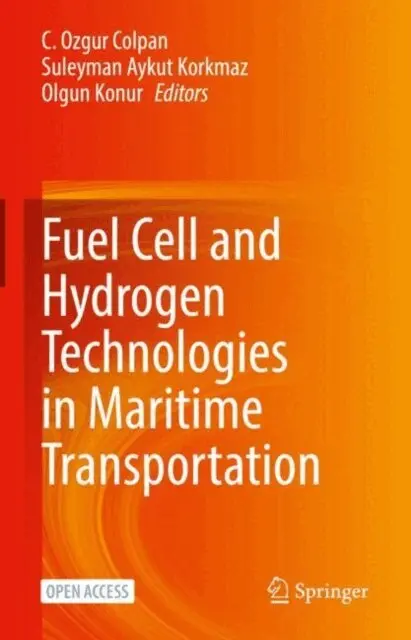
    Fuel Cell and Hydrogen Technologies in Maritime Transportation

    AvC. Ozgur Colpan,Suleyman Aykut Korkmaz

    Inbunden, Engelska, 2025

    1 194 kr

    Beställningsvara. Skickas inom 10-15 vardagar. Fri frakt över 249 kr.

    Beskrivning

    Fuel Cell and Hydrogen Technologies in Maritime Transportation looks at the role of hydrogen and fuel cells in creating a more sustainable and environmentally friendly maritime industry. It explores how hydrogen can revolutionize marine propulsion and highlights innovations and solutions for greener energy, including onboard hydrogen production, hybrid energy systems, and advanced fuel cell technologies. The book also covers performance and environmental analysis techniques for fuel cell-powered marine vessels, different fuel options, regulatory and safety considerations, and port-based hydrogen infrastructure. It provides insights into developing hydrogen infrastructure at ports and harbors and the economic implications and ecological benefits of adopting green hydrogen in maritime transportation. This resource is a must-read for engineers, maritime professionals, researchers, and marine enthusiasts who want to stay up-to-date with the changing landscape of sustainable marine transportation.Provides guidelines on the design and modeling of fuel cell-powered marine vessels;Discusses hydrogen safety and storage options;Includes detailed case studies and life cycle assessments for hydrogen-fueled marine vehicles.Chapter "Sustainable Waterborne Transportation with Hydrogen: An ecosystem approach to design" is available open access under a Creative Commons Attribution 4.0 International License via link.springer.com.

    Produktinformation

    • Utgivningsdatum:2025-07-31
    • Mått:155 x 235 x 24 mm
    • Vikt:674 g
    • Format:Inbunden
    • Språk:Engelska
    • Antal sidor:332
    • Förlag:Springer International Publishing AG
    • ISBN:9783031861093

    Utforska kategorier

    • Energiteknik inom Naturvetenskap och teknik
    • Sjöfart och skeppsbyggnad inom Naturvetenskap och teknik
    • Maskinteknik och material inom Naturvetenskap och teknik

    Mer om författaren

    Prof. Dr. Can Ozgur Colpan received his bachelor’s and master’s degrees from the Department of Mechanical Engineering at the Middle East Technical University in 2003 and 2005, respectively. He conducted his Ph.D. studies at the Department of Mechanical and Aerospace Engineering of Carleton University in Ottawa, Canada, between 2005 and 2009. He continued his studies as a post-doctoral researcher at the same department between 2009 and 2010 and at the Mechanical and Industrial Engineering Department of Ryerson University in Toronto, Canada, between 2010 and 2012. He has worked at the Department of Mechanical Engineering of Dokuz Eylül University since 2012. In 2014 and 2019, he was appointed Associate Professor and Professor, respectively. Dr. Çolpan has conducted research in the field of fuel cells and hydrogen and the mathematical modeling of integrated energy systems. His areas of research include modeling of direct internal reforming solid oxide fuel cells, material development and mathematical modeling for direct methanol fuel cells, development of high-temperature PEM fuel cells, simulation and optimization of the fuel cell vehicle powertrains, catalytic dehydrogenation of solid hydrogen storage materials, analysis of organic Rankine cycle based systems, and analysis of biofuel fueled turbojet. He has worked as chairman, technical chair, and organizing committee member for many conferences. He serves as a Board Member for the Turkish Hydrogen Technology Association and an Advisory Board Member with the TÜBİTAK Efficiency Challenge. In 2019, he won the Turkish Academy of Sciences Outstanding Young Scientist Award (TUBA-GEBIP) and METU Professor Dr. Mustafa N. Parlar Education and Research Foundation’s Research Encouragement Award.  Suleyman Aykut Korkmaz, Ph.D., is an experienced marine engineering researcher. He received his bachelor’s degree in 2009 from the Naval Architecture and Marine Engineering Department of the Istanbul Technical University, where he was also awarded the Certificate of Competency in Ocean Going Watchkeeping Engineering. He received his master’s and Ph.D. from Dokuz Eylül University, specializing in Marine Engineering – Maritime Transportation Systems Engineering Program, in 2017 and 2023, respectively. Dr. Korkmaz works as a Research Assistant with the Maritime Faculty in the Department of Marine Engineering at Dokuz Eylul University and as a Research Fellow in the Department of Civil, Maritime, and Environmental Engineering at the University of Southampton. His research has predominantly delved into fuel cell system modeling, energy management strategies for marine vessels, thermodynamic and economic evaluations of waste heat recovery systems aboard marine vessels, hydrogen production technologies, utilization of fuel cell and battery hybrid technologies on vessels, and techno-economic assessments of renewable and sustainable energy technologies for ships. As a Board Member, Dr. Korkmaz has contributed to the UCTEA Izmir Branch of the Chamber of Naval Architectures and Marine Engineers, underlining his commitment to professional engagement. Olgun Konur, Ph.D., received his bachelor’s degree from the Marine Engineering Department of Dokuz Eylül University in 2011. He worked as a marine engineer in merchant ships for three years. He received his master’s and Ph.D. from the Maritime Faculty in the Marine Transportation Systems Engineering program at Dokuz Eylül University in 2016 and 2021, respectively. He has worked at the Department of Marine Engineering of Dokuz Eylül University since 2015 and was appointed Assistant Professor in 2023. His research mainly focuses on the thermodynamic and economic assessment of waste heat recovery systems on marine vessels, energy efficiency on ships, seawater cooling systems for solar power systems, exergetic sustainability assessment on ship energy systems, operation of marine vessels, ammonia-engine-based ship propulsion systems, the utilization of fuel cell and battery hybrid configurations onboard, and PEM fuel cells. He serves as a Board Member in the UCTEA Chamber of Marine Engineers Izmir Branch.

    Innehållsförteckning

    • Chapter 1: Hydrogen Storage and Handling on Ships.- Chapter 2: Ammonia, Methanol, Liquid Hydrogen and Gas Hydrogen Utilization on Ships.- Chapter 3: The Role of Green Liquid Hydrogen in Sustainable Transportation: Opportunities and Barriers.- Chapter 4: Advanced Technologies and Recent Applications on Fuel Cell Powered Marine Transport.- Chapter 5: Fuel Cells for Autonomous Underwater and Surface Marine Vehicles with Energy Storage System.- Chapter 6: State-of-Art Energy Management Strategies for Hybrid Fuel Cell Applications for Ships.- Chapter 7: Green hydrogen production chain onboard maritime transport: A case study on hydrogen production through electrolysis powered by the waste heat recovery.- Chapter 8: Examining the effect of port injection (PI) and direct injection (DI) of hydrogen on engine performance and emissions in diesel engines.- Chapter 9: The emerging role of seaports as maritime hubs for hydrogen.- Chapter 10: Sustainable Waterborne Transportation with Hydrogen: An ecosystem approach to design.- Chapter 11: Life Cycle Assessment of Hydrogen Powered Vessels.- Chapter 12: Adoption of Hydrogen Use in Marine Applications.- Chapter 13: Future Pathways and Technological Advances of Fuel Cell and Hydrogen Technologies for Ships.