Inbunden, Engelska, 2025
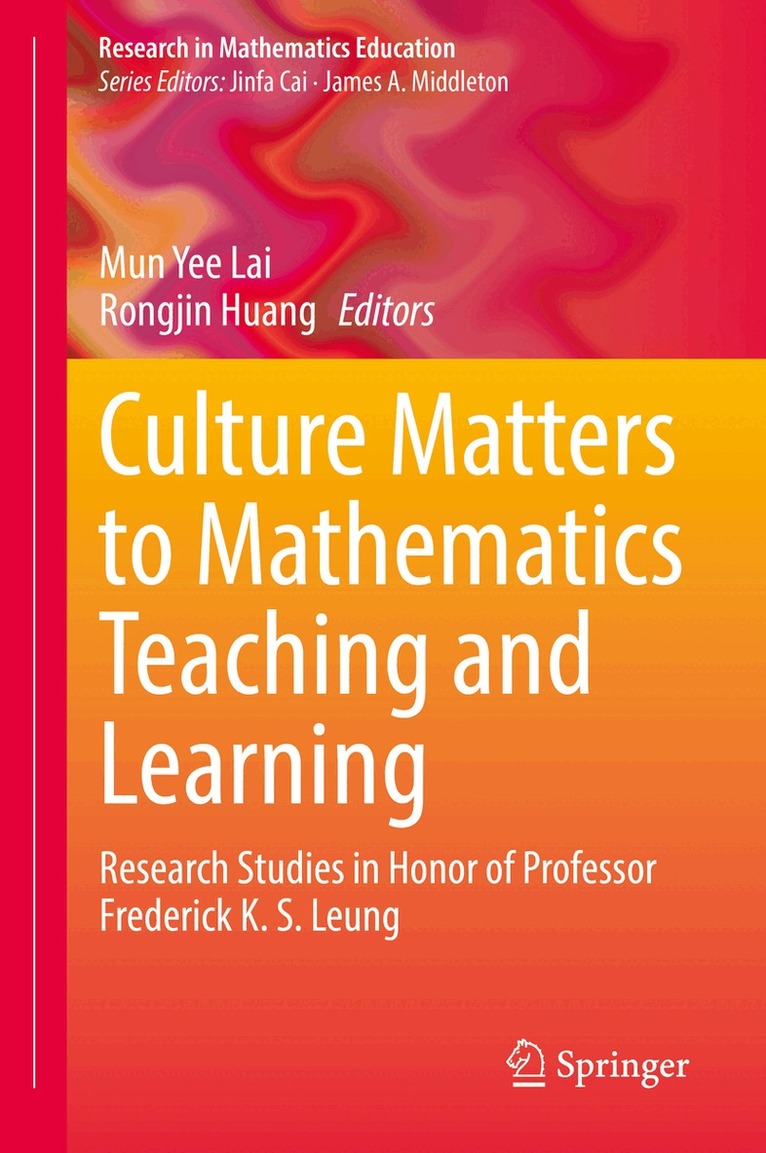
Culture Matters to Mathematics Teaching and Learning
1871 kr
Skickas inom 10-15 vardagar
Beskrivning
This book, compiled in honor of Chair Professor Frederick K. S. Leung, contributes to revisiting, renewing and enriching the knowledge of cultural matters to mathematics education, widening the horizon in the use of cultural perspectives to explain the characteristics of classroom teaching and learning in East Asia, and to explain/re-interpret the differences in teacher knowledge and beliefs between East Asian and Western countries. Multiple research methods are used to explore how different cultures influence mathematics education. In particular, the book discusses the comparative studies of mathematics education, the influence of different cultures on mathematics teaching and learning, and the use of the Confucian Heritage Culture to explain the phenomenon of superior mathematics achievement of East Asian students. The research methods include qualitative approaches, quantitative approaches (such as structured equation modelling, exploratory factor analysis and confirmation factoranalysis), case studies and a meta-analysis of the literature review.This book is dedicated to Chair Professor Frederick K. S. Leung’s (Hans Freudenthal Medallist 2013 and President of ICMI 2021-2024), one of the pioneers in investigating the cultural differences in mathematics education and establishing a framework for the relationship between cultures and mathematics educations. This book acknowledges his many contributions to the field and showcases promising research advancements that sparked directly or indirectly from his intellectual contributions to different mathematics educators globally.
Produktinformation
- Utgivningsdatum: 2025-06-19
- Mått: 155 x 235 x 21 mm
- Vikt: 586 g
- Format: Inbunden
- Språk: Engelska
- Antal sidor: 264
- Förlag: Springer International Publishing AG
- Serie: Research in Mathematics Education
- ISBN: 9783031905179
Utforska kategorier
Betyg & recensioner
0 recensioner
Inga recensioner tillgängliga.