• Fri frakt över 249 kr
  • •
  • Snabba leveranser
  • •
  • Billiga böcker
Kundservice

Du är på sajten för privatpersoner.

Företag, bibliotek eller offentlig verksamhet?

Du handlar på classic.bokus.com, där alla dina funktioner finns intakta.
Till classic.bokus.com
Bokus logotyp. Gå till startsidan.
  • Erbjudanden
  • Student
  • Topplistor
  • Barn & ungdom
  • Bokus Play
  • E-böcker
  • Ljudböcker
  • Pocketböcker
  • Spel och pussel

Pocketfynda! Hundratals böcker för 49 kr/st →

Sidfot

Mina sidor

    Hjälp

    • Kundservice
    • Vanliga frågor och svar
    • Frakt och leverans
    • Retur vid ångerrätt
    • Reklamera vara
    • Betalning
    • Köpvillkor
    • Allmänna villkor
    • Information om webbplatsens tillgänglighet

    Om Bokus

    • Om oss
    • Pressrum
    • För studenter
    • För företag
    • För bibliotek och offentlig verksamhet
    • För leverantörer
    • Hållbarhet

    Populärt

    • Aktuella erbjudanden
    • Presentkort
    • Studentlitteratur
    • Nya böcker
    • Topplistor
    • Signerade böcker
    • Engelska böcker

    Inspiration

    • Boktips
    • BookTok
    • Barnbokskaraktärer
    • Populära författare
    Logotyp för Bokus
    Följ oss på Facebook (extern länk)Följ oss på Instagram (extern länk)Följ oss på YouTube (extern länk)Följ oss på TikTok (extern länk)
    bokus @ CookiesAnpassa cookiesIntegritetspolicyKöpvillkor
    Till Citymail hemsida (extern länk)Till Budbee hemsida (extern länk)Till Postnord hemsida (extern länk)Till Schenker hemsida (extern länk)Till Early Bird hemsida (extern länk)Till Walleys hemsida (extern länk)
    1. Naturvetenskap och teknik
    2. Matematik och naturvetenskap
    3. Biologi
    4. Biovetenskap

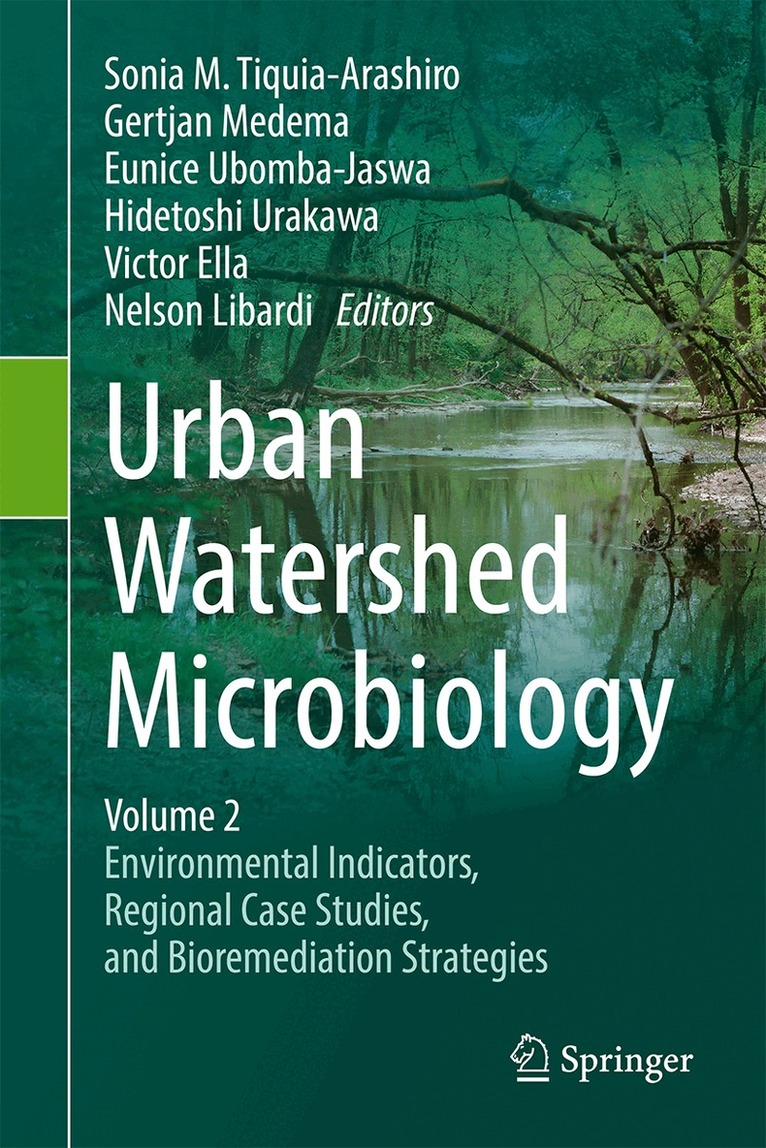
    Urban Watershed Microbiology, Volume 2

    Environmental Indicators, Regional Case Studies, and Bioremediation Strategies

    AvSonia M. Tiquia-Arashiro,Gertjan Medema

    Inbunden, Engelska, 2025

    2 471 kr

    Beställningsvara. Skickas inom 10-15 vardagar. Fri frakt över 249 kr.

    Beskrivning

    This book addresses significant gaps in our understanding of how watershed microbial structures and functions respond to the pressures of urbanization. It consolidates rapidly evolving, yet often fragmented, global data on watershed microbiomes, providing critical insights into the impacts of urban pollution, human health risks, and long-term ecological consequences.Featuring the latest technological advancements in biological monitoring, microbial source-tracking technologies, and strategies for effective watershed management, this volume serves as a comprehensive and reliable source for the current state of urban watershed microbiology. It examines the unique challenges urbanization presents to ecosystems, especially in terms of atmospheric chemistry, hydrology, vegetation, and how these factors disrupt microbial communities that mediate essential ecosystem services like water purification, nutrient recycling, and degradation of pollutants.Together this two-volume work delves into the mechanisms behind the urban watershed syndrome—ecological degradation of streams—and explores many unanswered questions that hinder progress in understanding urban watershed microbiomes. With original research articles, reviews, and perspectives, this collection is a key resource for microbiologists, environmental scientists, engineers, and professionals involved in water quality, ecosystem management, and land-use planning. The hope is that this volume will inspire new breakthroughs, drive further research, and ultimately help shape effective strategies for addressing the ecological challenges of urban watersheds.

    Produktinformation

    • Utgivningsdatum:2025-10-12
    • Mått:155 x 235 x 43 mm
    • Vikt:1 183 g
    • Format:Inbunden
    • Språk:Engelska
    • Antal sidor:671
    • Förlag:Springer Nature Switzerland AG
    • ISBN:9783032058089

    Utforska kategorier

    • Biovetenskap inom Naturvetenskap och teknik
    • Biologi inom Naturvetenskap och teknik
    • Hydrologi inom Naturvetenskap och teknik

    Mer om författaren

    Sonia Tiquia-Arashiro is a Professor of Microbiology at the University of Michigan-Dearborn, with primary research interests in biotechnology for clean water, renewable energy, and healthy ecosystems. Her broader interests include the analysis and management of complex adaptive systems, as well as microbiology education and science literacy. She serves as Associate Editor for Environmental Technology and Frontiers in Microbiology, and continues to contribute to global discussions on water sustainability, environmental microbiology, and biotechnology.Gertjan Medema is a part-time Chair on Water & Health at Delft University of Technology and Principal Microbiologist at KWR Water Research Institute. He has expertise in waterborne pathogen detection and epidemiology, leading research on SARS-CoV-2 sewage surveillance and investigating a Legionella outbreak in Flint, Michigan. Since 1991, he has advised the WHO on water microbiological guidelines and contributed to responses during outbreaks like SARS and Ebola. He also advises the European Commission on water guidelines and directs KWR’s WHO Collaborating Centre on Water Quality.Hidetoshi Urakawa is a Professor of Environmental Science at Florida Gulf Coast University and a Courtesy Professor at the University of South Florida. His research covers aquatic ecology, environmental microbiology, and ecosystem processes, with a focus on the nitrogen cycle, cyanobacteria dynamics, and marine species feeding ecology. He also works in aquaculture, biotechnology, and nutrient reduction technologies. Dr. Urakawa is the editor-in-chief of the International Journal of Microbiology.Nelson Libardi is a faculty member at the Federal University of Santa Catarina (UFSC) in Brazil, where he focuses on research and academic activities related to bioprocesses. He holds a Ph.D. in Bioprocess Engineering and Biotechnology from the Federal University of Paraná. His expertise is in environmental and industrial biotechnology, specializing in biological processes for wastewater treatment and resource recovery, with a strong emphasis on developing sustainable biotechnological solutions to improve environmental practices.Eunice Ubomba-Jaswa is a Research Manager in Water Resources Quality & Management at the Water Research Commission in Pretoria, South Africa. She specializes in water quality and pollution control, focusing on sustainable environmental remediation technologies. Her research covers wastewater treatment, waterborne pathogens, and the broader impacts of pollution on health and ecosystems. Dr. Ubomba-Jaswa is an advocate for water sustainability and has contributed to peer-reviewed journals and international conferences on environmental science and policy.Victor Ella is a Professor of Land and Water Resources Engineering at the University of the Philippines Los Baños. His research focuses on hydrologic modeling, groundwater hydrology, water quality, irrigation engineering, and soil conservation, with broader interests in contaminant transport, erosion, soil physics, water resources planning, climate change, IoT-based irrigation, and watershed-scale hydrologic modeling.

    Innehållsförteckning

    • Section 4: Microbial Response Indicators of Water quality, and Aquatic Ecosystems Change.- Threats of Cyanotoxins in a Changing Climate – A Review of Environmental Persistence and Health Effects.- Enzymatic Responses of Freshwater Microbial Communities to Fecal and Chemical Pollution.- Cyanobacterial Blooms and Associated Hydrogen Peroxide Dynamics.- Impacts of Environmental Regime Changes on Benthic Biofilm Community.- Metabolic Function and Carbon Utilization in Microbial Communities of Surface Waters and Sediments in Urban River and Lake Watersheds.- Biodiversity Indicators for Wetland Condition Assessment and Monitoring.- Exploring Microbial Response Indicators to Environmental Disturbances in Freshwater Ecosystems.- Assessing links between climate change indicators and algal occurrence in contemporary ecosystems.- Section 5: Regional and Country-Specific Perspectives on Urban Watershed Health Worldwide.- Nitrogen Cycling Processes and Their Microbial-driven Mechanisms in Major Watersheds of China.- Anthropogenic Changes in the Microbiological and Hydrochemical Water Quality of Southern Baikal tributaries (East Siberia).- From Waste to Water Quality: How Human Activities is Shaping Lake Victoria's Microbiome and Ecosystem Health.- Influence of Hydrometeorological Events on Lake Turbidity in Southern Chile.- Public Health at the Intersection of Climate Change and Faecal Contamination: An example from the shores of Vembanad Lake.- The Philippine Environmental Microbiological Water Quality Criteria: History and Current Directions.- Watershed Ecosystem Services of Chittagong Hill Districts, Bangladesh: Challenges and A Way Forward.- Section 6: Emerging contaminants and Bioremediation Strategies.- Ecological Factors Influencing the Biodegradation of Steroid Estrogens in Water Columns: The Interplay of Microbes and Natural Organic Matter.- Hydrogen Peroxide Production in Freshwater Environments: A Minireview.- Microbiology of Anaerobic Wastewater Treatment Processes Treating Purified Terephthalic Acid and Related Aromatic Compounds.- Biodegradation Potential of Urban Watershed Bacteria for Remediation Across an Array of Organic Contaminants.- Biosorption Dynamics in Bi-Metal solutions by Bacterial Strains Isolated from an Urban Watershed.- Metal-Microbe Interactions in Urban Watersheds: A Study of Siderophore Production.