• Fri frakt över 249 kr
  • •
  • Snabba leveranser
  • •
  • Billiga böcker
Kundservice

Du är på sajten för privatpersoner.

Företag, bibliotek eller offentlig verksamhet?

Du handlar på classic.bokus.com, där alla dina funktioner finns intakta.
Till classic.bokus.com
Bokus logotyp. Gå till startsidan.
  • Erbjudanden
  • Nyheter
  • Student
  • Topplistor
  • Barn & ungdom
  • Bokus Play
  • E-böcker
  • Pocketböcker
  • Spel & pussel

10% rabatt på allt med kod: NYSTART10 →

Sidfot

Mina sidor

    Hjälp

    • Kundservice
    • Vanliga frågor och svar
    • Frakt och leverans
    • Retur vid ångerrätt
    • Reklamera vara
    • Betalning
    • Köpvillkor
    • Allmänna villkor
    • Information om webbplatsens tillgänglighet

    Om Bokus

    • Om oss
    • Pressrum
    • För studenter
    • För företag
    • För bibliotek och offentlig verksamhet
    • För leverantörer
    • Hållbarhet

    Populärt

    • Aktuella erbjudanden
    • Presentkort
    • Studentlitteratur
    • Nya böcker
    • Topplistor
    • Signerade böcker
    • Engelska böcker

    Inspiration

    • Boktips
    • BookTok
    • Populära bokserier
    • Barnbokskaraktärer
    • Populära författare
    Logotyp för Bokus
    Följ oss på Facebook (extern länk)Följ oss på Instagram (extern länk)Följ oss på YouTube (extern länk)Följ oss på TikTok (extern länk)
    bokus @ CookiesAnpassa cookiesIntegritetspolicyKöpvillkor
    Till Citymail hemsida (extern länk)Till Budbee hemsida (extern länk)Till Postnord hemsida (extern länk)Till Schenker hemsida (extern länk)Till Early Bird hemsida (extern länk)Till Walleys hemsida (extern länk)
    1. Historia och arkeologi
    2. Historia
    3. Europas historia

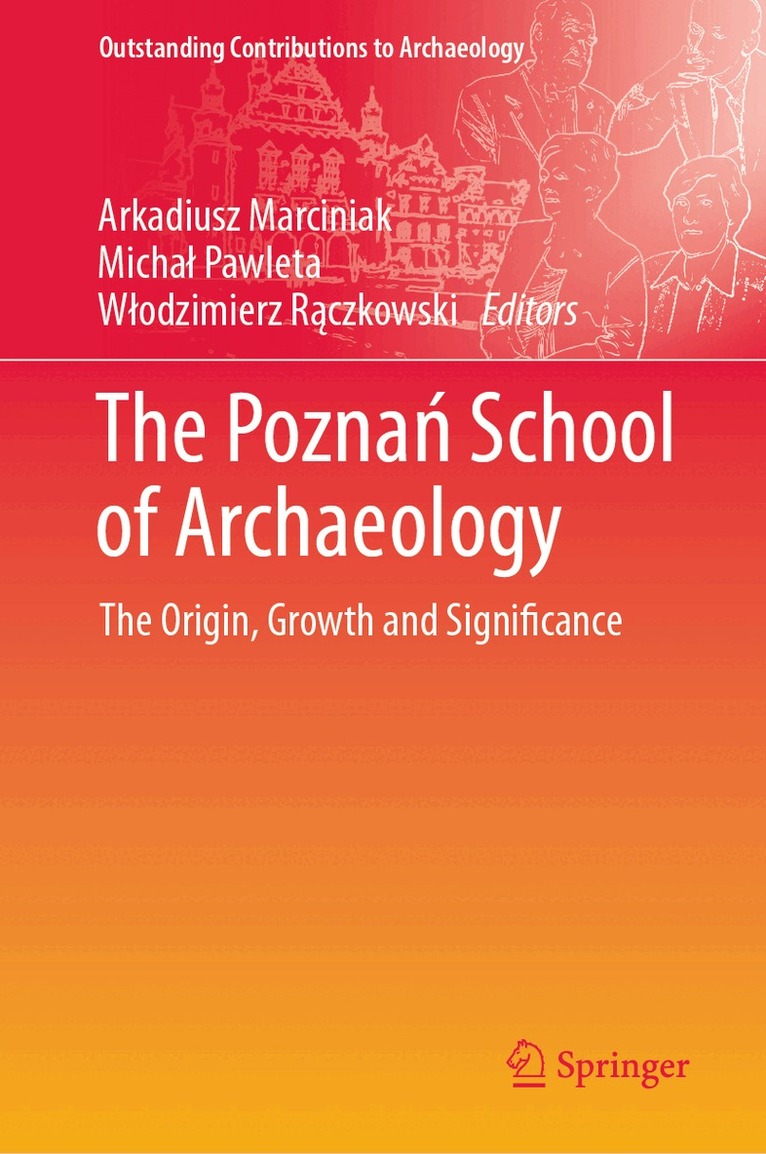
    Poznań School of Archaeology

    The Origin, Growth and Significance

    AvArkadiusz Marciniak,Michał Pawleta

    Inbunden, Engelska, 2026

    Del i serien Outstanding Contributions to Archaeology

    1 674 kr

    Beställningsvara. Skickas inom 10-15 vardagar. Fri frakt över 249 kr.

    Beskrivning

    This book provides a comprehensive overview of the Poznań School of Archaeology, an original mode of archaeological thought that emerged in Poznań in the 1960s and 1970s. The book examines the significance of this original Polish archaeological thought in its broad academic context and places it in the realm of the social and intellectual framework of Europe. It is directed to the worldwide community of researchers interested in understanding the nature of the studies of the past and places this original and well-developed school of archaeological thought in its broad geographical and chronological perspective.The Poznań School of Archaeology made explicit efforts to break off ties with the culture-history paradigm and rejected the simplified functional and rigid deductive-nomological explanations. Developed in the context of non-Marxist historical materialism, over decades it transformed itself into a distinct and multifaceted archaeological research school embedded in the tradition of cultural studies, philosophy, history, and the natural sciences. The book is suitable for undergraduate and graduate programmes in archaeology and archaeological theory.

    Produktinformation

    • Utgivningsdatum:2026-01-03
    • Mått:155 x 235 x 21 mm
    • Vikt:580 g
    • Format:Inbunden
    • Språk:Engelska
    • Serie:Outstanding Contributions to Archaeology
    • Antal sidor:262
    • Förlag:Springer Nature Switzerland AG
    • ISBN:9783032078476

    Utforska kategorier

    • Europas historia inom Historia och arkeologi
    • Arkeologi inom Historia och arkeologi
    • Naturvetenskapens historia inom Naturvetenskap och teknik

    Mer om författaren

    Arkadiusz Marciniak - Professor of Archaeology at Adam Mickiewicz University in Poznań. In the years 2013-2019 he was Associate Professor at Flinders University. He was a visiting professor at Stanford University (twice) and at University College London. He is a scholarship holder of prestigious foundations, such as Humboldt, Fulbright, Andrew W. Mellon, Kosciuszko and Soros/Commonwealth Office. He is a corresponding member of the Polish Academy of Science and a member of Academia Europaea. His expertise is in the development of early farming communities in western Asia and central Europe and their progression to complex societies. He is an initiator and advocate of social zooarchaeology, a research paradigm aimed at investigating multifaceted social relations between humans and animals. His other interests comprise heritage pedagogies and contemporary challenges of heritage policies and strategies.  He directed and conducted numerous international research projects financially supported by such agencies and programs as Horizon2020, Culture 2007-2013, European Research Council, Erasmus Plus, DG Education and Culture Program, NWO HEAR JPICH or the Polish National Science Center. Michał Pawleta holds a position of associate professor at the Faculty of Archaeology of Adam Mickiewicz University in Poznań. His research interests include the social function of archaeology, uses and misuses of the past in the present, archaeological methods and theory, the protection and management of the archaeological heritage, heritage studies, heritage tourism, gender archaeology, and the archaeology of childhood. His numerous publications include a book Przeszłość we współczesności. Studium metodologiczne archeologicznie kreowanej przeszłości w przestrzeni społecznej (The Past in the Present: A Methodological Study of an Archaeologically Created Past in Social Space) published in 2016.Włodzimierz Rączkowski - professor, full time employment. From the beginning of his research and teaching work at Adam Mickiewicz University, he was interested in theoretical archaeology and applying theoretical concepts in settlement pattern studies. For 15 years he carried out excavations and archaeological surveys in Middle Pomerania (North Poland) managing interdisciplinary projects on changes in settlement patterns from the Bronze Age till the Middle Ages. In the late 1990s, he shifted his area of research into aerial archaeology and other remote sensing methods in archaeological research and the protection and management of archaeological heritage within theoretical contexts. He was (and is) involved in European projects, e.g. European Landscapes: past, present and future,  ArchaeoLandscapes Europe, RESEARCH, TRIQUETRA. He was Chairman of Aerial Archaeology Research Group (2008–2011) and Vice-chairman (2011–2014). His current research interests comprise theoretical archaeology, remote sensing methods in archaeology, GIS as a tool in archaeology, settlement pattern studies, and past landscape studies. He has supervised 13 PhDs.

    Innehållsförteckning

    • Chapter 1. The Poznań School of Archaeology. An Outline (Marciniak et al).- Part 1. The Emergence of the Poznań School of Archaeology.- Chapter 2. Poznań School of Methodology: Institutional History – Research Program - Main Achievements (Brzechczyn).- Chapter 3. The Poznań School of Methodology and Its Continuations (Grad).- Part 2. The Character and Different Facets of the Poznań School of Archaeology.- Chapter 4. An Apologia of Methodology of Archaeology at Adam Mickiewicz University, Poznań (Mamzer).- Chapter 5. Danuta Minta-Tworzowska and Her Role in Conceptualizing the Poznań School of Archaeology and Advancing the Methodology of Archaeology in Poland (Pawleta).- Chapter 6. Did/Do Early Traditional Peoples Have a History? (Pałubicka).- Chapter 7. “Archaeology is Anthropology or it is Nothing”. But What Kind of Anthropology? (Kowalski).- Chapter 8. Philosophical Reflections on the Sources of Prehistoric Symbolism (Woźny).- Chapter 9. Shaping Archaeological Awareness and the Idea of Socializing Archeology (Julkowska).- Part 3. The Reception of the Poznań School of Archaeology in Poland and Beyond.- Chapter 10. Ethnoarchaeology in Toruń and the Influence of the Poznań School of Methodology (Kowalewski).- Chapter 11. Philosophy of Archaeology and the Poznań School of Methodology (Lozny).- Chapter 12. Late Mesolithic and Early Neolithic Hunter–gatherer Cultural Processes in Cis-Baikal, Eastern Siberia: A Case Study in Darwinian Evolutionary Archaeology (Weber).