• Fri frakt över 249 kr
  • •
  • Snabba leveranser
  • •
  • Billiga böcker
Kundservice

Du är på sajten för privatpersoner.

Företag, bibliotek eller offentlig verksamhet?

Du handlar på classic.bokus.com, där alla dina funktioner finns intakta.
Till classic.bokus.com
Bokus logotyp. Gå till startsidan.
  • Erbjudanden
  • Nyheter
  • Student
  • Topplistor
  • Barn & ungdom
  • Bokus Play
  • E-böcker
  • Pocketböcker
  • Spel & pussel

10% rabatt på allt med kod: NYSTART10 →

Sidfot

Mina sidor

    Hjälp

    • Kundservice
    • Vanliga frågor och svar
    • Frakt och leverans
    • Retur vid ångerrätt
    • Reklamera vara
    • Betalning
    • Köpvillkor
    • Allmänna villkor
    • Information om webbplatsens tillgänglighet

    Om Bokus

    • Om oss
    • Pressrum
    • För studenter
    • För företag
    • För bibliotek och offentlig verksamhet
    • För leverantörer
    • Hållbarhet

    Populärt

    • Aktuella erbjudanden
    • Presentkort
    • Studentlitteratur
    • Nya böcker
    • Topplistor
    • Signerade böcker
    • Engelska böcker

    Inspiration

    • Boktips
    • BookTok
    • Populära bokserier
    • Barnbokskaraktärer
    • Populära författare
    Logotyp för Bokus
    Följ oss på Facebook (extern länk)Följ oss på Instagram (extern länk)Följ oss på YouTube (extern länk)Följ oss på TikTok (extern länk)
    bokus @ CookiesAnpassa cookiesIntegritetspolicyKöpvillkor
    Till Citymail hemsida (extern länk)Till Budbee hemsida (extern länk)Till Postnord hemsida (extern länk)Till Schenker hemsida (extern länk)Till Early Bird hemsida (extern länk)Till Walleys hemsida (extern länk)
    1. Naturvetenskap och teknik
    2. Matematik och naturvetenskap
    3. Biologi
    4. Biovetenskap
    • Nyhet

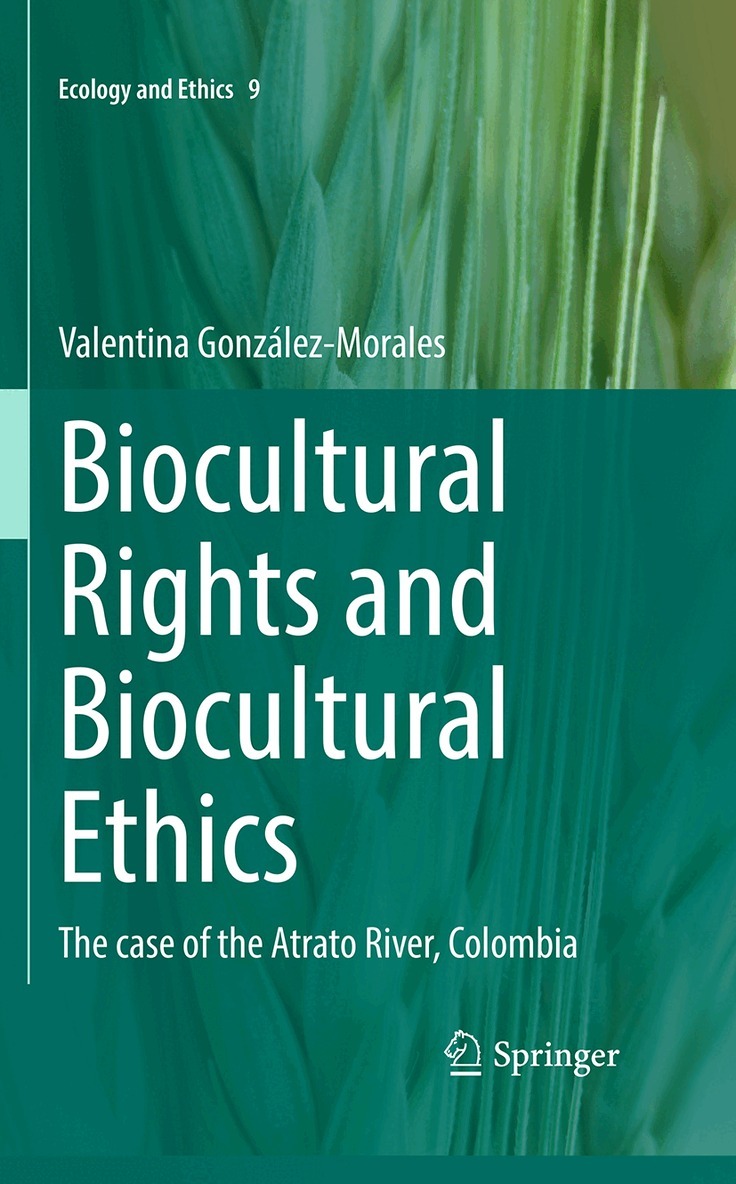
    Biocultural Rights and Biocultural Ethics

    The case of the Atrato River, Colombia

    AvValentina González-Morales

    Inbunden, Engelska, 2026

    Del i serien Ecology and Ethics

    470 kr

    Beställningsvara. Skickas inom 11-20 vardagar. Fri frakt över 249 kr.

    Beskrivning

    In 2016, Colombia introduced the concept of biocultural rights into its Constitution; an unprecedented legal development that has since shaped environmental and human rights discourse both nationally and internationally. An important moment in this shift was the recognition of the Atrato River as a subject of rights, establishing a legal mechanism to protect not only the ecosystem itself but also the Afro-Colombian communities whose cultural and spiritual identities are deeply intertwined with the river.This book explores the challenges of implementing biocultural rights in countries with weak governance structures. Legal recognition alone proves insufficient in contexts where state control is fragmented and power is often exercised by corporations, armed groups, and illicit networks. Addressing biocultural diversity requires engaging with cultural dimensions such as identity, worldviews, philosophical assumptions, and moral frameworks.Through an in-depth analysis of the Atrato River case, the 3Hs framework of biocultural ethics is applied to interconnect historical, biophysical, cultural, and political dimensions. This approach reveals the potential of biocultural rights to foster more equitable and sustainable forms of coexistence between human and other-than-human communities.Offering a critical perspective on legal innovation in fragile states, this book provides valuable insights for advancing biocultural conservation and transitioning toward governance models that support the flourishing of biocultural diversity.

    Produktinformation

    • Utgivningsdatum:2026-08-05
    • Mått:155 x 235 x undefined mm
    • Format:Inbunden
    • Språk:Engelska
    • Serie:Ecology and Ethics
    • Antal sidor:134
    • Förlag:Springer Nature Switzerland AG
    • ISBN:9783032125972

    Utforska kategorier

    • Biovetenskap inom Naturvetenskap och teknik
    • Miljövetenskap och miljöpolitik inom Naturvetenskap och teknik
    • Geografi inom Naturvetenskap och teknik

    Mer om författaren

    Valentina González-Morales is a Colombian environmental philosopher whose research focuses on biocultural ethics and the rights of nature, with a particular emphasis on the intersection of ecological and socio-environmental justice. In 2022, she earned her Ph.D. in Philosophy from the prestigious program in environmental philosophy, University of North Texas, USA, and later she joined the Department of Philosophy, Universidad de Cartagena, Colombia, where she is Assistant Professor.González-Morales’s academic work bridges philosophical traditions, drawing on both Western and Indigenous worldviews to propose situated, intercultural, and systemic frameworks for understanding human and other-than-human relationships. Her current work analyzes the case of the Atrato River in Colombia—recognized as a legal subject by the Constitutional Court through ruling T-622/16—through the lens of biocultural ethics, introducing the 3Hs (Habitats, Habits, and co-inhabitants) heuristic model to assess biocultural rights.In addition to her academic writing, she brings years of teaching experience at both the secondary and higher education levels, and remains committed to community-engaged scholarship, particularly in dialogue with Afro-Colombian and Indigenous communities affected by environmental degradation and systemic violence.

    Innehållsförteckning

    • My journey toward biocultural rights and biocultural ethics.- My biocultural journey in Colombia.- Building inclusive biocultural frameworks for co-inhabitation.- The structure of the book.- The Case of the Atrato River, Colombia.- Location of the Chocó region in Colombia.- Inhabitants of the Chocó Region.- Water: Ontologies Complementing the Paradigm of H2o.- Latin American Ontologies, Epistemologies, and Ethics.- Emberá Dobidá Ontologies, Epistemologies, and Ethics.- Biocultural Rights and Other Legal Measures for the Conservation of Nature.- Origin of the Term Biocultural.- Precedents of Biocultural Rights.- Atrato River as Subject of Biocultural Rights: Legal Processes and Philosophical Implications.- Legal Framework for Attributing Rights to Nature.- Colombia Legal Processes.- International Legal Processes.- Assessing the Case of the Atrato River Through the 3hs Lenses of the Biocultural Ethics.- Biocultural Ethics and the 3Hs Framework.- Habitat.- Conclusion.