• Fri frakt över 249 kr
  • •
  • Snabba leveranser
  • •
  • Billiga böcker
Kundservice

Du är på sajten för privatpersoner.

Företag, bibliotek eller offentlig verksamhet?

Du handlar på classic.bokus.com, där alla dina funktioner finns intakta.
Till classic.bokus.com
Bokus logotyp. Gå till startsidan.
  • Erbjudanden
  • Nyheter
  • Student
  • Topplistor
  • Barn & ungdom
  • Bokus Play
  • E-böcker
  • Pocketböcker
  • Spel & pussel

10% rabatt på allt med kod: NYSTART10 →

Sidfot

Mina sidor

    Hjälp

    • Kundservice
    • Vanliga frågor och svar
    • Frakt och leverans
    • Retur vid ångerrätt
    • Reklamera vara
    • Betalning
    • Köpvillkor
    • Allmänna villkor
    • Information om webbplatsens tillgänglighet

    Om Bokus

    • Om oss
    • Pressrum
    • För studenter
    • För företag
    • För bibliotek och offentlig verksamhet
    • För leverantörer
    • Hållbarhet

    Populärt

    • Aktuella erbjudanden
    • Presentkort
    • Studentlitteratur
    • Nya böcker
    • Topplistor
    • Signerade böcker
    • Engelska böcker

    Inspiration

    • Boktips
    • BookTok
    • Populära bokserier
    • Barnbokskaraktärer
    • Populära författare
    Logotyp för Bokus
    Följ oss på Facebook (extern länk)Följ oss på Instagram (extern länk)Följ oss på YouTube (extern länk)Följ oss på TikTok (extern länk)
    bokus @ CookiesAnpassa cookiesIntegritetspolicyKöpvillkor
    Till Citymail hemsida (extern länk)Till Budbee hemsida (extern länk)Till Postnord hemsida (extern länk)Till Schenker hemsida (extern länk)Till Early Bird hemsida (extern länk)Till Walleys hemsida (extern länk)
    1. Psykologi och pedagogik
    2. Pedagogik
    3. Studieteknik och inlärningsförmåga

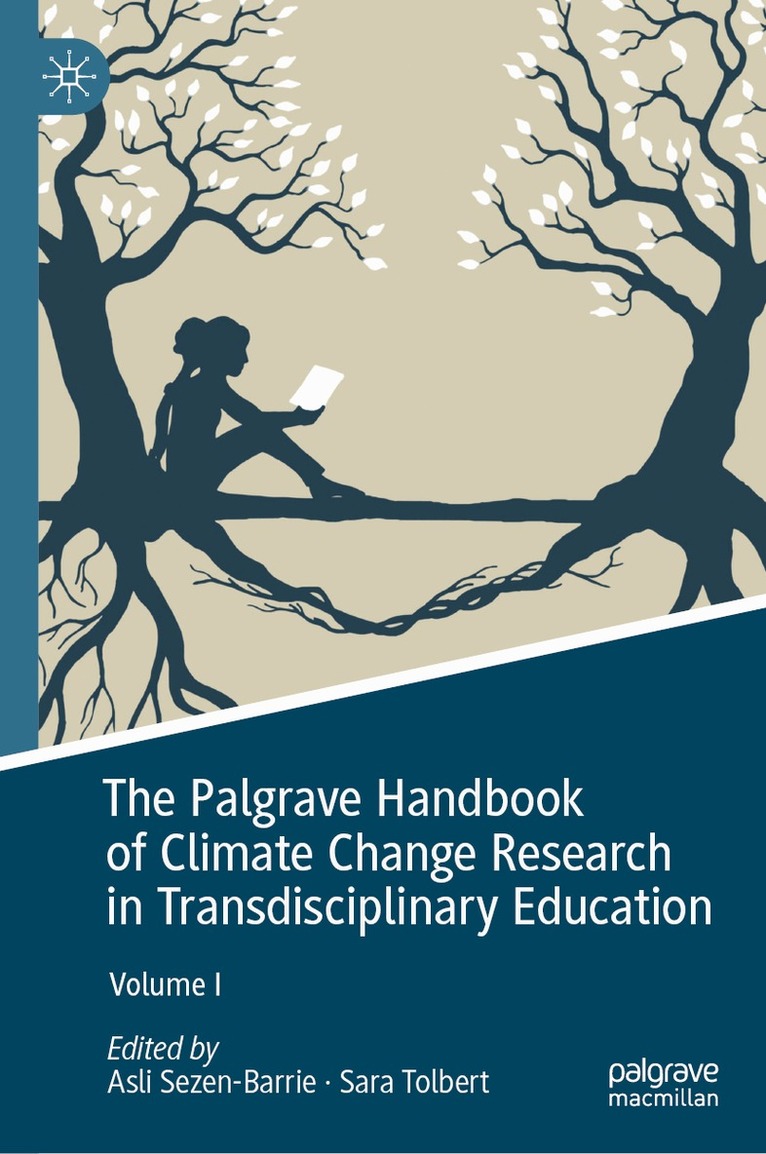
    Palgrave Handbook of Climate Change Research in Transdisciplinary Education

    Volume 1

    AvAsli Sezen-Barrie,Sara Tolbert

    Inbunden, Engelska, 2026

    Del i serien Palgrave Studies in Education and the Environment

    3 029 kr

    Beställningsvara. Skickas inom 10-15 vardagar. Fri frakt över 249 kr.

    Beskrivning

    This comprehensive and authoritative handbook, the first of two volumes, brings together critical themes in climate change education to help scholars and educators navigate the field of climate change education studies. While climate change education has been evolving and growing with scholars from a variety of fields (e.g., environmental education, science education, anthropology), there is a dearth of a resource book that brings together the scholarship with globally recognized scholars and section editors who have contributed significantly to climate change education. Combining theoretical, conceptual, pedagogical and empirical works, as well as synthesis chapters that will draw from relevant literature, this handbook provides future directions at the nexus of justice and equity-oriented research, creative scholarship, and policy and practice for climate change education.

    Produktinformation

    • Utgivningsdatum:2026-05-21
    • Mått:155 x 235 x 60 mm
    • Vikt:1 986 g
    • Format:Inbunden
    • Språk:Engelska
    • Serie:Palgrave Studies in Education and the Environment
    • Antal sidor:1 045
    • Förlag:Springer Nature Switzerland AG
    • ISBN:9783032144256

    Utforska kategorier

    • Studieteknik och inlärningsförmåga inom Psykologi och pedagogik
    • Biovetenskap inom Naturvetenskap och teknik
    • Miljövetenskap och miljöpolitik inom Naturvetenskap och teknik

    Mer om författaren

    Asli Sezen-Barrie is the Stacey Nicholas Endowed Chair Professor at University of California, Irvine, USA where she leads the statewide Environmental and Climate Change Literacy Projects (ECCLPs). Through community-based research, her scholarship contributes to advancing justice-oriented science education by centering epistemic practices, data storying, and transdisciplinary approaches that empower educators and youth to address urgent climate challenges.Sara Tolbert is Professor at Monash University in Melbourne, Australia, where she leads the Science Education Research Group and co-directs the Science Education in the Anthropocene Impact Lab. Tolbert’s scholarship is transdisciplinary, drawing from critical theory, curriculum studies, feminist science studies, and participatory (citizen/activist) sciences to reimagine science education.

    Innehållsförteckning

    • Chapter 1. Flourishing Futures Through Collective Action.- Chapter 2.Climate Change Education.- Chapter 3. Educating for Climate Futures.- Chapter 4.Applying an Afrofuturistic Climate-Environmental (ACE) Justice Literacy within K-12 Classrooms and Learning Spaces.- Chapter 5. Transformative Transdisciplinarity Education for Ecojustice.- Chapter 6. Layered Landscapes.- Chapter 7. From Levels of STEM Integration to Practice.- Chapter 8. Voices from the Grassroots Intergenerational Movement for Climate Education and Action in New York State.- Chapter 9. Education for Adaptation, Resilience, and Transformation.- Chapter 10. Critical climate pedagogies.- Chapter 11.Curricular Representations of Adaptation, Resilience, and Transformation.- Chapter 12. Environmental civic science.- Chapter 13. Expansive learning and possibility knowledge(s).- Chapter 14. Critical Thinking in Climate Change Education.- Chapter 15. Critical Thinking Skills of STEM Teachers While Designing Climate Change Lessons.- Chapter 16. Secondary Students’ Visions of ‘Ideal’ Material-Semiotic Networks, Possibly Supporting Increased Global Ecojustice.- Chapter 17. Using action-oriented biodiversity education to promote socioscientific reasoning as critical thinking.- Chapter 18. Critical thinking and action on a pressurized Planet.- Chapter 19. Intercultural dialogue and critical thinking.- Chapter 20. Freeing Elpis from Pandora’s Box.- Chapter 21. Teaching Climate Change as a Socio-Scientific Issue.- Chapter 22. Ocean literacy for critical thinking and action on climate change.- Chapter 23. Transdisciplinary Teacher Education for Climate Change Education.- Chapter 24. What Are Asking of Climate Change Educators?.- Chapter 25. Teachers’ Literacy-based Climate Change Learning through a Knowledge-building Book Club.- Chapter 26. Supporting upper secondary physics teachers in project-based climate education through research-practice partnership.- Chapter 27. Teacher education for social-ecological challenges.- Chapter 28. Climate Change Education in the Caribbean.- Chapter 29. Embedding and Enacting Climate Change Education in Faculties of Education in Canada.- Chapter 30. Ethics of Care and Pedagogies of Hope for Climate Change Education in Teacher Education.- Chapter 31. Navigating Climate Change Teacher Education.- Chapter 32. In-service teachers and climate change education.- Chapter 33. Teacher Education for Climate Change.- Chapter 34. Promoting critical emotional awareness in climate-change education.- Chapter 35. Teacher Education for Local Solutions Through Global Education Handbook on Climate Change Education.- Chapter 36. Fostering epistemic agency in climate change education.- Chapter 37. Supporting pre-service science teacher learning about sociopolitical and scientific dynamics of climate change through local phenomena.- Chapter 38. Climate Change Education in Informal Science Settings.- Chapter 39. Educating for Climate Action and Justice.- Chapter 40. How to Ensure Your Climate Messages Inspire Climate Action.- Chapter 41. Crossing Contexts.- Chapter 42. The Importance of Visual Literacy for Climate Outreach And Education.- Chapter 43. Climate Action Projects Connect Youth to Communities.- Chapter 44. “We are the Creative Generation”.- Chapter 45. National Audubon Society.- Chapter 46. Empowering Communities through Citizen Science.- Chapter 47. Climate Communication Through Media—Challenges, Opportunities, and Hope.- Chapter 48. Applying Inclusive Approaches to Climate Change Communication.- Chapter 49. What Kids Are Watching and What's Missing.- Chapter 50. Nurturing Environmental Stewardship with Molly Of Denali.- Chapter 51. Preparing the Next Generation of Latinos to Thrive by Advancing Science-Based, Climate-Resilient Parenting through Media and Local Communities.- Chapter 52. Humor as a Tool for Communicating Climate Information and Navigating Misinformation.