• Fri frakt över 249 kr
  • •
  • Snabba leveranser
  • •
  • Billiga böcker
Kundservice

Du är på sajten för privatpersoner.

Företag, bibliotek eller offentlig verksamhet?

Du handlar på classic.bokus.com, där alla dina funktioner finns intakta.
Till classic.bokus.com
Bokus logotyp. Gå till startsidan.
  • Erbjudanden
  • Nyheter
  • Student
  • Topplistor
  • Barn & ungdom
  • Bokus Play
  • E-böcker
  • Pocketböcker
  • Spel & pussel

10% rabatt på allt med kod NYSTART10 →

Sidfot

Mina sidor

    Hjälp

    • Kundservice
    • Vanliga frågor och svar
    • Frakt och leverans
    • Retur vid ångerrätt
    • Reklamera vara
    • Betalning
    • Köpvillkor
    • Allmänna villkor
    • Information om webbplatsens tillgänglighet

    Om Bokus

    • Om oss
    • Pressrum
    • För studenter
    • För företag
    • För bibliotek och offentlig verksamhet
    • För leverantörer
    • Hållbarhet

    Populärt

    • Aktuella erbjudanden
    • Presentkort
    • Studentlitteratur
    • Nya böcker
    • Topplistor
    • Signerade böcker
    • Engelska böcker

    Inspiration

    • Boktips
    • BookTok
    • Populära bokserier
    • Barnbokskaraktärer
    • Populära författare
    Logotyp för Bokus
    Följ oss på Facebook (extern länk)Följ oss på Instagram (extern länk)Följ oss på YouTube (extern länk)Följ oss på TikTok (extern länk)
    bokus @ CookiesAnpassa cookiesIntegritetspolicyKöpvillkor
    Till Citymail hemsida (extern länk)Till Budbee hemsida (extern länk)Till Postnord hemsida (extern länk)Till Schenker hemsida (extern länk)Till Early Bird hemsida (extern länk)Till Walleys hemsida (extern länk)
    1. Naturvetenskap och teknik
    2. Geovetenskap
    3. Miljövetenskap och miljöpolitik

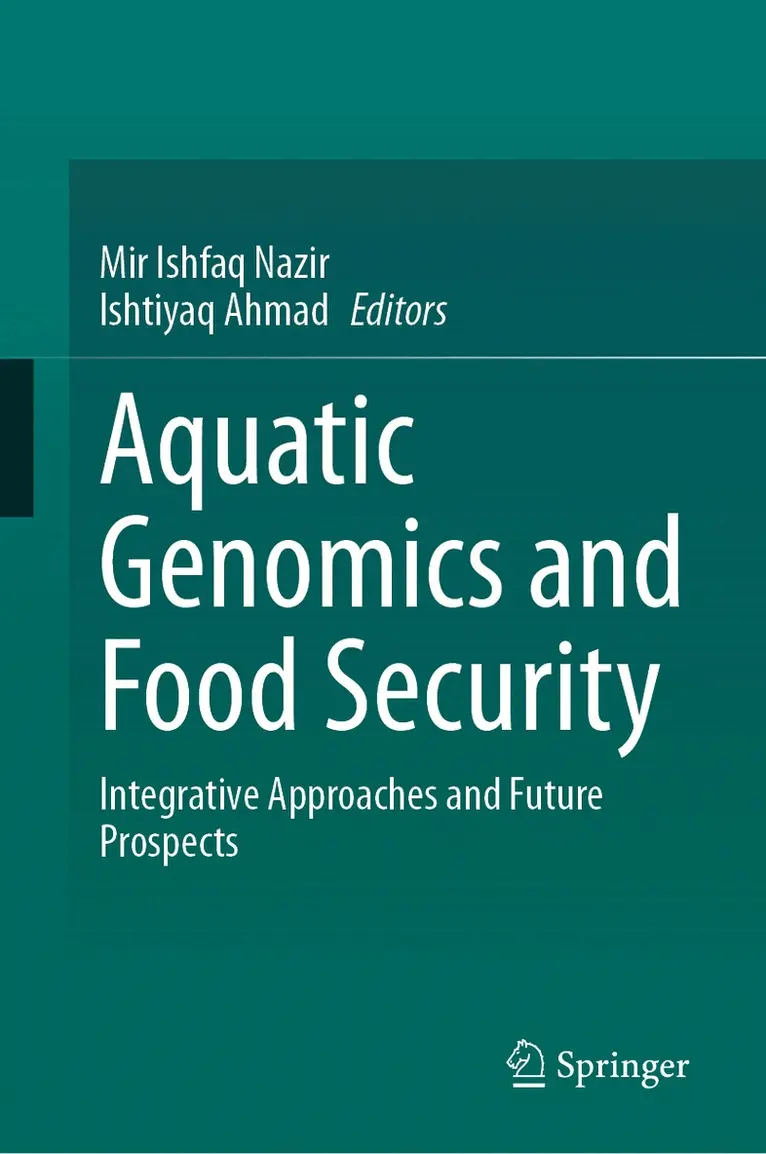
    Aquatic Genomics and Food Security

    Integrative Approaches and Future Prospects

    AvMir Ishfaq Nazir,Ishtiyaq Ahmad

    Inbunden, Engelska, 2026

    2 488 kr

    Beställningsvara. Skickas inom 10-15 vardagar. Fri frakt över 249 kr.

    Beskrivning

    Fish and other aquatic animals play an essential role in ensuring food and nutrition security in many countries where a significant portion of the population is poor and undernourished. These aquatic foods provide a rich source of high-quality protein, numerous micronutrients and fatty acids vital for human brain development. In low-income, food-deficit regions, fish is often the most affordable and commonly consumed animal-source food, making it a crucial component in diversifying diets that are otherwise heavily reliant on starchy staples. Additionally, fish consumption enhances food and nutrition security beyond its inherent nutrient content by facilitating the absorption of nutrients from plant-based foods in the diet. While fish is commonly associated with food security through its protein content, its true value lies in being a rich source of micronutrients and lipids. It provides easily digestible, high-quality proteins and healthy fats, along with essential nutrients like iodine, vitamin D, and calcium and serves as the primary source of omega-3 fatty acids in the human diet.Aquatic Genomics and Food Security: Integrative Approaches and Future Prospects delves into state-of-the-art strategies, offering insights into omic technologies in aquaculture for sustainable practices and global food security. Nutrigenomics provides a comprehensive understanding of how nutrients impact gene regulation and the pathways involved in nutrient utilization. Omic technologies, such as transcriptome analyses during early developmental stages, reveal transcript levels and differential gene expression during fish ontogenetic development, shedding light on larval nutrition mechanisms. This comprehensive book delves into the application of proteomic technologies to understand the protein expression profiles in aquatic organisms, providing insights into growth, health, and disease resistance by highlighting how proteomics can optimize feed formulations, improve fish health, and enhance overall productivity. Additionally, advanced microbiome analyses through metagenomics are discussed, emphasizing the role of microbial communities in digestion and health. The importance of metabolomics is highlighted, showcasing how metabolite profiling identifies markers for nutrient utilization, leading to improved performance and higher production, thereby contributing to sustainable food security. The book seeks to integrate advanced omic approaches and future perspectives to optimize aquaculture nutrition, enhance fish health and growth, and support sustainable aquaculture practices for global food security.

    Produktinformation

    • Utgivningsdatum:2026-02-03
    • Mått:155 x 235 x 31 mm
    • Vikt:861 g
    • Format:Inbunden
    • Språk:Engelska
    • Antal sidor:449
    • Förlag:Springer Nature Switzerland AG
    • ISBN:9783032149701

    Utforska kategorier

    • Miljövetenskap och miljöpolitik inom Naturvetenskap och teknik
    • Tillverkningsteknik inom Naturvetenskap och teknik
    • Biovetenskap inom Naturvetenskap och teknik

    Mer om författaren

    Dr. Mir Ishfaq Nazir is an Assistant Professor in the Division of Fish Nutrition and Biochemistry, Faculty of Fisheries, SKUAST-K in Rangil, Ganderbal, Jammu and Kashmir, IndiaDr. Ishtiyaq Ahmad is an Assistant Professor in the Department of Zoology, University of Kashmir, Hazratbal, Srinagar, Jammu and Kashmir, India

    Innehållsförteckning

    • Introduction to Omics Technologies in Aquaculture Nutrition.- Nutrigenomics: Understanding the Interaction Between Diet, Genes, and Food Security in Aquaculture.- Proteomics in Aquaculture: Unraveling Protein Function and Expression for Enhanced Food Security.- Peptidomics: The Role of Bioactive Peptides in Aquaculture Nutrition and Their Impact on Food Security.- Metabolomics: Profiling Metabolic Pathways in Aquaculture to Promote Food Security.- Metagenomics: Exploring Microbial Communities in Aquaculture Environments for Sustainable Food Security.- Metagenomic Insights into Gut Microbiota and Fish Health for Improved Food Security.- Nutritional Security Through Advanced Omics Technologies in Aquaculture.- Challenges and Opportunities in Implementing Omics in Aquaculture for Food Security.- Epigenetics and Nutritional Regulation in Aquaculture: Implications for Food Security.- Omics-Driven Feed Development: From Raw Materials to Functional Feeds.- Genomic Selection in Aquaculture Breeding Programs: Advancing Food Security.- Transcriptomics in Aquaculture: Decoding Gene Expression for Improved Food Security.- Bioinformatics Tools and Data Integration in Aquaculture Omics to Enhance Food Security.- Future Outlook: The Impact of Omics on the Future of Aquaculture Nutrition.