• Fri frakt över 249 kr
  • •
  • Snabba leveranser
  • •
  • Billiga böcker
Kundservice

Du är på sajten för privatpersoner.

Företag, bibliotek eller offentlig verksamhet?

Du handlar på classic.bokus.com, där alla dina funktioner finns intakta.
Till classic.bokus.com
Bokus logotyp. Gå till startsidan.
  • Erbjudanden
  • Nyheter
  • Student
  • Topplistor
  • Barn & ungdom
  • Bokus Play
  • E-böcker
  • Pocketböcker
  • Spel & pussel

10% rabatt på allt med kod NYSTART10 →

Sidfot

Mina sidor

    Hjälp

    • Kundservice
    • Vanliga frågor och svar
    • Frakt och leverans
    • Retur vid ångerrätt
    • Reklamera vara
    • Betalning
    • Köpvillkor
    • Allmänna villkor
    • Information om webbplatsens tillgänglighet

    Om Bokus

    • Om oss
    • Pressrum
    • För studenter
    • För företag
    • För bibliotek och offentlig verksamhet
    • För leverantörer
    • Hållbarhet

    Populärt

    • Aktuella erbjudanden
    • Presentkort
    • Studentlitteratur
    • Nya böcker
    • Topplistor
    • Signerade böcker
    • Engelska böcker

    Inspiration

    • Boktips
    • BookTok
    • Populära bokserier
    • Barnbokskaraktärer
    • Populära författare
    Logotyp för Bokus
    Följ oss på Facebook (extern länk)Följ oss på Instagram (extern länk)Följ oss på YouTube (extern länk)Följ oss på TikTok (extern länk)
    bokus @ CookiesAnpassa cookiesIntegritetspolicyKöpvillkor
    Till Citymail hemsida (extern länk)Till Budbee hemsida (extern länk)Till Postnord hemsida (extern länk)Till Schenker hemsida (extern länk)Till Early Bird hemsida (extern länk)Till Walleys hemsida (extern länk)
    1. Naturvetenskap och teknik
    2. Matematik och naturvetenskap
    3. Biologi
    4. Biovetenskap

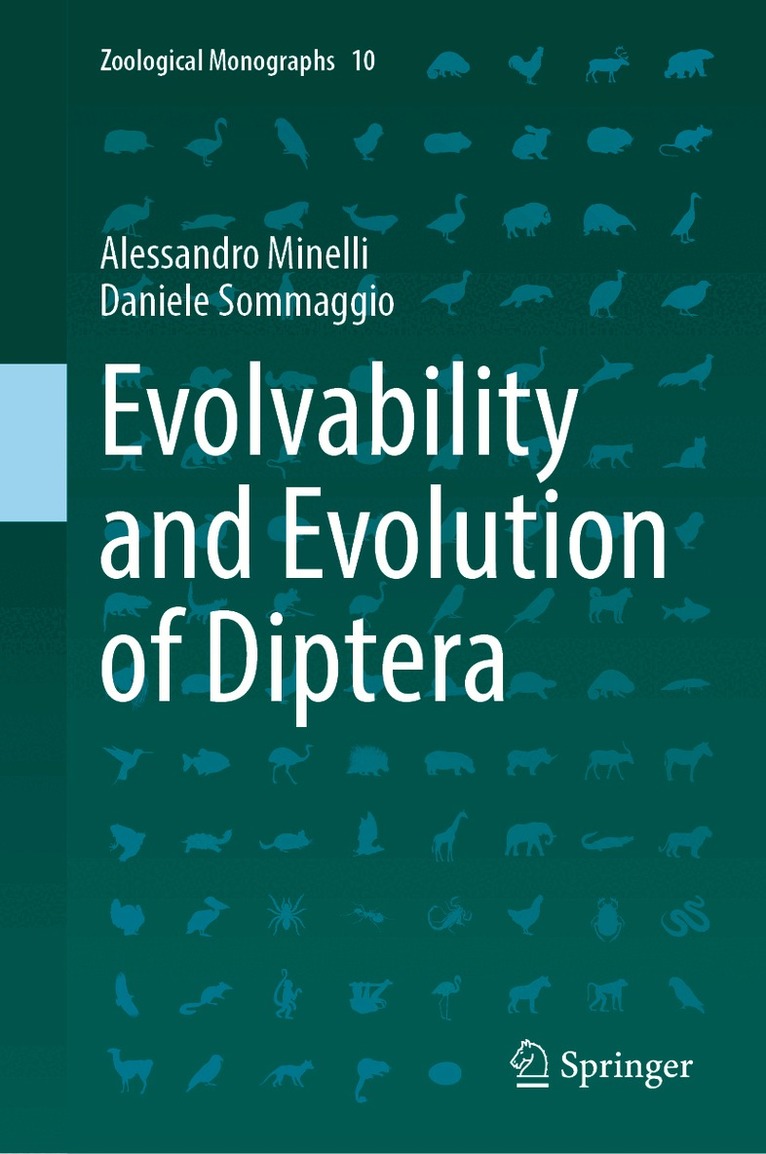
    Evolvability and Evolution of Diptera

    AvAlessandro Minelli,Daniele Sommaggio

    Inbunden, Engelska, 2026

    Del i serien Zoological Monographs

    2 990 kr

    Kommande

    Beskrivning

    Evolvability and Evolution of Diptera presents the first book-length exploration of phylo–evo–devo built around a single, extraordinarily diverse animal group. Integrating phylogeny, developmental biology, genetics, morphology, and fossils, the book examines how developmental systems shape evolutionary possibilities across multiple taxonomic levels and along the entire life cycle, from larva to adult.Rather than focusing on adaptation and the survival of the fittest, this volume addresses a central question of evolutionary developmental biology: the arrival of the fittest. By analyzing which changes are easy, difficult, or effectively impossible given a species’ developmental architecture, evolvability is placed at the heart of evolutionary explanation. Diptera offer an ideal case study, combining immense structural diversity, strong developmental modularity between larval and adult stages, and an unmatched depth of information available for model organisms such as Drosophila melanogaster.Bridging natural history and experimental developmental genetics, and re-examining classical and overlooked sources alongside modern data, this book offers a coherent and innovative framework for understanding evolutionary novelty, constraints, and disparity. It will be essential reading for evolutionary biologists, developmental biologists, and entomologists interested in how development channels the course of evolution.

    Produktinformation

    • Utgivningsdatum:2026-09-01
    • Mått:155 x 235 x undefined mm
    • Format:Inbunden
    • Språk:Engelska
    • Serie:Zoological Monographs
    • Antal sidor:368
    • Förlag:Springer Nature Switzerland AG
    • ISBN:9783032280589

    Utforska kategorier

    • Biovetenskap inom Naturvetenskap och teknik
    • Biologi inom Naturvetenskap och teknik
    • Djurböcker inom Djur och Natur

    Mer om författaren

    Alessandro Minelli was Professor of Zoology at the Faculty of Science of the University of Padova until his retirement in October 2011. Since the mid-90s, his main scientific interest has been evolutionary developmental biology, with particular reference to the origin and evolution of serial and modular structures such as arthropod segments and appendages. Alessandro is a founding member (1987) and Vice President (1997-99) of the European Society for Evolutionary Biology and a current or past member of the editorial boards of several scientific journals, including Evolution & Development, Frontiers in Zoology, Journal of Evolutionary Biology, Journal of Zoological Systematics and Evolutionary Research, Organisms Diversity and Evolution, Theory in Biosciences, and Zootaxa. He was the Editor-in-Chief of Frontiers in Evolutionary Developmental Biology from 2014 to 2017. In 2024 he has been awarded by the St. Petersburg Society of Naturalists the Kowalevsky Medal for his achievements in evolutionary developmental biology and comparative zoology.Daniele Sommaggio is an entomologist specializing in Diptera, with over twenty years of research on the taxonomy, morphology, and ecology of hoverflies (Diptera: Syrphidae). His work spans faunistic surveys, functional biodiversity, the use of insects as bioindicators, and the evolutionary interpretation of morphological patterns in Diptera. He has authored more than 80 scientific publications, contributed to the curation and study of major entomological collections, and served as reviewer for international initiatives in dipteran systematics and biodiversity assessment.

    Innehållsförteckning

    • 1. Introduction.- 1.1. Evolvability.- 1.2. Modularity and Innovation, an Evo-Devo Perspective.- 1.3. Why Diptera, and Very Short Chapters Outlines.- 2. Phylogenetic and Taxonomic Background.- 2.1. The Diptera in the Context of Holometabolous Insects.- 2.2. Phylogeny of Diptera .- 2.3. The Geological Time Scale .- 2.4. Phylogenetic Patterns of Species Diversity and Disparity.- 2.4.1 Small and large clades.- 2.4.2 The very large genera.- 3. The Scope of Variation.- 3.1. Scenarios of Character Variation in the Order Diptera.- 3.2. Exemplary Family I: Phoridae (Adults).- 3.3. Exemplary Family II: Syrphidae (Larvae).- 3.4. Exemplary Genus: Drosophila.- 3.5. Exemplary Species Group: Drosophila melanogaster.- 3.6 Exemplary traits.- 3.6.1 Sperm evolution in Cecidomyiidae.- 3.6.2 Compound eggs.- 3.6.3 Chromosome elimination.- 3.6.4 Wing markings and wing broad coloured areas.- 3.6.5 Evolvability of feeding habits.- 3.6.6 Sex determination.- 4. Model Species in Diptera - Selected Items of Genomics and Developmental Genetics.- 4.1. Introduction.- 4.2. Drosophila spp..- 4.3. Megaselia spp. (M. scalaris, M. abdita).- 4.4. Clogmia albipunctata.- 4.5. Anopheles gambiae, Aedes spp..- 5. Body Architecture: The Main Body Axis.- 5.1. Body Segments.- 5.1.1 Reduction of abdominal segments.- 5.1.2 Developmental Genetics: Segmentation and Hox Genes.- 5.1.3 Secondary segments in larvae.- 5.2. Tagmosis and Positional Information.- 5.2.1 Hox genes and positional hot spots of variation.- 5.2.2. Neotagmata in blepharicerid larvae.- 5.3. Asymmetry.- 5.3.1 Genitalia.- 5.3.2 Internal organs.- 6. Body appendages.- 6.1. Number of Antennomeres and Tarsomeres: Range and Patterns of Variation.- 6.2. Degrees of Articulation.- 6.3. Patterning and Positional Information.- 6.3.1. Haltere morphogenesis.- 6.3.2 Specialized legpairs.- 6.4. Developmental Genetics: Segmentation and Proximo-Distal Patterning of the Appendages.- 6.5. Paramorphism.- 7. Sexual dimorphism.- 7.1 Topology and Topography of Sexually Dimorphic Traits.- 7.2 Genetics of Sexually Dimorphic Traits.- 8. Patterns.- 8.1. Arrangement of Bristles as a Function of Cell Number and Cell Size.- 8.1.1 Basitarsus.- 8.1.2 Notal macrochaetae.- 8.2. Genetic Control of Wing Vein Patterns.- 8.3. Genetics Picture-winged Diptera.- 8.4 Genetics of Pigmentation.- 9. Size – Trends and Evolvability.- 9.1. Introduction.- 9.2. Miniaturization.- 9.3. Robustness.- 9.4. Allometry.- 9.5 Coaptations.- 10. Modularity.- 10.1. Modular vs. Systemic Change.- 10.2. Wings vs. Halters: Uncoupled Paths of Change.- 10.3. Male Sex Combs in Drosophila.- 10.4. Systemic vs. Modular Modifications in Miniaturized Diptera.- 11. Innovations.- 11.0 Origins of innovations.- 11.1. The Silk-Producing Cells in the Basitarsus of Male Empididae.- 11.2. The New Male Appendages of Themira.- 11.3. The Stalk-Eyed Flies.- 11.4. The proboscis of the Bombyliidae.- 11.5 The ‘wing eye’ of Eohelea.- 11.6. The Tympanal Hearing Organ of Ormia.- 11.7 Unusual sperm Types.- 12. The Complexity (and Diversity) of the Genotype→Phenotype Map.- 12.1. Genes to Phenotype.- 12.2. Evolution of Developmental Genes.- 12.3.Phenotypic Plasticity.- 12.4. Cell-Level Mechanisms (Division and Displacement) to Phenotype.- 12.5. Homoplasy.- 13. The Life Cycle.- 13.1. The Developmental Hourglass.- 13.2. Acceleration of Embryonic (and Post-Embryonic) Development .- 13.2.1 Turbo embryonic development.- 13.2.2 Compacted development and virtual stages.- 13.3. Number and Diversity of Larval Stages.- 13.3.1 Number of larval stages.- 13.3.2 The diversity of dipteran larvae.- 13.3.3 Polymetaboly (Stratiomyidae) and hypermetamorphosis (Acroceridae, Bombyliidae, Nemestrinidae) – what is new?.- 13.3.4 Diversity of pupae.- 13.3.5. Paedogenesis and morphological consequences.- 13.4. Gene Expression Along the Life Cycle.- 13.5. Stage-Specific Evolution.- 13.6. The Imaginal Discs.- 14. Overall Trends.- 14.1. Morphostasis.- 14.1.1 Bradytely - evidence of morphostasis from fossils.- 14.1.2 Cryptic species.- 14.2 Tachytelic Evolution.- 14.2. Changes by Loss: The Flightless Diptera.- 14.3. Out of context: Morphoclines and Williston’s law.- 14.4. Developmental Constraints on the Coevolution of Male/Female Genitalia .- 14.5. Developmental Constraints on the Evolution of Mimicry Between Hoverflies and Stinging Hymenopterans.- 14.6. Ecological Shifts.- 14.7. Evolutionary Dead Ends?.- 14.8. Extended Phenotypes: Plant Galls Induced by Dipterans.- 15. References.-  .- APPENDIX - Consensus Classification of Diptera and List of Genera and Species Cited in the Book .- Index to Taxa.- Subject Index.