• Fri frakt över 249 kr
  • •
  • Snabba leveranser
  • •
  • Billiga böcker
Kundservice

Du är på sajten för privatpersoner.

Företag, bibliotek eller offentlig verksamhet?

Du handlar på classic.bokus.com, där alla dina funktioner finns intakta.
Till classic.bokus.com
Bokus logotyp. Gå till startsidan.
  • Erbjudanden
  • Nyheter
  • Student
  • Topplistor
  • Barn & ungdom
  • Bokus Play
  • E-böcker
  • Pocketböcker
  • Spel & pussel

10% rabatt på allt med kod: NYSTART10 →

Sidfot

Mina sidor

    Hjälp

    • Kundservice
    • Vanliga frågor och svar
    • Frakt och leverans
    • Retur vid ångerrätt
    • Reklamera vara
    • Betalning
    • Köpvillkor
    • Allmänna villkor
    • Information om webbplatsens tillgänglighet

    Om Bokus

    • Om oss
    • Pressrum
    • För studenter
    • För företag
    • För bibliotek och offentlig verksamhet
    • För leverantörer
    • Hållbarhet

    Populärt

    • Aktuella erbjudanden
    • Presentkort
    • Studentlitteratur
    • Nya böcker
    • Topplistor
    • Signerade böcker
    • Engelska böcker

    Inspiration

    • Boktips
    • BookTok
    • Populära bokserier
    • Barnbokskaraktärer
    • Populära författare
    Logotyp för Bokus
    Följ oss på Facebook (extern länk)Följ oss på Instagram (extern länk)Följ oss på YouTube (extern länk)Följ oss på TikTok (extern länk)
    bokus @ CookiesAnpassa cookiesIntegritetspolicyKöpvillkor
    Till Citymail hemsida (extern länk)Till Budbee hemsida (extern länk)Till Postnord hemsida (extern länk)Till Schenker hemsida (extern länk)Till Early Bird hemsida (extern länk)Till Walleys hemsida (extern länk)
    1. Medicin
    2. Medicin: allmänt
    3. Samhällsmedicin och preventiv medicin
    4. Folkhälsa och hälsopedagogik

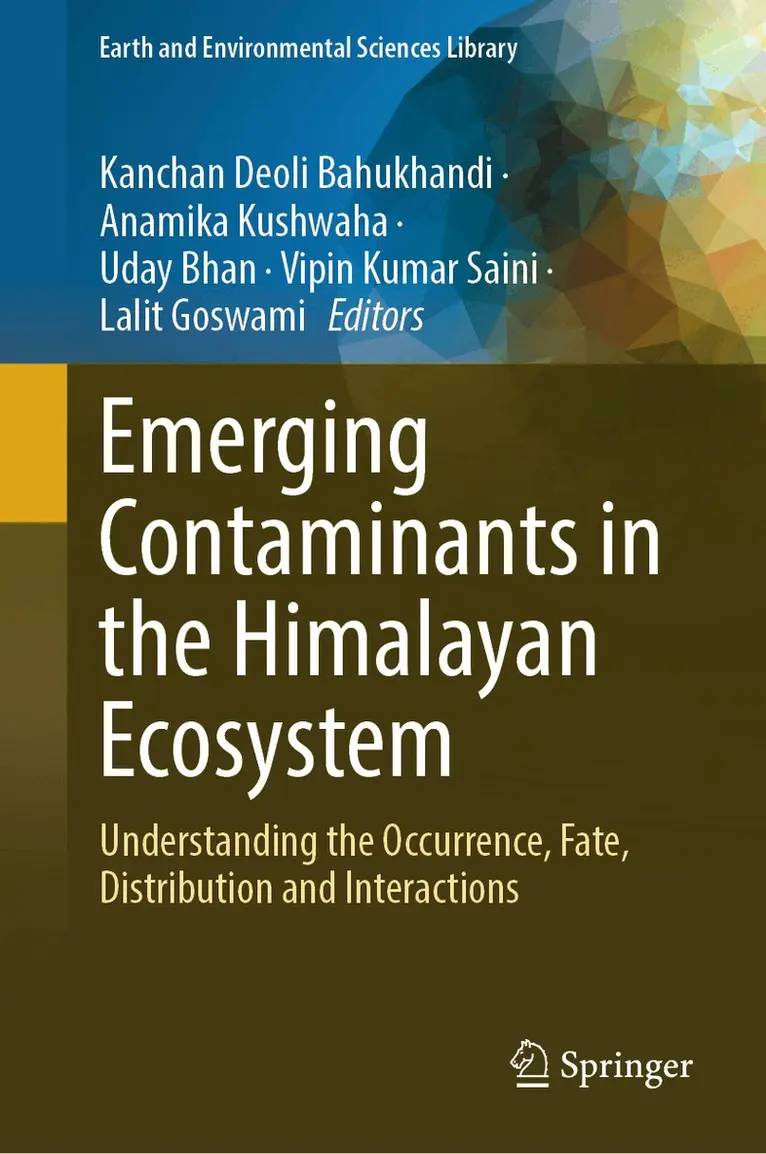
    Emerging contaminants in the Himalayan Ecosystem

    Understanding the Occurrence, Fate, Distribution and Interactions

    AvKanchan Deoli Bahukhandi,Anamika Kushwaha

    Inbunden, Engelska, 2026

    Del i serien Earth and Environmental Sciences Library

    2 185 kr

    Kommande

    Beskrivning

    This book covers impact of ECs on biodiversity, includes unique coverage on effect on Himalayan region and broadens understanding on antibiotic resistance. Emerging contaminants are a growing concern due to their potential impact on human health and the environment. Emerging contaminants are pollutants that pose potential or deadly hazards to human health and the environment. These contaminants can come from a variety of sources, including industrial activities, agriculture, and waste disposal, and can persist in the environment for a long time. As per the definition given by the United States Geological Survey, ECs are “any synthetic or naturally occurring chemical or any microorganism that is not commonly monitored in the environment but has the potential to enter the environment and cause known or suspected adverse ecological and/or human health effects” (USGS, 2017). In fact, microbial contaminants including antibiotic resistance bacteria/genes are also considered as ECs. Industrial chemicals, pesticides, medicines, surface-active agents, persistent organic compounds, mercury, and personal care items are examples of ECs that are routinely detected in groundwater, municipal wastewater, surface water, drinking water, and food supplies. As people's lifestyles change and new items are developed to improve their lives, a new class of emerging pollutants emerges. Endocrine disruptors, analgesics, antibiotics, hormones, and a variety of other pharmaceutical chemicals, such as anti-inflammatory, anti-diabetic, and antiepileptic drugs, are recent additions to this list of "emerging contaminants." Antibiotics, medicines, personal care items, hormones, and artificial sweeteners are considered emerging pollutants because of their demonstrated or prospective detrimental impacts on aquatic ecosystems and human health.

    Produktinformation

    • Utgivningsdatum:2026-10-06
    • Mått:155 x 235 x undefined mm
    • Format:Inbunden
    • Språk:Engelska
    • Serie:Earth and Environmental Sciences Library
    • Antal sidor:261
    • Förlag:Springer Nature Switzerland AG
    • ISBN:9783032283719

    Utforska kategorier

    • Folkhälsa och hälsopedagogik inom Medicin
    • Kemi inom Naturvetenskap och teknik
    • Miljövetenskap och miljöpolitik inom Naturvetenskap och teknik

    Mer om författaren

    Dr. Kanchan Deoli Bahukhandi is a Senior Associate Professor in the Sustainability Cluster at the School of Advanced Engineering, UPES, India. With over 25 years of experience, she specializes in environmental science, hydrogeochemistry, water pollution, microplastics, and solid waste management, particularly in Himalayan ecosystems. She holds a Ph.D. from the Wadia Institute of Himalayan Geology. Dr. Bahukhandi has published 85+ research papers, 35 book chapters, and 4 edited books. She has supervised 7 Ph.D. scholars and is guiding 5 more. She has led government-funded projects (DST, UCOST, ANRF) worth over INR 90 lakhs and serves as Associate Editor and reviewer for reputed international journals. Dr. Anamika Kushwaha obtained her Ph.D. in Biotechnology from Motilal Nehru National Institute of Technology (MNNIT), Allahabad, India. She is currently serving as a Postdoctoral Fellow at Chungbuk National University, Republic of Korea. Her research expertise lies in environmental biotechnology, focusing on phyto- and bioremediation, biogeochemical analysis of heavy metals, plant–microbe–soil interactions, microplastics, resource recovery, and environmental microbiome studies. Dr. Kushwaha has made significant scholarly contributions through numerous peer-reviewed publications, book, and patents, reflecting the applied impact and innovation of her research work. Dr. Uday Bhan did his Ph.D. in Earth Sciences in 2012. Currently, he serves as Professor in the Energy Cluster, School of Advance Engineering at UPES. Dr. Bhan specializes in organic geochemistry, groundwater chemistry, atmospheric pollution studies, and basin analysis. He has supervised 7 PhD including four Ph.D. scholars worked in the Himalayan region. His work also encompasses reservoir analysis, drilling fluids, and atmospheric pollutants. His contributions significantly advance research in environmental geosciences, energy resources, and sustainable development. Dr. Vipin Kumar Saini is an Associate Professor of Environmental Chemistry at Doon University, India. He earned his PhD from Indian Institute of Technology Roorkee and completed postdoctoral research in Portugal. His research interests include functional porous materials for adsorption, catalysis, and sustainable environmental remediation.Dr. Lalit Goswami is currently an Assistant Professor at Gachon University, Republic of Korea. He received his Ph.D. in The Environment from Indian Institute of Technology Guwahati, India. His research interest includes environmental biotechnology, bio-hydrogeochemistry, bio-inspired carbonaceous nano-materials, organic micropollutants, and resource recovery.

    Innehållsförteckning

    • Emerging Contaminants in Himalayan Water Bodies.- Emerging Organic Contaminants in the Himalayan Ganga River Basin: Sources, Transport, and Environmental Fate.- Emerging Contaminants in the Himalayas: Understanding Sources, Pathways, Ecotoxicological Impacts, Policies and Mitigation Strategies.- Health Risks and Ecotoxicological Impacts of Emerging Contaminants in the Himalayan Ecosystem.- Toxicological and Environmental Risks Imposed by Aerosols and Emerging Pollutants in the Himalayan Region.- Atmospheric transportation and deposition of Emerging Contaminants in Himalayan Region.- Characterization and Factors contributing Particulate Matter pollution over Himalayan Region.- Microplastics in the Himalayan glaciers, lakes and rivers: Sources, Occurrence, environmental impacts and future directions.- Per- and polyfluoroalkyl substances (PFAS) in the Himalayan cryosphere.- Predictive modelling of Organic micropollutants using machine learning algorithms & Remote Sensing in the Himalayan region.- Oscillating impacts of organic pollutants in the Ganga River Basin impedimenting conservation and SDGs.- Emerging contaminant as a threat to the Himalayan water sustainability.