• Fri frakt över 249 kr
  • •
  • Snabba leveranser
  • •
  • Billiga böcker
Kundservice

Du är på sajten för privatpersoner.

Företag, bibliotek eller offentlig verksamhet?

Du handlar på classic.bokus.com, där alla dina funktioner finns intakta.
Till classic.bokus.com
Bokus logotyp. Gå till startsidan.
  • Erbjudanden
  • Student
  • Topplistor
  • Barn & ungdom
  • Bokus Play
  • E-böcker
  • Ljudböcker
  • Pocketböcker
  • Spel & pussel

10% rabatt på allt med kod NYSTART10 →

Sidfot

Mina sidor

    Hjälp

    • Kundservice
    • Vanliga frågor och svar
    • Frakt och leverans
    • Retur vid ångerrätt
    • Reklamera vara
    • Betalning
    • Köpvillkor
    • Allmänna villkor
    • Information om webbplatsens tillgänglighet

    Om Bokus

    • Om oss
    • Pressrum
    • För studenter
    • För företag
    • För bibliotek och offentlig verksamhet
    • För leverantörer
    • Hållbarhet

    Populärt

    • Aktuella erbjudanden
    • Presentkort
    • Studentlitteratur
    • Nya böcker
    • Topplistor
    • Signerade böcker
    • Engelska böcker

    Inspiration

    • Boktips
    • BookTok
    • Populära bokserier
    • Barnbokskaraktärer
    • Populära författare
    Logotyp för Bokus
    Följ oss på Facebook (extern länk)Följ oss på Instagram (extern länk)Följ oss på YouTube (extern länk)Följ oss på TikTok (extern länk)
    bokus @ CookiesAnpassa cookiesIntegritetspolicyKöpvillkor
    Till Citymail hemsida (extern länk)Till Budbee hemsida (extern länk)Till Postnord hemsida (extern länk)Till Schenker hemsida (extern länk)Till Early Bird hemsida (extern länk)Till Walleys hemsida (extern länk)
    1. Kultur
    2. Arkitektur
    3. Arkitekturhistoria

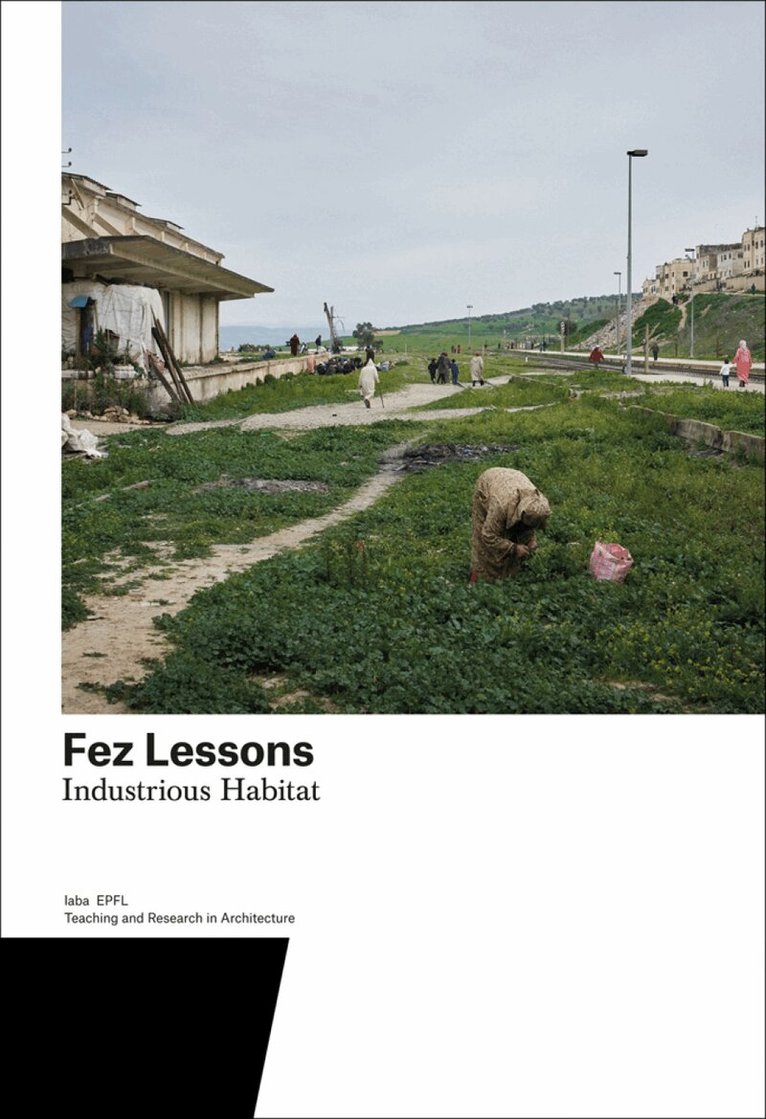
    Fez Lessons

    Industrious Habitat. Teaching and Research in Architecture

    AvHarry Gugger,Sarah Bart

    Häftad, Engelska, 2019

    Del i serien Teaching and Research in Architecture

    556 kr

    Beställningsvara. Skickas inom 7-10 vardagar. Fri frakt över 249 kr.

    Beskrivning

    The infamous Scramble for Africa in the late 19th and 20th centuries disrupted the entire African continent with enduring repercussions. Morocco - located at a crossroads between Sub-Saharan Africa, the Arab-Muslim world in the Maghreb, and Mediterranean Europe - has struggled to withstand the resulting culturaland sociopolitical clashes ever since.Fez Lessons: Industrious Habitatlooks at Fez, Morocco's famous former capital and today its second-largest city. Based on a recent research program conducted by EPFL's Laboratory Basel (laba), it investigates how these clashes have marked the city's socioeconomic structure and urban fabric, and whether or not it offers alternative and relevant means of human association andcommunity.Given the growing stream of large-scale international investment, the constant enticement of tourism, and a worldwide revival of nationalism, Laba's student's and researchers were looking for tiny cues, nagging doubts, and signs of the fusion between form and life, raising questions about identity, authenticity, tradition, the globalisation of culture, and the use of local resources. Their findingsare visualised in the book in striking images, graphics and maps. Students' proposals for architectural interventions addressing these issues are presented through images and plans.

    Produktinformation

    • Utgivningsdatum:2019-12-17
    • Mått:210 x 310 x 24 mm
    • Vikt:1 000 g
    • Format:Häftad
    • Språk:Engelska
    • Serie:Teaching and Research in Architecture
    • Antal sidor:204
    • Förlag:Park Books
    • ISBN:9783038601692

    Utforska kategorier

    • Arkitekturhistoria inom Kultur
    • Sociala och etiska frågor inom Samhälle och politik
    • Sociala grupper och identitet inom Samhälle och politik

    Mer om författaren

    Harry Gugger is professor of architecture and director of laba, a Basel-based satellite studio of EPFL's School of Architecture, where Tiago Trigo is an architect and research assistant, Augustin Clément is an architect and teaching assistant, Alexandros Fotakis is an architect and teaching assistant, and Sarah Barth is a research assistant.