
Meilensteine der Rechentechnik
Zur Geschichte der Mathematik und der Informatik
E-bok
Tyska, 20151 719 kr
Läs direkt i Bokus Reader – eller ladda ned till din enhet
Fler format och utgåvor
Beskrivning
• Numerous recent discoveries of rare historical analog and digital calculators and previously unknown texts, drawings, and pictures from Germany, Austria, Switzerland, Liechtenstein, and France.
• Worldwide, multilingual bibliography regarding the history of computer science with over 3000 entries.
• 12 step-by-step set of instructions for the operation of historical analog and digital calculating devices.
• 75 comparative overviews in tabular form.
• 200 illustrations.
• 20 comprehensive lists.
• 7 timelines of computer history.
During the 1970s mechanical calculating instruments and machines suddenly disappeared from the scene. They were replaced by electronic versions. Most of these devices developed since the 17th century – often very clever constructions – have been forgotten. Who can imagine today how difficult calculation was only a few decades ago? This book introduces the reader to selected milestones from prehistory and early history of computing.
The Antikythera Mechanism
This puzzling device was made around 200 BC. It was discovered around 1900 by divers off the Greek island of Antikythera. It is believed to be the oldest known analog (or rather hybrid) computing device. Numerous replicas have been built to unravel the mysteries of this calendar calculator. It is suspected that the machine came from the school of Archimedes.
Androids, Music Boxes, Chess Automatons, Looms
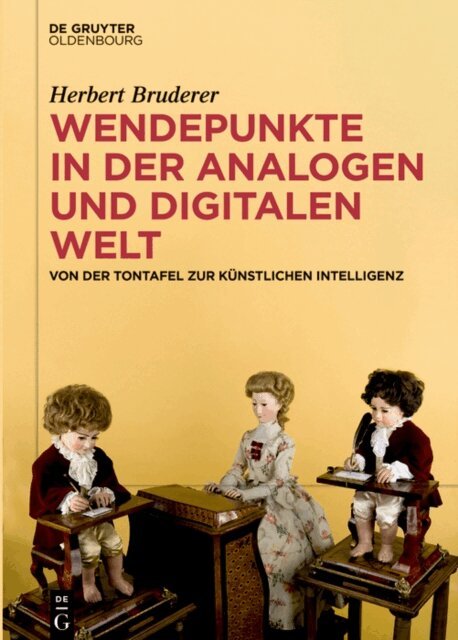
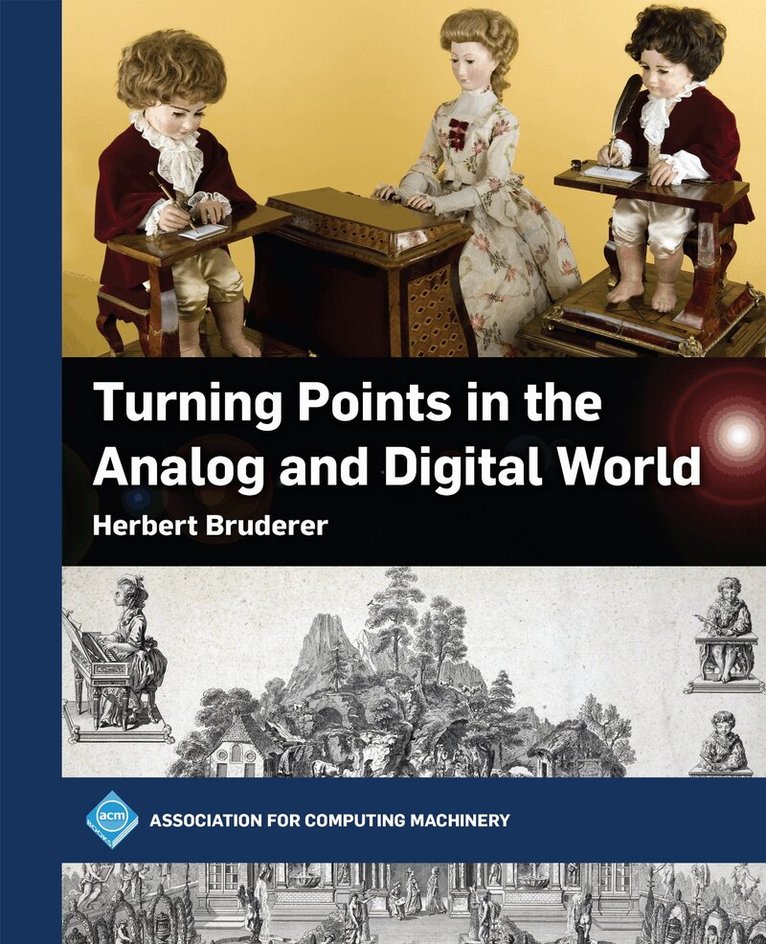
This treatise also explores topics related to computing technology: automated human and animal figures, mecha-nized musical instruments, music boxes, as well as punched tape controlled looms and typewriters. Also men-tioned are the chess playing machines of the highly gifted Spanish scholar Torres Quevedo (20th century), the magnificent androids (artificial humans) of the Neuchâtel clockmaker Jaquet-Droz (18th century), and his splen-did still functional programmable handwriting automaton "The Writer". A similar machine can also be seen in Vienna.
Schickard, Pascal, and Leibniz
During the 17th century broadly gifted geniuses from Germany and France tried to build calculating machines. Developing a mechanism to perform decimal carry was very challenging. Famous calculators are covered in the text and pictures. These ornate works of art, often circular in form, were popular presents for royalty. Only in the 19th century did makers succeed in producing useful four function calculators. The first successful, commercial-ly produced device was the Thomas Arithmometer, made in Paris. This book lists, for the first time, all the known Swiss makers of mechanical calculating machines and compares their products with one another. The most famous firms were Egli AG (maker of the "Millionaire" and the "Madas") and Pecisa AG. Both companies were located in Zurich. In the 1950s Heinz Rutishauser, the inventor of automatic programming, used a Madas at the ETH (Swiss Federal Institute of Technology) Zurich.
Sectors, Proportional Compasses, Polar Planimeters, Pantographs, and Coordinatographs
Here the discussion is about exceptionally versatile analog calculation instruments such as sectors and propor-tional compasses (dividers). Vanished and forgotten are the products of the world''s former leading makers of mechanical integrators such as Amsler (Schaffhausen), Coradi (Zurich), and Ott (Kempten). They also made planimeters and pantographs. These were used in land surveying offices and the textile industry (knitting).
Counting Boards
During the middle ages and in more recent times many city halls had a beautiful carved counting board. These tables were used for performing calculations using coins. This method was later replaced by written calculation. Only a few counting boards have survived, mostly in Switzerland, Germany, and France.
The Oldest Preserved Key-driven Adding Machine in World
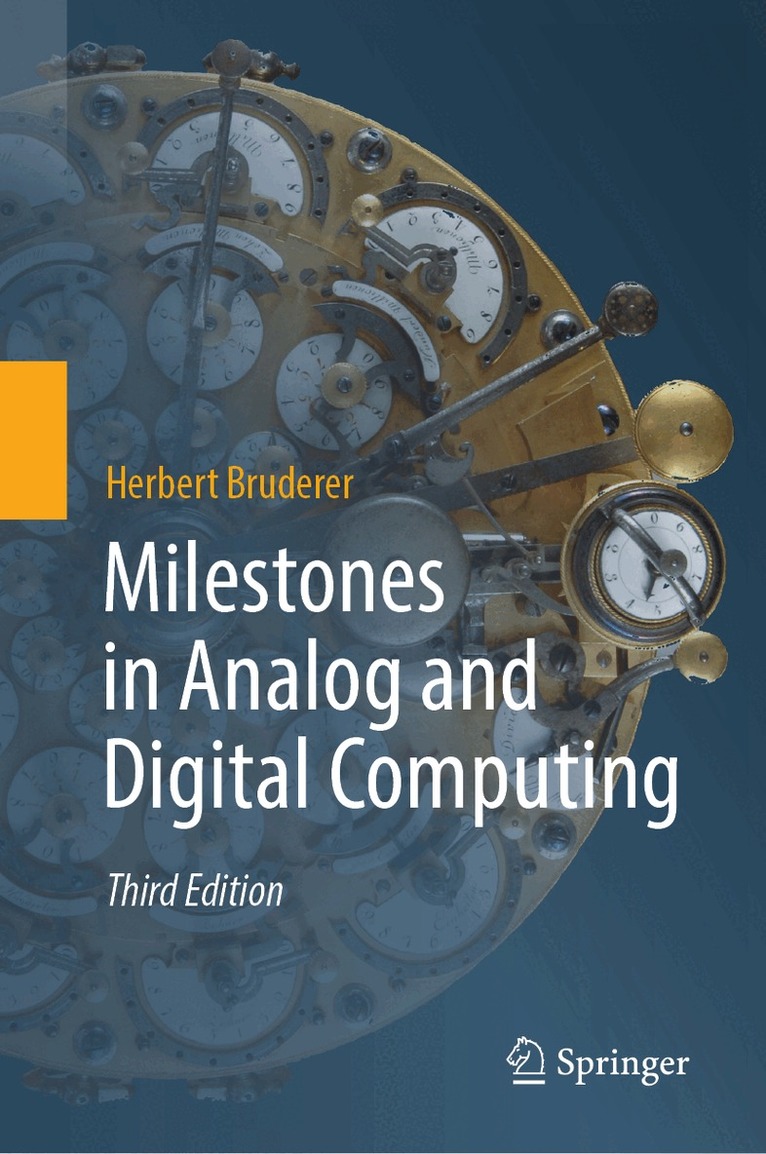
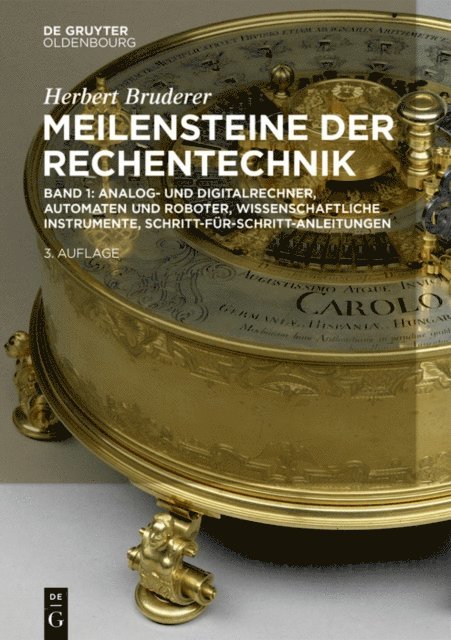
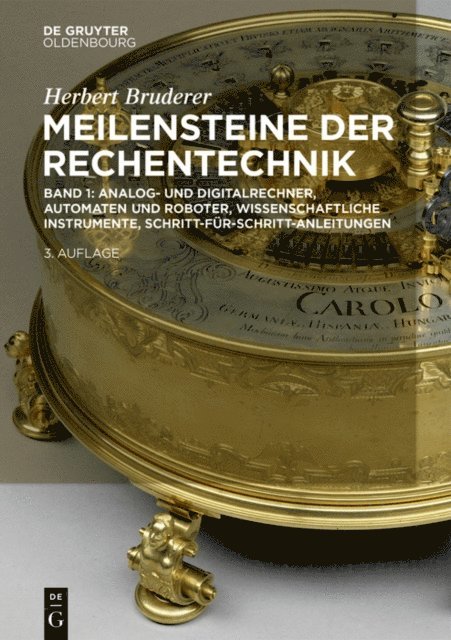
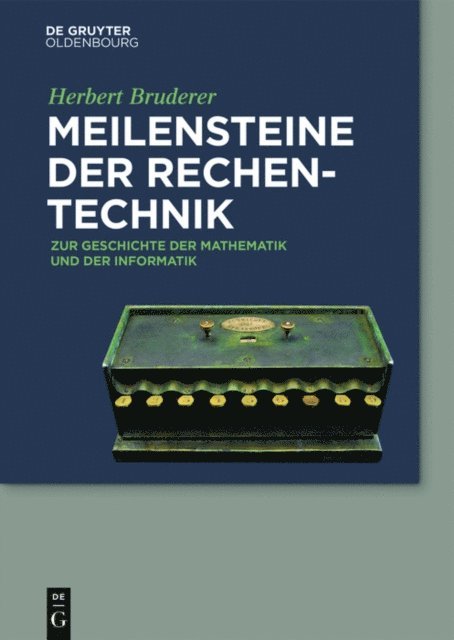
The most important international discovery concerns Jean-Baptiste Schwilgué, the creator of the astronomical clock in the Cathedral in Strasbourg. The oldest preserved keyboard adding machine in the world (19th century) came to light next to an early Thomas Arithmometer in the collection of the observatory at ETH Zurich. This machine is featured on the cover of this book. Two examples of this machine have survived, an older one in Strasbourg and a later one in Zurich. The latter is in far better condition.
Process Computer for the Astronomical Clock at the Cathedral of Strasbourg
An additional big surprise was the discovery (in December 2014) of a rare large adding machine in the Strasbourg Historical Museum. Research has indicated that this adding machine was used to calculate the settings for a very precise milling machine used to make the gears of the astronomical clock at the Cathedral of Strasbourg. The results of calculations were transcribed by hand to a paper tape. This was put in a small box with rollers which was attached to the milling machine. Thus this formed a simple "process computer". The Strasbourg discovery was shown at a special exhibition at the Arithmeum of the Bonn University in 2015. If the English mathematician Charles Babbage had known of the gear milling machine of his contemporary Schwilgué, perhaps he would have been able to complete his famous program controlled Analytical Engine (19th century), the forerunner of today''s digital computers. Schwilgue''s calculating machines are not covered by the authoritative publications about the history of computing. Until recently leading museums of science and tech-nology throughout the world knew nothing of Schwilgué.
24 Meter Loga Cylindrical Slide Rule
Bruderer''s book also describes the invention of the powerful 24-meter cylindrical slide rule, the largest and most precise slide rule in the world. These analog logarithmical tools were utilized in large quantities by banks and insurance companies, for example for currency calculations. Eighty scale sections, each 60 cm long, are mounted on a drum. The result is a scale that (because of overlapping) is 24 meters long.
Curta, Technical Marvel from the Buchenwald Concentration Camp
The Curta is the world''s smallest mechanical calculating machine that is able to perform all four arithmetical operations. The story of the Curta is told in detail by the ingenious Austrian engineer Curt Herzstark, who drew the drawings for the device while he was in Buchenwald Concentration Camp. New minutes from Thüringen have come to light about his breakneck escape from Soviet pursuers. Affectionately known as the "Peppermill" and very photogenic, the Curta was manufactured in Liechtenstein. However, the inventor was cheated out of his life''s work.
Who Invented the Computer, the Compiler, and the Stored Program?
This volume discusses the decade-long controversy over the invention of the stored program computer (von Neumann architecture). The debate between American and British historians of computing continues today. This debate has been stirred up recently by the attention given to the 100th birthday of Alan Turing, truly the most important founder of theoretical informatics. The Universal Turing Machine (1936) was a mathematical model of today''s stored programmed digital computer. This book offers a worldwide overview of the first computers, the early relay-based, vacuum tube, and transistorized computers, the pioneers (both men and women) of calcu-lator technology and their masterpieces. There is further coverage of the developmental lineage of calculation aids and their life span.
Alan Turing, Enigma and Colossus: at Bletchley Park
The dramatic events at Bletchley Park (the former British Code-Breaking Center) are presented in detail. For decades even the existence of the electronic computer Colossus was concealed. For a long time it was rumored that after WWII Churchill ordered the destruction of the ten impressive machines. Vacuum tube computers were used to crack the Lorenz Machine SZ40/42 which was used by Hitler and the German High Command. The Co-lossus was designed and built by the British Post Office Research Station. Colossus Mark 2 was ready to use a few days before the landings in Normandy. The Colossus was programmed with a plugboard and qualified as the world''s first large electronic computer. The "Turing-Welchman Bombe" was developed by Alan Turing in collaboration with Gordon Welchman. Over 200 copies of the bombe were manufactured. They helped to crack the German Enigma machine. The Navy''s U-Boat Enigma, which was considered unbreakable, was decrypted largely due to Alan Turing. The German armed forces had some 100,000 Enigmas.
Difficulties during the Construction of the Ermeth and its Marketing Failure
Many previously unknown documents relating to the early history of informatics have been discovered in the archives of ETH Zurich. These documents include contracts concerning the legendary relay calculator Z4 in-vented by and rented from the German Konrad Zuse. ETH Zurich was, in 1950, the first university in central Europe with a functional program-controlled computer. Recently, after a (required) waiting period of 50 years expired, documents came to light that describe the considerable difficulties that were encountered during the production of the (eventually successful) Ermeth. The development of the magnetic drum caused a lot of head-aches. The documents, particularly letters, also clarify why the intended marketing of the first Swiss computer by Hasler AG, Berne (now Ascom), failed. Until now no one knew of these plans. As the result of research in connection with the Z4, the only surviving Zuse calculating punch, the M9, was tracked down. The Zuse gave rise to the first programming language, Plankalkül. The book contains a wealth of illustrations from ETH Zurich''s main library and an annotated bibliography as to the findings in the archives.
Abacus: How to calculate with historical calculators?
There are very few people still living who know how to handle early, widely distributed calculating aids that were very versatile for their times. This book seeks to fill these gaps with sets of step-by-step instructions for the use of important calculating devices. These include the Chinese abacus (12th century), as well as the Japanese abacus, the Russian abacus, sectors and proportional dividers (which stem from 16/17th century, the era of Gali-leo Galilei and Jost Bürgi), Napier’s bones (the co-discoverer of logarithms (17th century), the circular slide rule (17th century), the cylindrical slide rule (19th century), and mechanical calculators (19th and 20th centuries) such as the Curta.
What Kind of Calculating Machines have survived? In which Museums are they to be Found?
The book contains comprehensive and informative lists about the museums (throughout the world) in which one can find masterpieces of computing technology, including both analog and digital calculating aids.
Reference Works
This publication has a detailed name and subject index. Therefore it can be used as a reference work. It also mentions several eyewitness reports by people involved with the Zuse Z4, the Cora, and the Curta. In addition a new classification of analog, digital, mechanical, and electronic instruments and machines is offered.
Intended Readers
This book is written in broadly understandable language and is intended for specialists, lay persons, collectors, information scientists, mathematicians, historians, curators, archivists, restorers, and everyone dealing with the history of technology.
Available by the same author is Konrad Zuse and Switzerland: Who invented the Computer?, de Gruyter Oldenbourg, Berlin/München, 2012, XXVI, 224 pages.
Translation by Rodger Shepherd, The Oughtred Society, USA/revised by Tom Misa, Charles Babbage Institute, University of Minnesota, Minneapolis, and Brian Randell, Newcastle University, UK April 2016
Produktinformation
Utforska kategorier
Hoppa över listan
Mer från samma författare
Analog- Und Digitalrechner, Automaten Und Roboter, Wissenschaftliche Instrumente, Schritt-Für-Schritt-Anleitungen
Herbert Bruderer
Inbunden, 2020
2 256 kr
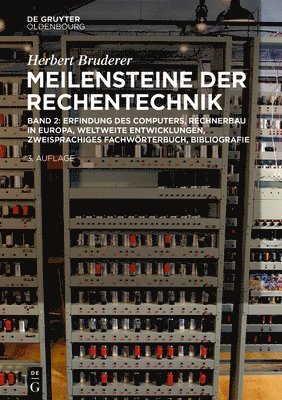
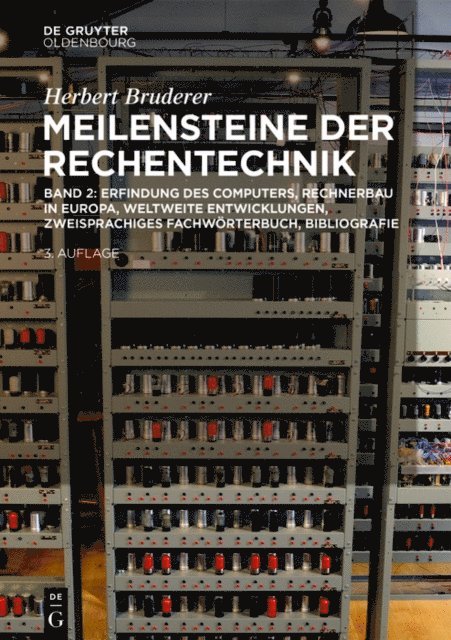
Erfindung Des Computers, Rechnerbau in Europa, Weltweite Entwicklungen, Zweisprachiges Fachwörterbuch, Bibliografie
Herbert Bruderer
Inbunden, 2020
2 256 kr
Analog- und Digitalrechner, Automaten und Roboter, wissenschaftliche Instrumente, Schritt-für-Schritt-Anleitungen
Herbert Bruderer
E-bok
20201 688 kr
Erfindung des Computers, Rechnerbau in Europa, weltweite Entwicklungen, zweisprachiges Fachwörterbuch, Bibliografie
Herbert Bruderer
E-bok
20201 675 kr
Analog- und Digitalrechner, Automaten und Roboter, wissenschaftliche Instrumente, Schritt-für-Schritt-Anleitungen
Herbert Bruderer
E-bok
20201 688 kr
Erfindung des Computers, Rechnerbau in Europa, weltweite Entwicklungen, zweisprachiges Fachwörterbuch, Bibliografie
Herbert Bruderer
E-bok
20201 688 kr
Hoppa över listan
Du kanske också är intresserad av
- 10% rabatt på allt
Erfindung Des Computers, Rechnerbau in Europa, Weltweite Entwicklungen, Zweisprachiges Fachwörterbuch, Bibliografie
Herbert Bruderer
Inbunden, 2020
2 256 kr
Analog- und Digitalrechner, Automaten und Roboter, wissenschaftliche Instrumente, Schritt-für-Schritt-Anleitungen
Herbert Bruderer
E-bok
20201 688 kr