• Fri frakt över 249 kr
  • •
  • Snabba leveranser
  • •
  • Billiga böcker
Kundservice

Du är på sajten för privatpersoner.

Företag, bibliotek eller offentlig verksamhet?

Du handlar på classic.bokus.com, där alla dina funktioner finns intakta.
Till classic.bokus.com
Bokus logotyp. Gå till startsidan.
  • Erbjudanden
  • Student
  • Topplistor
  • Barn & ungdom
  • Bokus Play
  • E-böcker
  • Ljudböcker
  • Pocketböcker
  • Spel och pussel

Pocketfynda! Hundratals böcker för 49 kr/st →

Sidfot

Mina sidor

    Hjälp

    • Kundservice
    • Vanliga frågor och svar
    • Frakt och leverans
    • Retur vid ångerrätt
    • Reklamera vara
    • Betalning
    • Köpvillkor
    • Allmänna villkor
    • Information om webbplatsens tillgänglighet

    Om Bokus

    • Om oss
    • Pressrum
    • För studenter
    • För företag
    • För bibliotek och offentlig verksamhet
    • För leverantörer
    • Hållbarhet

    Populärt

    • Aktuella erbjudanden
    • Presentkort
    • Studentlitteratur
    • Nya böcker
    • Topplistor
    • Signerade böcker
    • Engelska böcker

    Inspiration

    • Boktips
    • BookTok
    • Barnbokskaraktärer
    • Populära författare
    Logotyp för Bokus
    Följ oss på Facebook (extern länk)Följ oss på Instagram (extern länk)Följ oss på YouTube (extern länk)Följ oss på TikTok (extern länk)
    bokus @ CookiesAnpassa cookiesIntegritetspolicyKöpvillkor
    Till Citymail hemsida (extern länk)Till Budbee hemsida (extern länk)Till Postnord hemsida (extern länk)Till Schenker hemsida (extern länk)Till Early Bird hemsida (extern länk)Till Walleys hemsida (extern länk)
    1. Juridik
    2. Internationell rätt
    3. Folkrätt

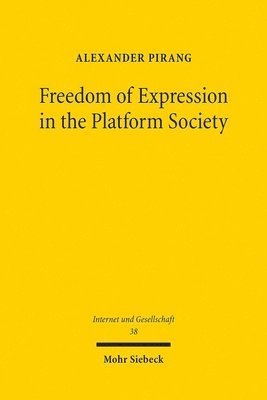
    Freedom of Expression in the Platform Society

    The Right to Freedom of Expression as a Constraint on Public Authorities' Power to Govern Online Speech Through Platform Companies

    AvAlexander Pirang

    Häftad, Engelska, 2024

    Del 38 i serien Internet und Gesellschaft

    1 506 kr

    Beställningsvara. Skickas inom 5-8 vardagar. Fri frakt över 249 kr.

    Beskrivning

    Kann sich der Gesetzgeber seiner grundrechtlichen Verantwortung entziehen, indem er Online-Plattformen verpflichtet, nutzergenerierte Inhalte zu löschen? Alexander Pirang zeigt, dass das Recht auf Meinungsfreiheit nicht durch Plattformregulierung ausgehebelt wird.

    Produktinformation

    • Utgivningsdatum:2024-12-17
    • Mått:157 x 233 x 25 mm
    • Vikt:663 g
    • Format:Häftad
    • Språk:Engelska
    • Serie:Internet und Gesellschaft
    • Antal sidor:449
    • Förlag:Mohr Siebeck
    • ISBN:9783161639623

    Utforska kategorier

    • Folkrätt inom Juridik
    • Offentlig förvaltning inom Juridik
    • Författningsrätt och förvaltningsrätt inom Juridik

    Mer om författaren

    Born 1989; law studies at Bucerius Law School, Hamburg and in Saint Petersburg; legal clerkship at the Berlin Court of Appeal; research associate at the Alexander von Humboldt Institute for Internet and Society; non-resident fellow with the Global Public Policy Institute; non-resident fellow with the Global Public Policy Institute; policy officer at the Federal Ministry for Economic Affairs and Climate Action; 2023 doctorate (University of Hamburg).

    Innehållsförteckning

    • IntroductionI. Setting the stage - II. Hypothesis and research questions - III. Research scope - IV. Research design - V. Conceptual clarification: governance and regulationChapter 1. First-order online speech governance: content moderationI. What is content moderation? - II. What role does context play in content moderation? - III. To what extent does content moderation impact freedom of expression? - IV. How do different incentives and constraints influence platform companies' decision-making regarding content moderation? - V. ConclusionChapter 2. Second-order online speech governance: platform regulationI. How has platform regulation evolved in the EU? - II. What are the rationales behind platform regulation? - III. How does platform regulation interact with other influences on platform companies' decision-making? - IV. How does platform regulation operate in practice? - V. ConclusionChapter 3. Third-order online speech governance: freedom of expressionI. To what extent does platform regulation allow public authorities to launder state action through platform companies' private ordering? - II. To what extent does the case law of the ECtHR and the CJEU on causation and attribution provide avenues for overcoming the risks of laundered state action in the context of platform regulation? - III. How can limitations of users' right to freedom of expression be established where public authorities require platform companies to moderate content? - IV. To what extent are public authorities obligated to minimize the risks of over-blocking in the context of platform regulation in order to justify limitations of users' right to freedom of expression? - V. ConclusionConclusion