• Fri frakt över 249 kr
  • •
  • Snabba leveranser
  • •
  • Billiga böcker
Kundservice

Du är på sajten för privatpersoner.

Företag, bibliotek eller offentlig verksamhet?

Du handlar på classic.bokus.com, där alla dina funktioner finns intakta.
Till classic.bokus.com
Bokus logotyp. Gå till startsidan.
  • Erbjudanden
  • Nyheter
  • Student
  • Topplistor
  • Barn & ungdom
  • Bokus Play
  • E-böcker
  • Pocketböcker
  • Spel & pussel

10% rabatt på allt med kod: NYSTART10 →

Sidfot

Mina sidor

    Hjälp

    • Kundservice
    • Vanliga frågor och svar
    • Frakt och leverans
    • Retur vid ångerrätt
    • Reklamera vara
    • Betalning
    • Köpvillkor
    • Allmänna villkor
    • Information om webbplatsens tillgänglighet

    Om Bokus

    • Om oss
    • Pressrum
    • För studenter
    • För företag
    • För bibliotek och offentlig verksamhet
    • För leverantörer
    • Hållbarhet

    Populärt

    • Aktuella erbjudanden
    • Presentkort
    • Studentlitteratur
    • Nya böcker
    • Topplistor
    • Signerade böcker
    • Engelska böcker

    Inspiration

    • Boktips
    • BookTok
    • Populära bokserier
    • Barnbokskaraktärer
    • Populära författare
    Logotyp för Bokus
    Följ oss på Facebook (extern länk)Följ oss på Instagram (extern länk)Följ oss på YouTube (extern länk)Följ oss på TikTok (extern länk)
    bokus @ CookiesAnpassa cookiesIntegritetspolicyKöpvillkor
    Till Citymail hemsida (extern länk)Till Budbee hemsida (extern länk)Till Postnord hemsida (extern länk)Till Schenker hemsida (extern länk)Till Early Bird hemsida (extern länk)Till Walleys hemsida (extern länk)
    1. Samhälle och politik
    2. Sociologi och antropologi
    3. Sociologi

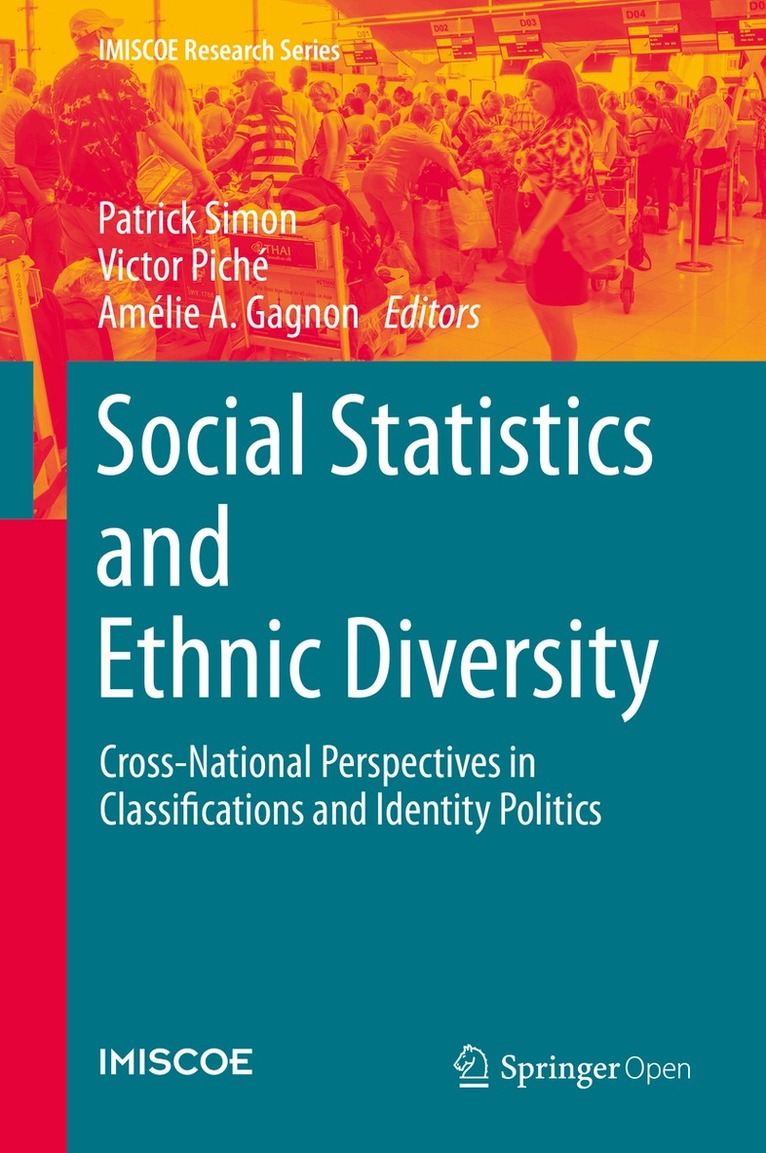
    Social Statistics and Ethnic Diversity

    Cross-National Perspectives in Classifications and Identity Politics

    AvPatrick Simon,Victor Piché

    Inbunden, Engelska, 2015

    Del i serien IMISCOE Research Series

    547 kr

    Beställningsvara. Skickas inom 10-15 vardagar. Fri frakt över 249 kr.

    Beskrivning

    This open access book examines the question of collecting and disseminating data on ethnicity and race in order to describe characteristics of ethnic and racial groups, identify factors of social and economic integration and implement policies to redress discrimination. It offers a global perspective on the issue by looking at race and ethnicity in a wide variety of historical, country-specific contexts, including Asia, Latin America, Europe, Oceania and North America. In addition, the book also includes analysis on the indigenous populations of the Americas.The book first offers comparative accounts of ethnic statistics. It compares and empirically tests two perspectives for understanding national ethnic enumeration practices in a global context based on national census questionnaires and population registration forms for over 200 countries between 1990 to 2006.Next, the book explores enumeration and identity politics with chapters that cover the debate on ethnic andracial statistics in France, ethnic and linguistic categories in Québec, Brazilian ethnoracial classification and affirmative action policies and the Hispanic/Latino identity and the United States census.The third, and final, part of the book examines measurement issues and competing claims. It explores such issues as the complexity of measuring diversity using Malaysia as an example, social inequalities and indigenous populations in Mexico and the demographic explosion of aboriginal populations in Canada from 1986 to 2006.Overall, the book sheds light on four main questions: should ethnic groups be counted, how should they be counted, who is and who is not counted and what are the political and economic incentives for counting. It will be of interest to all students of race, ethnicity, identity, and immigration. In addition, researchers as well as policymakers will find useful discussions and insights for a better understanding of the complexity of categorization and relatedpolitical and policy challenges.

    Produktinformation

    • Utgivningsdatum:2015-08-27
    • Mått:155 x 235 x 20 mm
    • Vikt:547 g
    • Format:Inbunden
    • Språk:Engelska
    • Serie:IMISCOE Research Series
    • Antal sidor:244
    • Upplaga:15001
    • Förlag:Springer International Publishing AG
    • ISBN:9783319200941

    Utforska kategorier

    • Sociologi inom Samhälle och politik
    • Statsvetenskap och politisk teori inom Samhälle och politik
    • Geografi inom Naturvetenskap och teknik

    Recensioner i media

    "Why do states collect (or not collect) ethnic and racial data, and what are the social and political implications of the ethnic and racial classifications which are used? At a time when debates about the salience of ethnic and racial assertions and identities are central to the workings of many multiethnic societies, this illuminating and ambitious volume breaks new ground through a global and comprehensive exploration of these questions." Miri Song, University of Kent "Should nations count by race and ethnicity? This impressive collection instructs us that massive population movements require many nations to govern their increasingly diverse racial and ethnic populations, confronting unprecedented social tensions and struggling to guarantee new forms of social justice. Here we learn that there are cross-national commonalities, and lessons to learn about whether, why and how to classify and count." Kenneth Prewitt, Columbia University and author of What is Your Race: The Census and Our Flawed Effort to Classify Americans. "There is considerable variation across the world in the extent to which different nations gather official statistics that classify people by ethnicity and origins, and in the kinds of questions they ask and the categories they use. This book combines an overview of patterns of classification across the world, along with case studies of specific countries. It is a fascinating look at how the statistics on ethnicity are created, shaped and used in different national contexts. It should be required reading for those who study race and ethnicity, as well as anyone who uses ethnic statistics." Mary C. Waters, Harvard University

    Innehållsförteckning

    • INTRODUCTION: Chapter 1 The Making of Racial and Ethnic Categories: Official Statistics Reconsidered: Patrick Simon, Victor Piché, and Amélie A. Gagnon.- PART I COMPARATIVE ACCOUNTS OF ETHNIC STATISTICS: Chapter 2. Ethnic Classification in Global Perspective: A Cross-national Survey of the 2000 Census Round: Ann Morning.- Chapter 3. “Inside out”: The Politics of Ethnically Enumerating The Nation: Tahu Kukutai and Victor Thompson.- PART II. ENUMERATION AND IDENTITY POLITICS: Chapter 4. The Choice of Ignorance: The Debate on Ethnic and Racial Statistics in France: Patrick Simon.- Chapter 5. Ethnic and Linguistic Categories in Québec: Counting to Survive: Victor Piché.- Chapter 6. Brazilian Ethnoracial Classification and Affirmative Action Policies: Where Are We and Where Do We Go?:José Luis Petruccelli.- Chapter 7. The Ethnic Question: Census Politics in Great Britain: Debra Thompson.- PART III. MEASUREMENT ISSUES AND COMPETING CLAIMS: Chapter 8. Counting Ethnicity in Malaysia: the Complexity of Measuring Diversity: Shyamala Nagaraj, Tey Nai-Peng, Ng Chiu-Wan, Lee Kiong-Hock, Jean Pala.- Chapter 9. The Growth of Ethnic Minorities in Uruguay: Ethnic Renewal or Measurement Problems?: Wanda Cabella and Rafael Porzecanski.- Chapter 10. The Objective Approaches of Ethnic Origins in Belgium: Methodological Alternatives and Statistical Implications: Nicolas Perrin, Luc Dal and Michel Poulain.- Chapter 11. Social Inequalities and Indigenous Populations in Mexico: A Plural Approach: Olivier Barbary.- Chapter 12. Fuzzy Definitions and Demographic Explosion of Aboriginal Populations in Canada from 1986 to 2006: Éric Guimond, Norbert Robitaille and Sacha Senécal.