• Fri frakt över 249 kr
  • •
  • Snabba leveranser
  • •
  • Billiga böcker
Kundservice

Du är på sajten för privatpersoner.

Företag, bibliotek eller offentlig verksamhet?

Du handlar på classic.bokus.com, där alla dina funktioner finns intakta.
Till classic.bokus.com
Bokus logotyp. Gå till startsidan.
  • Erbjudanden
  • Nyheter
  • Student
  • Topplistor
  • Barn & ungdom
  • Bokus Play
  • E-böcker
  • Pocketböcker
  • Spel & pussel

Må bättre, för mindre! Upp till 50% rabatt på hälsoböcker

Sidfot

Mina sidor

    Hjälp

    • Kundservice
    • Vanliga frågor och svar
    • Frakt och leverans
    • Retur vid ångerrätt
    • Reklamera vara
    • Betalning
    • Köpvillkor
    • Allmänna villkor
    • Information om webbplatsens tillgänglighet

    Om Bokus

    • Om oss
    • Pressrum
    • För studenter
    • För företag
    • För bibliotek och offentlig verksamhet
    • För leverantörer
    • Hållbarhet

    Populärt

    • Aktuella erbjudanden
    • Presentkort
    • Studentlitteratur
    • Nya böcker
    • Topplistor
    • Signerade böcker
    • Engelska böcker

    Inspiration

    • Boktips
    • BookTok
    • Populära bokserier
    • Barnbokskaraktärer
    • Populära författare
    Logotyp för Bokus
    Följ oss på Facebook (extern länk)Följ oss på Instagram (extern länk)Följ oss på YouTube (extern länk)Följ oss på TikTok (extern länk)
    bokus @ CookiesAnpassa cookiesIntegritetspolicyKöpvillkor
    Till Citymail hemsida (extern länk)Till Budbee hemsida (extern länk)Till Postnord hemsida (extern länk)Till Schenker hemsida (extern länk)Till Early Bird hemsida (extern länk)Till Walleys hemsida (extern länk)
    1. Djur och Natur
    2. Naturböcker
    3. Växtböcker

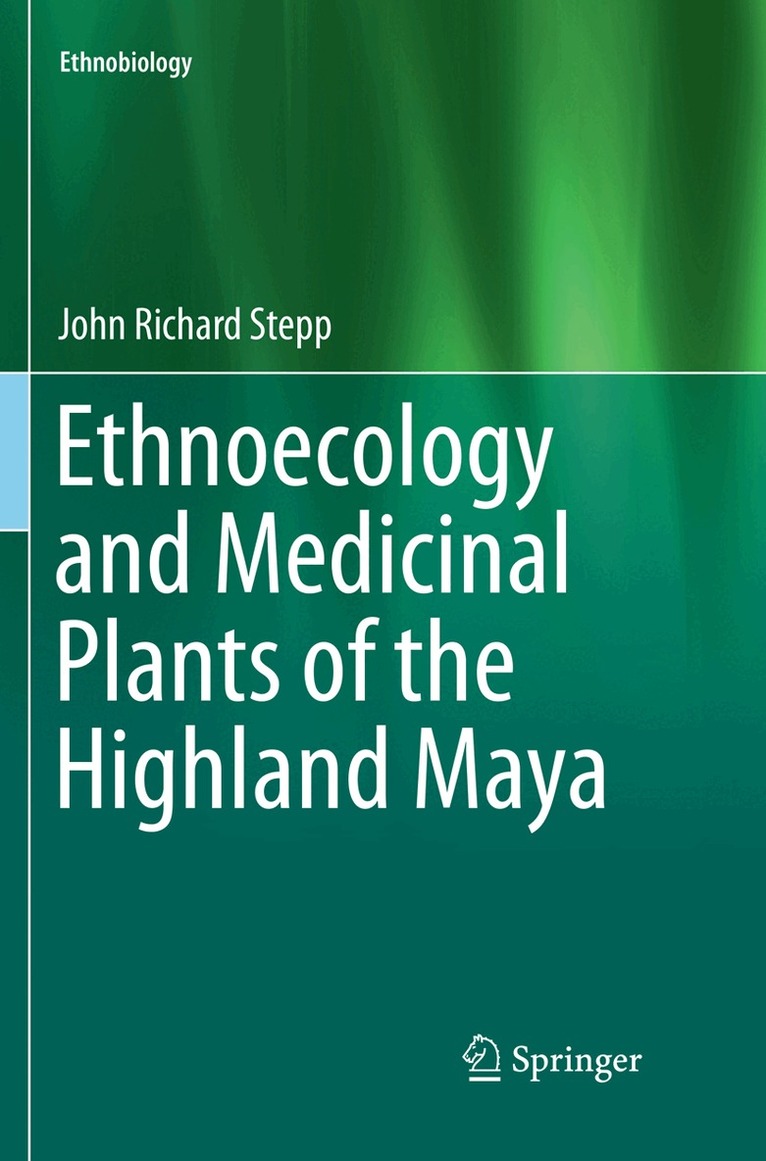
    Ethnoecology and Medicinal Plants of the Highland Maya

    AvJohn Richard Stepp

    Inbunden, Engelska, 2018

    Del i serien Ethnobiology

    1 086 kr

    Beställningsvara. Skickas inom 10-15 vardagar. Fri frakt över 249 kr.

    Fler format och utgåvor

    Häftad

    1 086 kr

    E-bok

    1 413 kr

    Beskrivning

    Plants play a central role in human existence. Medicinal plants, in particular, have allowed for the continued survival of the human species. This book, based on over a decade of research in Southern Mexico with the Highland Maya, explores the relationship between medicinal plants, traditional ecological knowledge and the environment. The biodiversity of the region remains among the highest in the world, comprising more than 9000 plant species. Over 1600 employed for medicinal uses and knowledge for approximately 600 species is widespread. Medicinal plants play an overwhelmingly primary role in the daily health care of the Highland Maya. Three principal objectives are addressed: 1) identifying which medicinal plants are used; 2) determining the role of environmental variation on use and selection of medicinal plants; and 3) identifying which habitats are preferred for medicinal plant procurement. Findings demonstrate the overwhelming importance of human modified environments for medicinal plants. Explanations are presented from human ecology and biochemical ecology. Implications for conservation, health and the environment are discussed.

    Produktinformation

    • Utgivningsdatum:2018-11-08
    • Mått:155 x 235 x 13 mm
    • Vikt:382 g
    • Format:Inbunden
    • Språk:Engelska
    • Serie:Ethnobiology
    • Antal sidor:112
    • Upplaga:18001
    • Förlag:Springer International Publishing AG
    • ISBN:9783319693132

    Utforska kategorier

    • Växtböcker inom Djur och Natur
    • Botanik inom Naturvetenskap och teknik
    • Miljövetenskap och miljöpolitik inom Naturvetenskap och teknik

    Mer om författaren

    Dr. John Richard Stepp serves as Associate Professor of Anthropology and Latin American Studies at the University of Florida. For the last decade he has conducted ethnobiological research with the Tzeltal Maya in Highland Chiapas, Mexico. He currently coordinates an interdiscplinary research program in the Maya Forest of Belize, Guatemala and Mexico. His research explores persistence, change and variation of traditional ecological knowledge and ethnobotany.

    Innehållsförteckning

    • Preface.- Introduction.- Identifying medicinal plants used.- The role of environmental variation on use and selection.- Identifying preferred habitats.- Importance of human modified environments for medicinal plants.- Human ecology and biochemical ecology.- Implications for conservation, health, and the environment.- Index.