• Fri frakt över 249 kr
  • •
  • Snabba leveranser
  • •
  • Billiga böcker
Kundservice

Du är på sajten för privatpersoner.

Företag, bibliotek eller offentlig verksamhet?

Du handlar på classic.bokus.com, där alla dina funktioner finns intakta.
Till classic.bokus.com
Bokus logotyp. Gå till startsidan.
  • Erbjudanden
  • Nyheter
  • Student
  • Topplistor
  • Barn & ungdom
  • Bokus Play
  • E-böcker
  • Pocketböcker
  • Spel & pussel

10% rabatt på allt med kod NYSTART10 →

Sidfot

Mina sidor

    Hjälp

    • Kundservice
    • Vanliga frågor och svar
    • Frakt och leverans
    • Retur vid ångerrätt
    • Reklamera vara
    • Betalning
    • Köpvillkor
    • Allmänna villkor
    • Information om webbplatsens tillgänglighet

    Om Bokus

    • Om oss
    • Pressrum
    • För studenter
    • För företag
    • För bibliotek och offentlig verksamhet
    • För leverantörer
    • Hållbarhet

    Populärt

    • Aktuella erbjudanden
    • Presentkort
    • Studentlitteratur
    • Nya böcker
    • Topplistor
    • Signerade böcker
    • Engelska böcker

    Inspiration

    • Boktips
    • BookTok
    • Populära bokserier
    • Barnbokskaraktärer
    • Populära författare
    Logotyp för Bokus
    Följ oss på Facebook (extern länk)Följ oss på Instagram (extern länk)Följ oss på YouTube (extern länk)Följ oss på TikTok (extern länk)
    bokus @ CookiesAnpassa cookiesIntegritetspolicyKöpvillkor
    Till Citymail hemsida (extern länk)Till Budbee hemsida (extern länk)Till Postnord hemsida (extern länk)Till Schenker hemsida (extern länk)Till Early Bird hemsida (extern länk)Till Walleys hemsida (extern länk)
    1. Djur och Natur
    2. Naturböcker
    3. Växtböcker

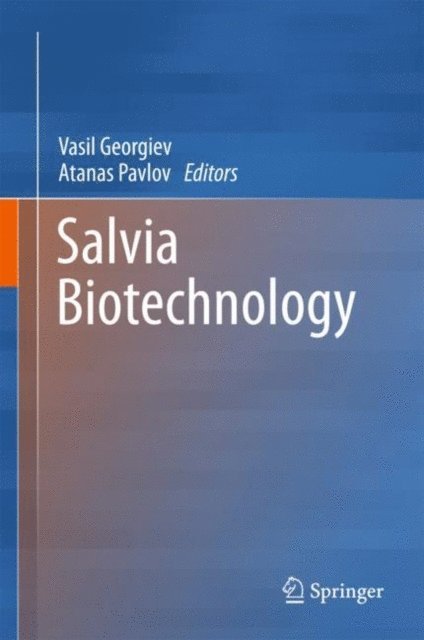
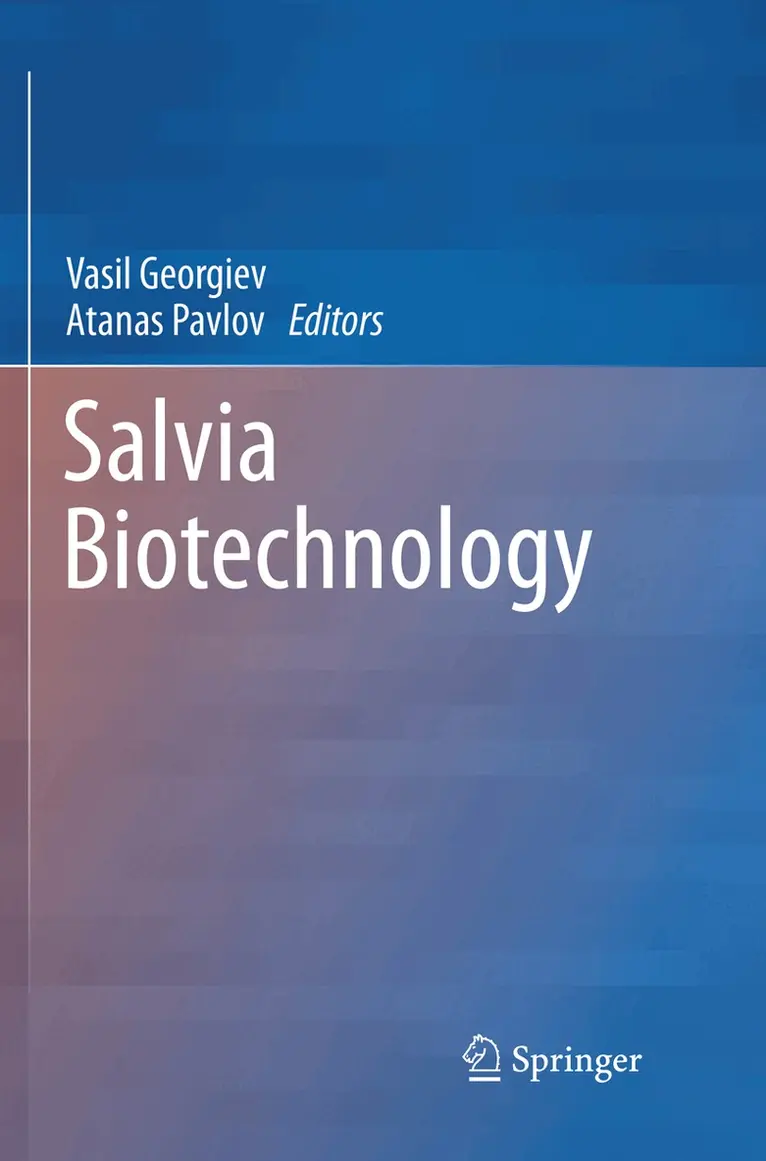
    Salvia Biotechnology

    AvVasil Georgiev,Atanas Pavlov

    Inbunden, Engelska, 2018

    1 085 kr

    Beställningsvara. Skickas inom 10-15 vardagar. Fri frakt över 249 kr.

    Beskrivning

    The genus Salvia represents nearly 1,000 species that are widely distributed around the world. It is the largest in the Lamiaceae family. Traditionally, infusions of Salvia species have been widely used to treat oral inflammation, throat and headaches, and digestive disturbances in various folklore- and ethno-medicine practices worldwide. The antispasmodic, antiseptic and hypoglycemic effects of their extracts have been recognized by the ancient healers a long time ago before the development of modern medicine. With the advances in phytochemistry and pharmacology, terpenes, polyphenols and volatile compounds have been recognized as the source of bioactivity in Salvia extracts. Nowadays, because of their valuable pharmaceutical and nutraceutical properties, many Salvia species have been widely used as ingredients in food, pharmacy and cosmetic industries. The economic importance of Salvia plants continues to increase, following closely the growing interest to the concept for modern healthy lifestyle, based on prevention by consuming quality foods and nutraceutical supplements of natural origin.However, the growing demand has led to overexploitation of natural habitats and in the last few years many wild growing Salvia species have shrunk or fallen under threat. Obviously, to deal with that problem and to prevent ecological crisis, there is an urgent need for alternative, renewable sources of Salvia biomass. Plant biotechnology can provide a wide range of tools for development of economically feasible continuous production of standardized valuable phytochemicals. Plant in vitro culture technology is a powerful method for continuous production of plant secondary metabolites under controlled conditions, recently adapted to various Salvia species. Salvia in vitro systems are harmless to natural plant populations and can be grown independently of environmental factors, geographical latitude, climatic change, and seasonal variations. Several bioactive metabolites from rare and endangered Salvia plants can be produced by employing different plant in vitro systems. However, the researches on development of large scale biotechnology, based on Salvia in vitro systems, are still in early stages and many points still have to be addressed before the commercialization to take place.In this book we intend to summarize the recent achievements in research with Salvia in vitro systems as biological matrixes for the production of pharmaceutically important secondary metabolites. Further we invited leading experts to present their recent studies on phytochemistry, ethnobotanical and ethnophamacological aspects of genus Salvia. Safety and legal issues related to implementation of Salvia plants and in vitro cultures extracts in foods, cosmetics and pharmaceutical products will be discussed as well.
    Produktinformation

    • Utgivningsdatum:2018-04-09
    • Mått:155 x 235 x 28 mm
    • Vikt:902 g
    • Format:Inbunden
    • Språk:Engelska
    • Antal sidor:427
    • Upplaga:18001
    • Förlag:Springer International Publishing AG
    • ISBN:9783319738994

    Utforska kategorier

    • Växtböcker inom Djur och Natur
    • Botanik inom Naturvetenskap och teknik
    • Biokemisk teknik inom Naturvetenskap och teknik

    Mer om författaren

    Dr. Vasil Georgiev obtained his PhD at The Stephan Angeloff Institute of Microbiology – Bulgarian Academy of Sciences in 2009. He is an expert on bioprocess engineering and secondary metabolites production by plant cells, tissue and organ cultures, functional genomics, metabolite profiling, development and improvement of plant in vitro production platforms. In 2011 he was awarded by the Bulgarian Academy of Sciences with the “Prof. Marin Drinov” prize for the outstanding research in biological sciences. Dr. Georgiev did postdoctoral research at Florida A&M University, USA (2012-2016). Since 2016, he is Associate Professor in the Laboratory of Applied Biotechnology at The Stephan Angeloff Institute of Microbiology – BAS and also joined the Department of Organic Chemistry at the University of Food Technologies, Plovdiv, BulgariaProf. Atanas Pavlov completed his PhD in biotechnology at the Stephan Angeloff Institute of Microbiology, Bulgarian Academy ofSciences in 1998. From 2003 to 2005, he did postdoctoral research at the Institute of Food Technologies and Bioprocess Engineering, University of Technologies, Dresden, Germany. In 2005, he joined The Stephan Angeloff Institute of Microbiology, Bulgarian Academy of Sciences as an Associate Professor. In 2009, he received his habilitation (DSci) and is since 2010 a Professor at the Laboratory of Applied Biotechnology. Since 2011 he also holds a second Professor position at the University of Food Technologies on Plovdiv, Bulgaria. His research is mainly focused on the production of specific bioactive metabolites by plant cell, tissue and organ cultures.

    Innehållsförteckning

    • Salvia spp: An updated on antioxidant activity and pharmacological uses.- European species of genus Salvia: secondary metabolites, pharmacological properties and biological activity.- Chia - Tiny, but mighty.- Composition of volatile compounds in Salvia sp., grown in Bulgaria and their biological activities.- Screening of Salvia leaves surface microflora for lactobacteria with potential application in development of new high-quality functional dairy products.-  Anticancer activity of Salvia miltiorrhiza.- Salvia divinorum a psychoactive plant with pharmacological potential.- Bioactive Constituents of Anatolian Salvia Species.- Salvia cell culture: a terrific factory of bioactive compounds.- Optimization of the production of rosmarinic acid in Salvia officinalis and Salvia dolomitica cell biomass with several biotechnological approaches.- Bioactivities of differentiated Salvia in vitro cultures.- Micropropagation of African Salvia species.- Molecular Markers in Salvia: Past, Present andFuture.- Genetic engineering and manipulation of metabolite pathways in Salvia plants”- under correspondence.