• Fri frakt över 249 kr
  • •
  • Snabba leveranser
  • •
  • Billiga böcker
Kundservice

Du är på sajten för privatpersoner.

Företag, bibliotek eller offentlig verksamhet?

Du handlar på classic.bokus.com, där alla dina funktioner finns intakta.
Till classic.bokus.com
Bokus logotyp. Gå till startsidan.
  • Erbjudanden
  • Nyheter
  • Student
  • Topplistor
  • Barn & ungdom
  • Bokus Play
  • E-böcker
  • Pocketböcker
  • Spel & pussel

10% rabatt på allt med kod NYSTART10 →

Sidfot

Mina sidor

    Hjälp

    • Kundservice
    • Vanliga frågor och svar
    • Frakt och leverans
    • Retur vid ångerrätt
    • Reklamera vara
    • Betalning
    • Köpvillkor
    • Allmänna villkor
    • Information om webbplatsens tillgänglighet

    Om Bokus

    • Om oss
    • Pressrum
    • För studenter
    • För företag
    • För bibliotek och offentlig verksamhet
    • För leverantörer
    • Hållbarhet

    Populärt

    • Aktuella erbjudanden
    • Presentkort
    • Studentlitteratur
    • Nya böcker
    • Topplistor
    • Signerade böcker
    • Engelska böcker

    Inspiration

    • Boktips
    • BookTok
    • Populära bokserier
    • Barnbokskaraktärer
    • Populära författare
    Logotyp för Bokus
    Följ oss på Facebook (extern länk)Följ oss på Instagram (extern länk)Följ oss på YouTube (extern länk)Följ oss på TikTok (extern länk)
    bokus @ CookiesAnpassa cookiesIntegritetspolicyKöpvillkor
    Till Citymail hemsida (extern länk)Till Budbee hemsida (extern länk)Till Postnord hemsida (extern länk)Till Schenker hemsida (extern länk)Till Early Bird hemsida (extern länk)Till Walleys hemsida (extern länk)
    1. Samhälle och politik
    2. Samhälle och kultur
    3. Kultur och medier
    4. Referensverk och tvärvetenskap

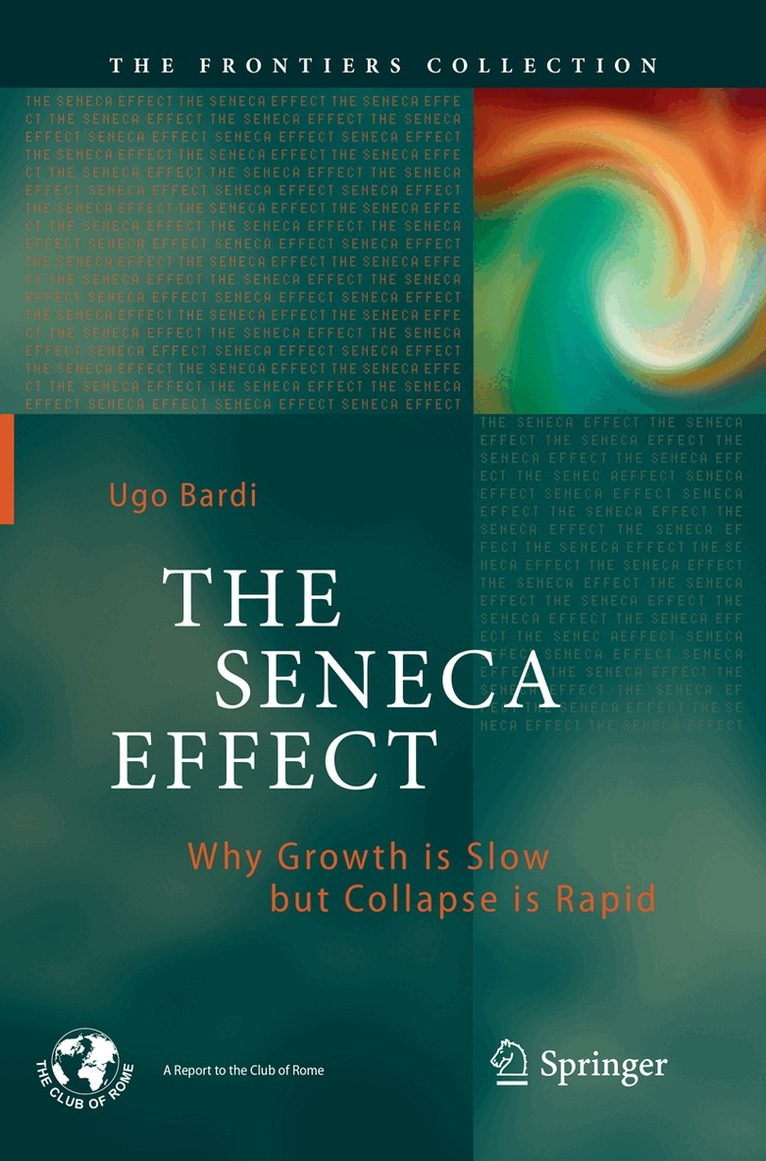
    Seneca Effect

    Why Growth is Slow but Collapse is Rapid

    AvUgo Bardi

    Häftad, Engelska, 2018

    Del i serien Frontiers Collection

    924 kr

    Beställningsvara. Skickas inom 10-15 vardagar. Fri frakt över 249 kr.

    Fler format och utgåvor

    Inbunden

    924 kr

    E-bok

    1 176 kr

    Beskrivning

    The essence of this book can be found in a line written by the ancient Roman Stoic Philosopher Lucius Annaeus Seneca: "Fortune is of sluggish growth, but ruin is rapid". This sentence summarizes the features of the phenomenon that we call "collapse," which is typically sudden and often unexpected, like the proverbial "house of cards." But why are such collapses so common, and what generates them? Several books have been published on the subject, including the well known "Collapse" by Jared Diamond (2005), "The collapse of complex societies" by Joseph Tainter (1998) and "The Tipping Point," by Malcom Gladwell (2000). Why The Seneca Effect? This book is an ambitious attempt to pull these various strands together by describing collapse from a multi-disciplinary viewpoint. The reader will discover how collapse is a collective phenomenon that occurs in what we call today "complex systems," with a special emphasis on system dynamics and the concept of "feedback." From this foundation, Bardi applies the theory to real-world systems, from the mechanics of fracture and the collapse of large structures to financial collapses, famines and population collapses, the fall of entire civilzations, and the most dreadful collapse we can imagine: that of the planetary ecosystem generated by overexploitation and climate change. The final objective of the book is to describe a conclusion that the ancient stoic philosophers had already discovered long ago, but that modern system science has rediscovered today. If you want to avoid collapse you need to embrace change, not fight it. Neither a book about doom and gloom nor a cornucopianist's dream, The Seneca Effect goes to the heart of the challenges that we are facing today, helping us to manage our future rather than be managed by it.

    Produktinformation

    • Utgivningsdatum:2018-08-18
    • Mått:155 x 235 x 13 mm
    • Vikt:353 g
    • Format:Häftad
    • Språk:Engelska
    • Serie:Frontiers Collection
    • Antal sidor:210
    • Förlag:Springer International Publishing AG
    • ISBN:9783319861036

    Utforska kategorier

    • Referensverk och tvärvetenskap inom Samhälle och politik
    • Teknik: allmänt inom Naturvetenskap och teknik
    • Sociologi inom Samhälle och politik

    Mer om författaren

    Ugo Bardi teaches physical chemistry at the University of Florence, in Italy. He is interested in resource depletion, system dynamics modeling, climate science and renewable energy. He is member of the scientific committee of ASPO (Association for the study of peak oil) and regular contributor of "The Oil Drum" and "Resilience.org". His blog in English is called "Cassandra's legacy". His most recent book in English Extracted: How the Quest for Global Mining Wealth is Plundering the Planet (Chelsea Green”, 2014. He is also the author of The Limits to Growth Revisited (Springer 2011).

    Recensioner i media

    “The bulk of this book is a catalogue of collapses. Bardi starts small with structural failures, such as collapsing building, avalanches, or cracks in metal objects and how these grow. He then walks the reader through a selection of cheerful examples of past or imminent collapses on larger scales … . Bardi’s book is an interesting and worthwhile exercise in bringing together many seemingly disparate topics into one framework that should get readers thinking.” (Leon, NHBS Book Shop, nhbs.com, September, 2018)

    Innehållsförteckning

    • Introduction.- Seneca's times: The fall of the Roman Empire.- The Seneca collapse as a critical phenomenon: why do things break?.- Networks: the Seneca collapse of complex structures.- Fast and Furious Seneca: Financial collapses.- Destroying what keeps you alive: the tragedy of the commons.- The World as a Giant Bathtub: the Seneca Collapse of Complex Systems.- World models and the collapse of everything.- The dark heart of the fossil empires.- Malthus was an optimist: famines and population collapses.- The Seneca asteroid: climate change as the ultimate collapse.- Managing complex systems: how to pull the levers in the right direction.- Conclusion: How to euthanize an empire.