• Fri frakt över 249 kr
  • •
  • Snabba leveranser
  • •
  • Billiga böcker
Kundservice

Du är på sajten för privatpersoner.

Företag, bibliotek eller offentlig verksamhet?

Du handlar på classic.bokus.com, där alla dina funktioner finns intakta.
Till classic.bokus.com
Bokus logotyp. Gå till startsidan.
  • Erbjudanden
  • Student
  • Topplistor
  • Barn & ungdom
  • Bokus Play
  • E-böcker
  • Ljudböcker
  • Pocketböcker
  • Spel och pussel

Pocketfynda! Hundratals böcker för 49 kr/st →

Sidfot

Mina sidor

    Hjälp

    • Kundservice
    • Vanliga frågor och svar
    • Frakt och leverans
    • Retur vid ångerrätt
    • Reklamera vara
    • Betalning
    • Köpvillkor
    • Allmänna villkor
    • Information om webbplatsens tillgänglighet

    Om Bokus

    • Om oss
    • Pressrum
    • För studenter
    • För företag
    • För bibliotek och offentlig verksamhet
    • För leverantörer
    • Hållbarhet

    Populärt

    • Aktuella erbjudanden
    • Presentkort
    • Studentlitteratur
    • Nya böcker
    • Topplistor
    • Signerade böcker
    • Engelska böcker

    Inspiration

    • Boktips
    • BookTok
    • Barnbokskaraktärer
    • Populära författare
    Logotyp för Bokus
    Följ oss på Facebook (extern länk)Följ oss på Instagram (extern länk)Följ oss på YouTube (extern länk)Följ oss på TikTok (extern länk)
    bokus @ CookiesAnpassa cookiesIntegritetspolicyKöpvillkor
    Till Citymail hemsida (extern länk)Till Budbee hemsida (extern länk)Till Postnord hemsida (extern länk)Till Schenker hemsida (extern länk)Till Early Bird hemsida (extern länk)Till Walleys hemsida (extern länk)
    1. Psykologi och pedagogik
    2. Pedagogik
    3. Pedagogisk psykologi

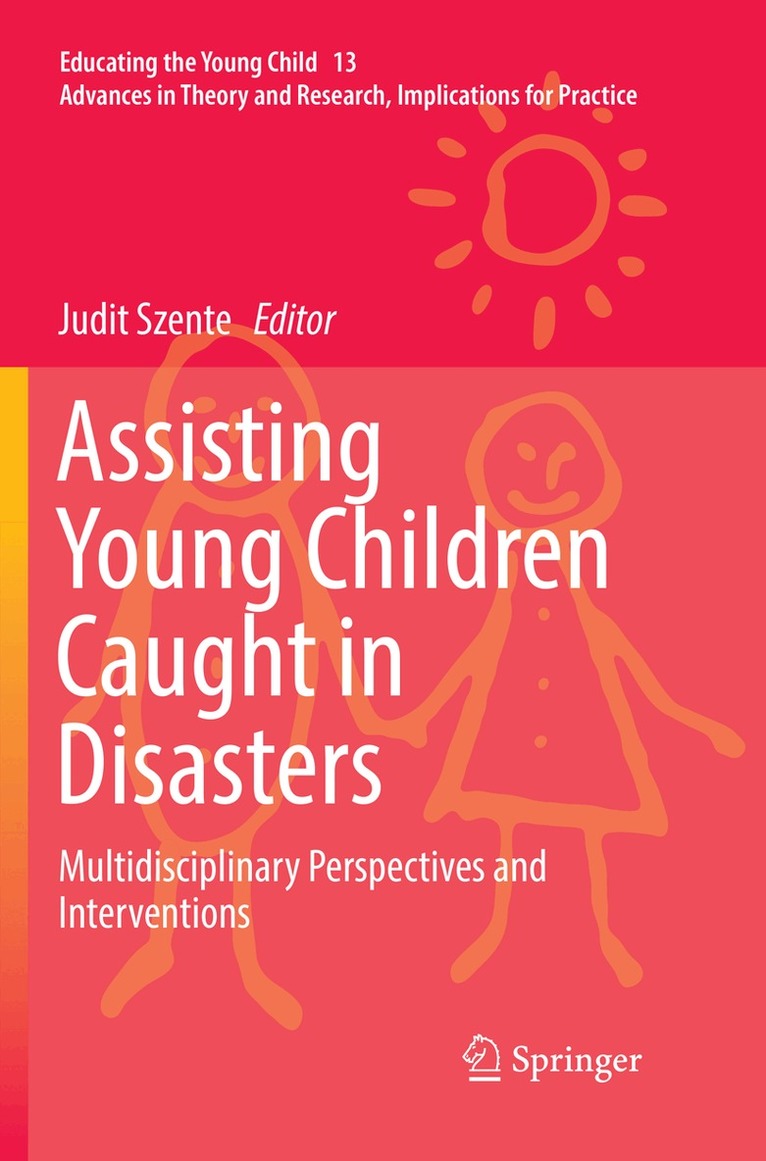
    Assisting Young Children Caught in Disasters

    Multidisciplinary Perspectives and Interventions

    AvJudit Szente

    Häftad, Engelska, 2018

    Del 13 i serien Educating the Young Child

    1 360 kr

    Beställningsvara. Skickas inom 10-15 vardagar. Fri frakt över 249 kr.

    Beskrivning

    This volume discusses 14 different types of disasters and their implications on the social, emotional and academic development of young children, from birth through age eight. It focuses on human-related crises and disasters such as community violence exposure; war and terrorism; life in military families; child trafficking; parent migration; radiation disasters; HIV/AIDS; and poverty. The environment-related disasters addressed in this book include hunger; hurricanes; earthquakes; frostbites; wildfires; and tornadoes. The volume includes suggestions for interventions, such as using picture books with young children in coping with natural disasters and human crises. In addition, each chapter provides research-based strategies for early childhood and related professionals to be used in the classroom. Many children in our world today experience some type of disasters and/or crises. These crises or disasters can either be human- or environment-related and can interrupt children’s daily lives. They often negatively impact children’s development, education, and safety. Bringing together authors representing a variety of countries including Australia, Canada, China, Finland, Haiti, Hungary, Kenya, USA, and Zimbabwe, this book provides truly global perspectives on the various types of disasters and their implications for our work with young children.

    Produktinformation

    • Utgivningsdatum:2018-08-28
    • Mått:155 x 235 x 12 mm
    • Vikt:330 g
    • Format:Häftad
    • Språk:Engelska
    • Serie:Educating the Young Child
    • Antal sidor:193
    • Förlag:Springer International Publishing AG
    • ISBN:9783319874203

    Utforska kategorier

    • Pedagogisk psykologi inom Psykologi och pedagogik
    • Utbildningsstrategier och utbildningspolitik inom Psykologi och pedagogik
    • Skolan och förskolan inom Psykologi och pedagogik

    Innehållsförteckning

    • About the Contributors.- Foreword; Nancy Brown.- Acknowledgements.- 1. Introduction: Assisting Young Children Caught in Disasters; Judit Szente.- Part I: Human Crises and Their Implications on the Education and the Social-Emotional Development of Young Children.- Introduction to Part I; Judit Szente.- 2. The Impact of Community Violence Exposure on the Developmental Outcomes of Young Children of Color; Yvette R. Harris.- 3. When War and Terrorism Enter the Lives of Young Children; Judith A. Myers-Walls.- 4. Young Children in Military Families; Erica Culler and Tara Saathoff-Wells.- 5. Trafficking of Vulnerable Children in Southeast Asia; Deanna Davy.- 6. Coping with Parents’ Work Migration in China: The Stress and Adjustment of Children Who Got Left-Behind; Chun Tao and Paul A. Miller.- 7. The Psychosocial Effects of Radiation Disasters on Young Children; John S. Murray.- 8. HIV/AIDS and the Socio-Emotional Development of Children in Southern Africa; George Chitiyo and Morgan Chitiyo.- 9. When the Basic Necessities of Life are Missing: The Impact of Poverty on Children; Judith N. Levin.- Part II: Environmental Disasters and Their Implications on the Education and the Social-Emotional Development of Young Children.- Introduction to Part II; Judit Szente.- 10. The Effects of Hunger on the Physical and Cognitive Development of Children; Grace Jepkemboi.- 11. School Districts’ and Teachers’ Responses to Hurricanes and Their Impact on Children; Holly K. Howat.- 12. Long Term Effects of the 2010 Earthquake on Haitian Children and Their Determination to Survive; Edwidge Crevecoeur Bryant and Emily Blum.- 13. Occurrence and Prevention of Frostbites in Children; Tiina Maria Ikäheimo.- 14. “Hope is in Our Hands:” Impacts of the Slave Lake Wildfires in Alberta, Canada on Children; Judith C. Kulig, Ivan Townshend, Anna Pujadas Botey and Blythe Shepard.- 15. Classroom Intervention with Young Children After a Tornado Disaster; Paul A. Miller, Chun Tao and Mary H. Burleson.- 16. Literature Support: Using Picturebooks to Assist Young Children in Coping with Natural Disasters and Human Crises; Patricia A. Crawford and Sherron Killingsworth Roberts.- Part III: Conclusion.- 17. Assisting Young Children Caught in Disasters: Lessons Learned and Implications for Educators; Judit Szente.