• Fri frakt över 249 kr
  • •
  • Snabba leveranser
  • •
  • Billiga böcker
Kundservice

Du är på sajten för privatpersoner.

Företag, bibliotek eller offentlig verksamhet?

Du handlar på classic.bokus.com, där alla dina funktioner finns intakta.
Till classic.bokus.com
Bokus logotyp. Gå till startsidan.
  • Erbjudanden
  • Nyheter
  • Student
  • Topplistor
  • Barn & ungdom
  • Bokus Play
  • E-böcker
  • Pocketböcker
  • Spel & pussel

10% rabatt på allt med kod: NYSTART10 →

Sidfot

Mina sidor

    Hjälp

    • Kundservice
    • Vanliga frågor och svar
    • Frakt och leverans
    • Retur vid ångerrätt
    • Reklamera vara
    • Betalning
    • Köpvillkor
    • Allmänna villkor
    • Information om webbplatsens tillgänglighet

    Om Bokus

    • Om oss
    • Pressrum
    • För studenter
    • För företag
    • För bibliotek och offentlig verksamhet
    • För leverantörer
    • Hållbarhet

    Populärt

    • Aktuella erbjudanden
    • Presentkort
    • Studentlitteratur
    • Nya böcker
    • Topplistor
    • Signerade böcker
    • Engelska böcker

    Inspiration

    • Boktips
    • BookTok
    • Populära bokserier
    • Barnbokskaraktärer
    • Populära författare
    Logotyp för Bokus
    Följ oss på Facebook (extern länk)Följ oss på Instagram (extern länk)Följ oss på YouTube (extern länk)Följ oss på TikTok (extern länk)
    bokus @ CookiesAnpassa cookiesIntegritetspolicyKöpvillkor
    Till Citymail hemsida (extern länk)Till Budbee hemsida (extern länk)Till Postnord hemsida (extern länk)Till Schenker hemsida (extern länk)Till Early Bird hemsida (extern länk)Till Walleys hemsida (extern länk)
    1. Samhälle och politik
    2. Samhälle och kultur
    3. Kultur och medier
    4. Medievetenskap

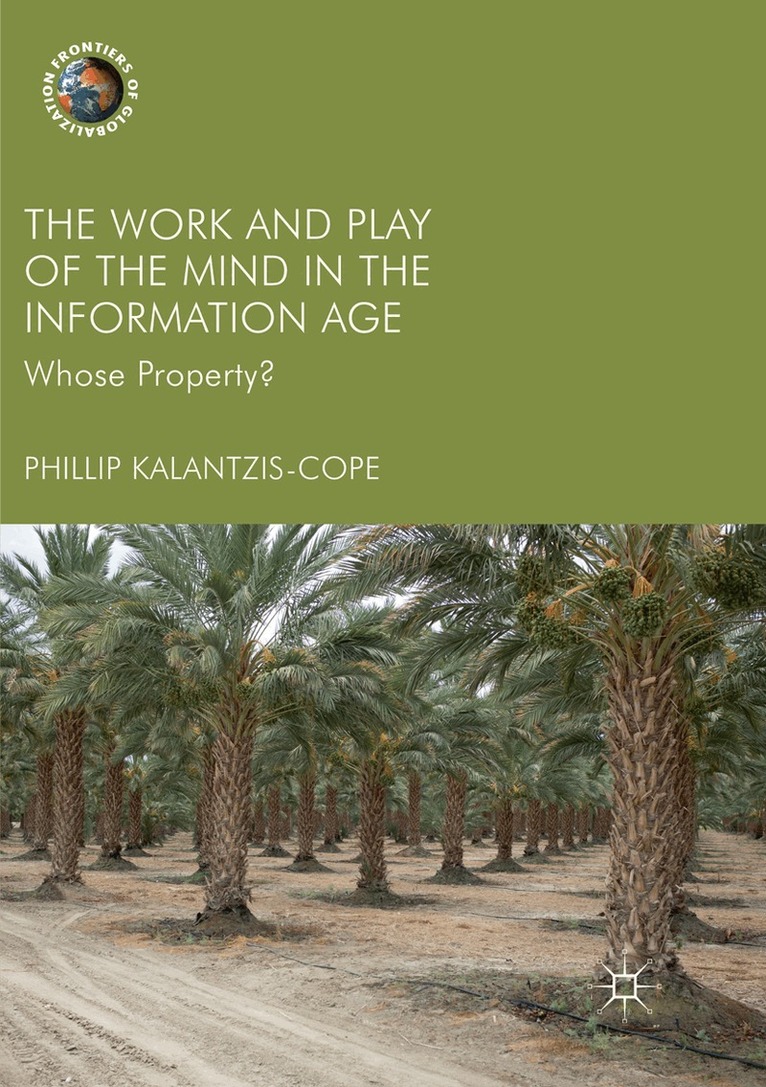
    Work and Play of the Mind in the Information Age

    Whose Property?

    AvPhillip Kalantzis-Cope

    Häftad, Engelska, 2018

    Del i serien Frontiers of Globalization

    850 kr

    Beställningsvara. Skickas inom 10-15 vardagar. Fri frakt över 249 kr.

    Fler format och utgåvor

    Inbunden

    850 kr

    E-bok

    1 082 kr

    Beskrivning

    This book tells a series of living stories about a domain of social activity, “the work and play of the mind,” in a particular historical epoch: the “information age.” The stories concern political processes and movements as varied as the World Trade Organization’s Trade-Related Aspects of Intellectual Property Rights, China’s Great Firewall, practices of image sharing in social media, Occupy Wall Street, The Arab Spring, The Alt-Right, and the use of geographical indications by indigenous peoples and farmers to defend their lifestyles.In its theoretical analysis, the book illuminates four alternative political agendas for the work and play of the mind. These four “propertyscapes” represent competing visions for social life, framing projects for collective political action that are at times competing, at times overlapping. The author prompts us to consider whose property is the work and play of the mind, as well as addressing larger questions  regarding the framing of political space, the kinds of political communities we may need for the future, and the changing place of the work and play of the mind within these social imaginaries. The book will be of interest to students and scholars across a range of disciplines including media and communications, arts and design, law, politics and interdisciplinary social sciences.

    Produktinformation

    • Utgivningsdatum:2018-08-15
    • Mått:148 x 210 x 13 mm
    • Vikt:311 g
    • Format:Häftad
    • Språk:Engelska
    • Serie:Frontiers of Globalization
    • Antal sidor:226
    • Förlag:Springer International Publishing AG
    • ISBN:9783319878430

    Utforska kategorier

    • Medievetenskap inom Samhälle och politik
    • Sociologi inom Samhälle och politik
    • Underhållning och media: Juridik inom Juridik

    Mer om författaren

    Phillip Kalantzis-Cope holds a Ph.D from the Department of Political Science at the New School for Social Research, New York, USA

    Innehållsförteckning

    • 1. Introduction: Becoming Property.- 2. The Private: Whose Equilibrium?.- 3. The Exceptional: Whose Creativity?.- 4. The Transformative: Whose Network?.- 5. The Ecological: Whose Nature?.- 6. Conclusion: Whose Property?.