Häftad, Engelska, 2018
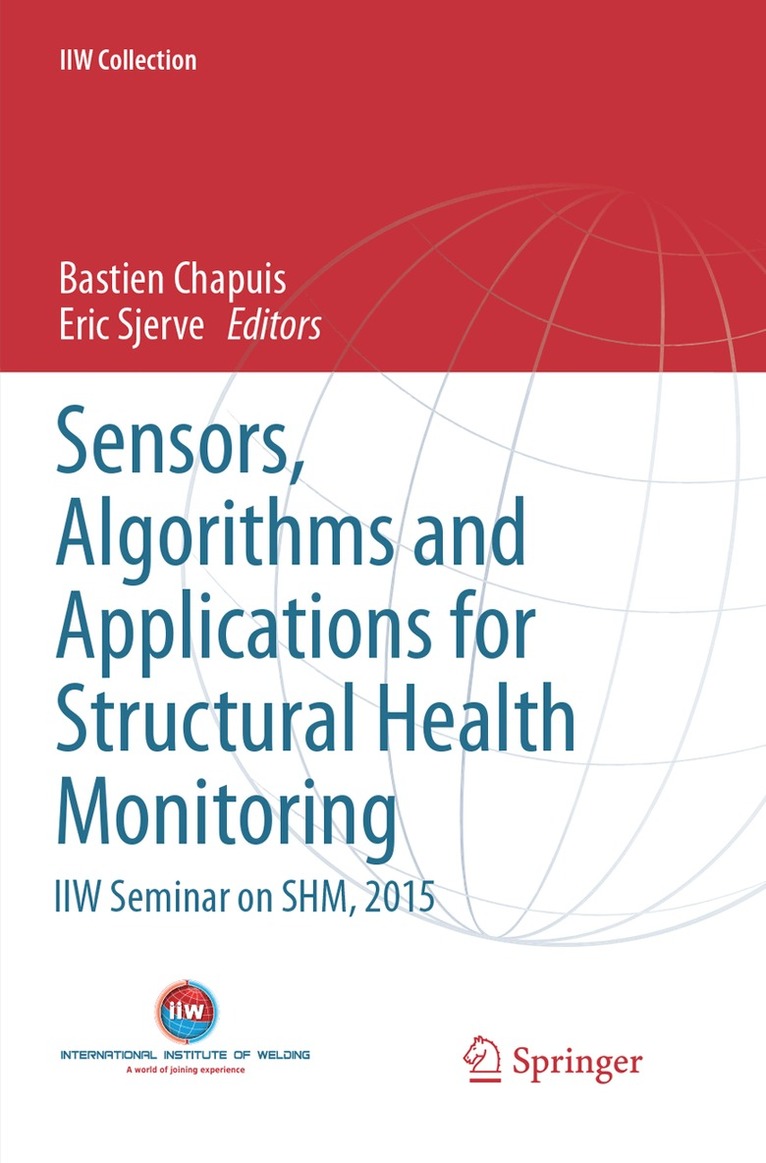
Sensors, Algorithms and Applications for Structural Health Monitoring
Av Bastien Chapuis, Eric Sjerve
1204 kr
Beställningsvara. Skickas inom 10-15 vardagar. Fri frakt över 249 kr.
Beskrivning
This book provides insights into sensor development for structural health monitoring. Current technological advances mean that the field is changing rapidly, making standardization an ongoing challenge. As such, the book gathers several essential contributions in the area of sensor development, including macro-fiber composite sensors for crack detection and optical fiber Bragg gratings for flaw detection. It also discusses the use of the welds in the structure as sensors, and probability estimation of detection for various sensor configurations. In addition, it presents methods based on vibration signal variations to detect small defects in composite components or to monitor large structures. Last but not least, the book includes special structural health monitoring applications in industrial components such as a nuclear boiler support spines and industrial presses as well as in corrosion monitoring of pipes.
Produktinformation
- Utgivningsdatum: 2018-09-04
- Mått: 155 x 235 x 7 mm
- Vikt: 184 g
- Format: Häftad
- Språk: Engelska
- Serie: IIW Collection
- Antal sidor: 98
- Förlag: Springer International Publishing AG
- ISBN: 9783319887395
Utforska kategorier
Betyg & recensioner
0 recensioner
Inga recensioner tillgängliga.