• Fri frakt över 249 kr
  • •
  • Snabba leveranser
  • •
  • Billiga böcker
Kundservice

Du är på sajten för privatpersoner.

Företag, bibliotek eller offentlig verksamhet?

Du handlar på classic.bokus.com, där alla dina funktioner finns intakta.
Till classic.bokus.com
Bokus logotyp. Gå till startsidan.
  • Erbjudanden
  • Nyheter
  • Student
  • Topplistor
  • Barn & ungdom
  • Bokus Play
  • E-böcker
  • Pocketböcker
  • Spel & pussel

Må bättre, för mindre! Upp till 50% rabatt på hälsoböcker

Sidfot

Mina sidor

    Hjälp

    • Kundservice
    • Vanliga frågor och svar
    • Frakt och leverans
    • Retur vid ångerrätt
    • Reklamera vara
    • Betalning
    • Köpvillkor
    • Allmänna villkor
    • Information om webbplatsens tillgänglighet

    Om Bokus

    • Om oss
    • Pressrum
    • För studenter
    • För företag
    • För bibliotek och offentlig verksamhet
    • För leverantörer
    • Hållbarhet

    Populärt

    • Aktuella erbjudanden
    • Presentkort
    • Studentlitteratur
    • Nya böcker
    • Topplistor
    • Signerade böcker
    • Engelska böcker

    Inspiration

    • Boktips
    • BookTok
    • Populära bokserier
    • Barnbokskaraktärer
    • Populära författare
    Logotyp för Bokus
    Följ oss på Facebook (extern länk)Följ oss på Instagram (extern länk)Följ oss på YouTube (extern länk)Följ oss på TikTok (extern länk)
    bokus @ CookiesAnpassa cookiesIntegritetspolicyKöpvillkor
    Till Citymail hemsida (extern länk)Till Budbee hemsida (extern länk)Till Postnord hemsida (extern länk)Till Schenker hemsida (extern länk)Till Early Bird hemsida (extern länk)Till Walleys hemsida (extern länk)
    1. Historia och arkeologi
    2. Arkeologi

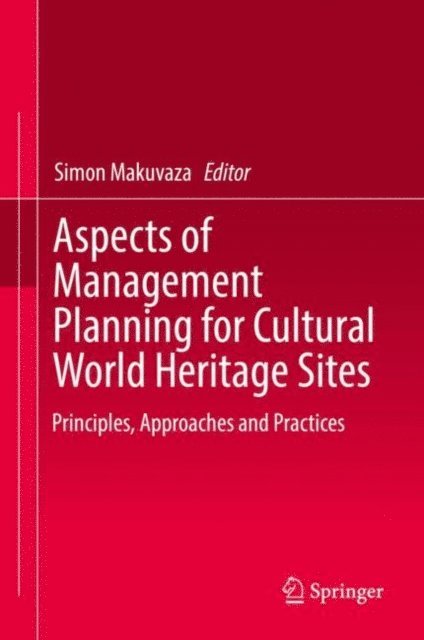
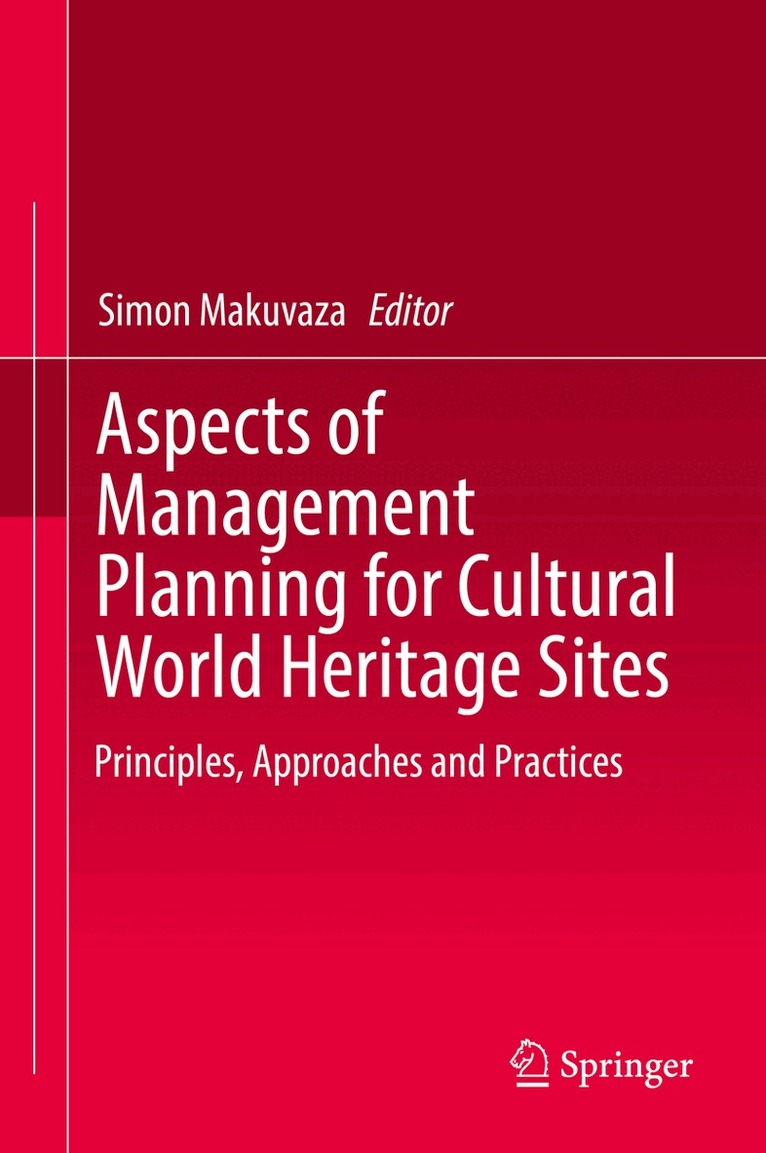
    Aspects of Management Planning for Cultural World Heritage Sites

    Principles, Approaches and Practices

    AvSimon Makuvaza

    Häftad, Engelska, 2018

    1 119 kr

    Beställningsvara. Skickas inom 10-15 vardagar. Fri frakt över 249 kr.

    Beskrivning

    Every site that is inscribed on the World Heritage List (WHL) must have a management plan or some other management system. According to the UNESCO Operational Guidelines, the purpose of a management plan is to ensure the effective protection of the nominated property for present and future generations. This requirement was in part necessitated by the need to implement real systems of monitoring on the management of World Heritage Sites.Since its implementation in 2005, discussion on the function and the contents of management plans for World Heritage Sites has grown tremendously. The discussions have mainly been focused on the theoretical frameworks of World Heritage site management plans and proposals of practical guidelines for their implementation.This volume provides a platform for heritage practitioners, especially those working at Cultural World Heritage Sites, to put in writing their experiences and impressions about the implementation of site management plans at properties that are inscribed on the WHL. Cultural World Heritage Sites in this case refer to world heritage properties such as archaeological sites, cultural landscapes, religious sites and architectural structures. The book also seeks to examine the extent to which site management plans have been or are being implemented at Cultural World Heritage Sites.


    Produktinformation

    • Utgivningsdatum:2018-09-06
    • Mått:155 x 235 x 16 mm
    • Vikt:441 g
    • Format:Häftad
    • Språk:Engelska
    • Antal sidor:261
    • Förlag:Springer International Publishing AG
    • ISBN:9783319888538

    Utforska kategorier

    • Arkeologi inom Historia och arkeologi
    • Kulturvetenskap inom Samhälle och politik
    • Referensverk och tvärvetenskap inom Samhälle och politik

    Mer om författaren

    Simon MakuvazaResearch FellowFaculty of the Built EnvironmentNational University of Science and TechnologyPO Box AC 939AscotBulawayoZimbabwe

    Innehållsförteckning

    • Part 1 - Historical Overview.- Chapter 1 - Introduction of Management Planning for Cultural World Heritage Sites.- Chapter 2 - The World Heritage Convention and its Management Concept.- Chapter 3 - The Management Plan for the World Heritage Sites as a Tool of Performance Measurement and Sustainability Reporting: Opportunities and Limits in the Italian Context.- Part 2 - Case Studies.- Chapter 4 - From Archaeological Site to World Heritage Site: The Emergence of Social Management at Monte Alban, Mexico.- Chapter 5 - Head-Smashed-In Buffalo Jump, Canada and Cahokia Mounds State Historic Site, United States.- Chapter 6 - Pragmatic Approaches to World Heritage Management-Along the Central Asian Silk Roads.- Chapter 7 - “Huai hai wei Yangzhou”: Site Management Planning and the Establishment of Yangzhou Archaeological Site Park in China.- Chapter 8 - Integrated Management of Archaeological and Rural Landscape: Feasibility Project for Gordion Archaeological Park.- Chapter 9 - Conservation Issues, Management Initiatives and the Challenges for Implementing Khami World Heritage Site Management Plans in Zimbabwe.- Chapter 10 - Concerning Heritage: Lessons from Rock Art Management in the Maloti-Drakensberg Park World Heritage Site.- Chapter 11 - Managing the Rock Art of the uKhahlamba-Drakensberg: Progress, Blind Spots and Challenges.- Chapter 12 - Conservation, Stakeholders and Local Politics: The Management of the Matobo Hills World Heritage Site, South Western Zimbabwe.- Chapter 13 - Stone Circles and Atlantic Forts: Tourism and Management of Gambia’s World Heritage Sites.- Chapter 14 - Managing a Hybrid Institution; the Evolving Case of Robben Island World Heritage Site, Western Cape, South Africa.- Chapter 15 - National Identities, New Actors and Management of World Heritage Sites: The Case of Ouro Preto and a Jesuit Mission of the Guaranis in Brazil.- Chapter 16 - The Case Study of the Town of Bamberg (Germany) Concerning the Combination of Management Plans with Participation Strategies in Urban World Heritage Properties.- Part 3 - Analysis, Discussion and Conclusion.- Chapter 17 - Making Sense of Site Management.- Chapter 18 - Governance in UNESCO World Heritage Sites: Reframing the Role of Management Plans as a Tool to Improve Community Engagement.