• Fri frakt över 249 kr
  • •
  • Snabba leveranser
  • •
  • Billiga böcker
Kundservice

Du är på sajten för privatpersoner.

Företag, bibliotek eller offentlig verksamhet?

Du handlar på classic.bokus.com, där alla dina funktioner finns intakta.
Till classic.bokus.com
Bokus logotyp. Gå till startsidan.
  • Erbjudanden
  • Nyheter
  • Student
  • Topplistor
  • Barn & ungdom
  • Bokus Play
  • E-böcker
  • Pocketböcker
  • Spel & pussel

10% studentrabatt med kod TERM26

Sidfot

Mina sidor

    Hjälp

    • Kundservice
    • Vanliga frågor och svar
    • Frakt och leverans
    • Retur vid ångerrätt
    • Reklamera vara
    • Betalning
    • Köpvillkor
    • Allmänna villkor
    • Information om webbplatsens tillgänglighet

    Om Bokus

    • Om oss
    • Pressrum
    • För studenter
    • För företag
    • För bibliotek och offentlig verksamhet
    • För leverantörer
    • Hållbarhet

    Populärt

    • Aktuella erbjudanden
    • Presentkort
    • Studentlitteratur
    • Nya böcker
    • Topplistor
    • Signerade böcker
    • Engelska böcker

    Inspiration

    • Boktips
    • BookTok
    • Populära bokserier
    • Barnbokskaraktärer
    • Populära författare
    Logotyp för Bokus
    Följ oss på Facebook (extern länk)Följ oss på Instagram (extern länk)Följ oss på YouTube (extern länk)Följ oss på TikTok (extern länk)
    bokus @ CookiesAnpassa cookiesIntegritetspolicyKöpvillkor
    Till Citymail hemsida (extern länk)Till Budbee hemsida (extern länk)Till Postnord hemsida (extern länk)Till Schenker hemsida (extern länk)Till Early Bird hemsida (extern länk)Till Walleys hemsida (extern länk)
    1. Samhälle och politik
    2. Samhälle och kultur
    3. Kultur och medier
    4. Referensverk och tvärvetenskap

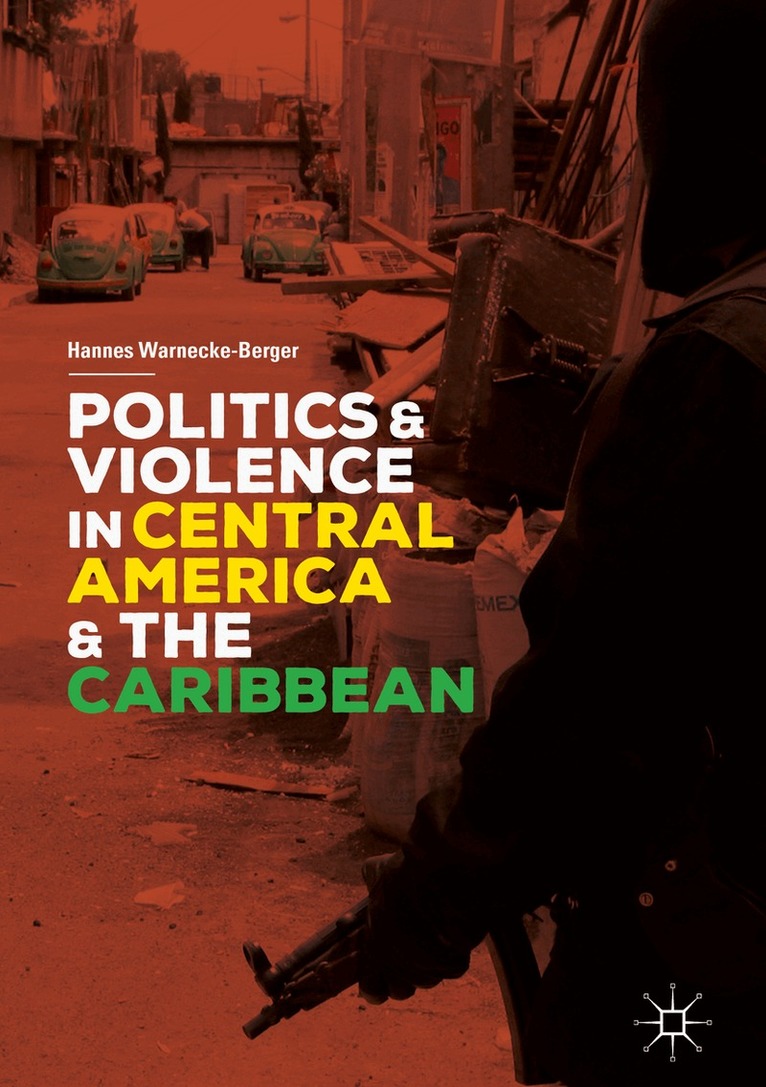
    Politics and Violence in Central America and the Caribbean

    AvHannes Warnecke-Berger

    Inbunden, Engelska, 2018

    762 kr

    Beställningsvara. Skickas inom 10-15 vardagar. Fri frakt över 249 kr.

    Fler format och utgåvor

    Häftad

    762 kr

    E-bok

    947 kr

    Beskrivning

    This book develops a comparative study on violence in Jamaica, El Salvador, and Belize based on a theoretical approach, extensive field research, and in-depth empirical research. It combines the Caribbean and Central America into a single comparative research that explores the historical (from the conquista onwards) as well as contemporary causes of violence in these societies. The volume focuses on forms of violence such as gang violence, police violence, every day forms of violence, vigilantism, and organized crime. The analysis provides a theoretical perspective that bridges political economy as well as cultural approaches in violence research. As such, it will be of interest to readers studying development, violence, political, Central American, and Caribbean studies.

    Produktinformation

    • Utgivningsdatum:2018-06-04
    • Mått:148 x 210 x 26 mm
    • Vikt:490 g
    • Format:Inbunden
    • Språk:Engelska
    • Antal sidor:281
    • Upplaga:18001
    • Förlag:Springer International Publishing AG
    • ISBN:9783319897813

    Utforska kategorier

    • Referensverk och tvärvetenskap inom Samhälle och politik
    • Religion: allmänt inom Filosofi och religion
    • Statsvetenskap och politisk teori inom Samhälle och politik

    Mer om författaren

    Hannes Warnecke-Berger is Senior Researcher at the Collaborative Research Centre 1199 “Processes of Spatialization under the Global Condition” and member of the Institute of Political Science at University of Leipzig, Germany.

    Innehållsförteckning

    • 1. Introduction.- 2. Political Economy and/or Culture? Theorizing Forms of Violence.- 3.The Roots of Current Violence: Historical Comparative Perspectives on El Salvador, Jamaica, and Belize, 1500-1980.- 4. El Salvador: Transnationalization by Polarization and the Re-Emergence of Violence.- 5. Jamaica: Transnationalization by Force and the Transformation of Violence.- 6. Belize: Transnationalization by Coincidence and the Rise of Violence.- 7. Forms of Violence in Comparative Perspective.- 8. The Cultural Political Economy of Violence: A Conclusion.