• Fri frakt över 249 kr
  • •
  • Snabba leveranser
  • •
  • Billiga böcker
Kundservice

Du är på sajten för privatpersoner.

Företag, bibliotek eller offentlig verksamhet?

Du handlar på classic.bokus.com, där alla dina funktioner finns intakta.
Till classic.bokus.com
Bokus logotyp. Gå till startsidan.
  • Erbjudanden
  • Nyheter
  • Student
  • Topplistor
  • Barn & ungdom
  • Bokus Play
  • E-böcker
  • Pocketböcker
  • Spel & pussel

10% rabatt på allt med kod NYSTART10 →

Sidfot

Mina sidor

    Hjälp

    • Kundservice
    • Vanliga frågor och svar
    • Frakt och leverans
    • Retur vid ångerrätt
    • Reklamera vara
    • Betalning
    • Köpvillkor
    • Allmänna villkor
    • Information om webbplatsens tillgänglighet

    Om Bokus

    • Om oss
    • Pressrum
    • För studenter
    • För företag
    • För bibliotek och offentlig verksamhet
    • För leverantörer
    • Hållbarhet

    Populärt

    • Aktuella erbjudanden
    • Presentkort
    • Studentlitteratur
    • Nya böcker
    • Topplistor
    • Signerade böcker
    • Engelska böcker

    Inspiration

    • Boktips
    • BookTok
    • Populära bokserier
    • Barnbokskaraktärer
    • Populära författare
    Logotyp för Bokus
    Följ oss på Facebook (extern länk)Följ oss på Instagram (extern länk)Följ oss på YouTube (extern länk)Följ oss på TikTok (extern länk)
    bokus @ CookiesAnpassa cookiesIntegritetspolicyKöpvillkor
    Till Citymail hemsida (extern länk)Till Budbee hemsida (extern länk)Till Postnord hemsida (extern länk)Till Schenker hemsida (extern länk)Till Early Bird hemsida (extern länk)Till Walleys hemsida (extern länk)
    1. Naturvetenskap och teknik
    2. Matematik och naturvetenskap
    3. Biologi
    4. Cellbiologi

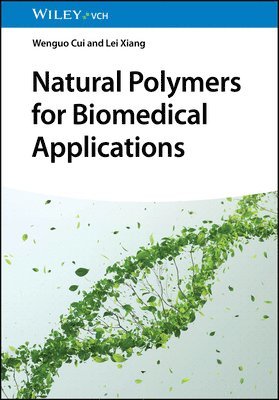
    Natural Polymers for Biomedical Applications

    AvWenguo Cui,Lei Xiang

    Inbunden, Engelska, 2024

    1 409 kr

    Skickas . Fri frakt över 249 kr.

    Beskrivning

    Develop natural solutions to biomedical problems with this introduction A natural polymer is one that forms from biosynthetic or biochemical processes typically found in nature, with corresponding advantages in biocompatibility and biodegradability. These advantages give natural polymers a range of applications, from the use of polysaccharides as structural components to the use of polyphenols as antioxidant active ingredients. In biomedical engineering they are clearly preferable to synthetic polymers in numerous cases, and their applications are more numerous every day. Natural Polymers for Biomedical Applications offers a comprehensive summary of these polymers and their biomedical applications. It covers the sources, structures, and properties of polysaccharides, polyphenols, and polypeptides, as well as analyzing the latest advances in polymer-based biomedical technologies. The result has ramifications in a vast range of industries and research areas. In Natural Polymers for Biomedical Applications readers will also find: Applications including drug and cell delivery, cell and organoid cultures, tissue regeneration, and moreDetailed analysis of alginate, cellulose, quercetin, silk fibroin, and many othersA logical, easy-to-use structure to facilitate rapid access to pertinent informationNatural Polymers for Biomedical Applications is ideal for materials scientists, polymer chemists, biochemists, and any researcher or professional in biomedical or pharmaceutical industries.

    Produktinformation

    • Utgivningsdatum:2024-08-07
    • Mått:170 x 244 x 15 mm
    • Vikt:680 g
    • Format:Inbunden
    • Språk:Engelska
    • Antal sidor:224
    • Förlag:Wiley-VCH Verlag GmbH
    • ISBN:9783527353545

    Utforska kategorier

    • Cellbiologi inom Naturvetenskap och teknik
    • Biomedicinsk teknik inom Medicin
    • Tillverkningsteknik inom Naturvetenskap och teknik

    Mer om författaren

    Wenguo Cui, PhD, is a Professor at the Shanghai Institute of Traumatology and Orthopaedics, Ruijin Hospital, Shanghai Jiao Tong University School of Medicine, Shanghai, China, as well as group leader of Regenerative Biomaterials. He has worked extensively on the development of novel biomaterials and nanomaterials for tissue regeneration, drug delivery, and disease treatment, and his awards and honors include the Fundamental Bone Research Scholar award from the Chinese Medical Association and the Huaxia Medicine Award, among many others.Lei Xiang is a doctoral candidate in medicine at the Shanghai Institute of Traumatology and Orthopaedics, Ruijin Hospital, Shanghai Jiao Tong University School of Medicine, Shanghai, China. His research concerns novel biomaterials and nanomaterials for tissue regeneration, as well as treatment for sports medicine diseases.

    Innehållsförteckning

    • Graphical Abstract xiForeword xiiiPreface xviiAcknowledgments xixSection I Historical Review of the Development of Natural Polymers 1References 3Section II Polysaccharides for Biomedical Application 51 Sources, Structures, and Properties of Alginate 71.1 Alginate-Based Hydrogel for Biomedical Application 81.1.1 Drug and Cell Delivery 81.1.2 Cell and Organoid Culture 131.1.3 Tissue Regeneration 151.1.4 Other Applications 181.2 Alginate-Based Electrospinning for Biomedical Application 211.2.1 Drug Delivery 211.2.2 Tissue Regeneration 231.3 Alginate-Based 3D Printing for Biomedical Application 281.3.1 Alginate-Based Bio-Ink and Printing Strategies Improvement 281.3.2 Attempts at Bionic Matrix Ink 29References 312 Sources, Structures, and Properties of Cellulose 392.1 Cellulose-Based Hydrogel for Biomedical Application 392.1.1 Drug Delivery 392.1.2 Cell and Organoid Culture 442.1.3 Tissue Regeneration 452.2 Cellulose-Based Electrospinning for Biomedical Application 492.2.1 Drug Delivery 492.2.2 Antibacterial 512.2.3 Tissue Regeneration 522.3 Cellulose-Based 3D Printing for Biomedical Application 552.3.1 Improvement of Bio-Ink 552.3.2 Bacteria and Cell Culture 57References 593 Sources, Structures, and Properties of Hyaluronic Acid 653.1 Hyaluronic-Acid-Based Hydrogel for Biomedical Application 663.1.1 Cell and Organoids Culture 663.1.2 Cell Behaviors Regulation 673.1.3 Drug Delivery 703.1.4 Tissue Regeneration 713.2 Hyaluronic-Acid-Based Electrospinning for Biomedical Application 743.2.1 Drug Delivery and Antibacterial 743.2.2 Tissue Regeneration 753.3 Hyaluronic-Acid-Based 3D Printing for Biomedical Application 773.3.1 Cell and Organoid Culture 773.3.2 Tissue Regeneration 78References 814 Sources, Structures, and Properties of Chitosan 854.1 Chitosan-Based Hydrogel for Biomedical Application 854.1.1 Cell and Organoid Culture 854.1.2 Tissue Regeneration 864.2 Chitosan-Based Electrospinning for Biomedical Application 914.2.1 Drug and Cell Delivery 914.2.2 Tissue Regeneration 924.3 Chitosan-Based 3D Printing for Biomedical Application 954.3.1 Cell Behavior Regulation 954.3.2 Drug Delivery 954.3.3 Tissue Regeneration 95References 985 Sources, Structures, and Properties of Other Polysaccharides 1015.1 Other Polysaccharides-Based Hydrogel for Biomedical Application 1025.1.1 Drug Delivery 1025.1.2 Cell and Organoid Culture 1035.1.3 Tissue Regeneration 1045.2 Other Polysaccharides-Based Electrospinning for Biomedical Application 1075.2.1 Drug Delivery 1075.2.2 Tissue Regeneration 1075.3 Other Polysaccharides 3D Printing for Biomedical Application 1095.3.1 Drug Delivery 1095.3.2 Tissue Regeneration 109References 1106 Summary 113Section III Polypeptides for Biomedical Application 1157 Sources, Structures, and Properties of Collagen 1177.1 Collagen-Based Hydrogel for Biomedical Application 1177.1.1 Drug Delivery 1177.1.2 Cell and Organoid Culture 1197.1.3 Cell Behavior Regulation 1197.1.4 Tissue Regeneration 1207.2 Collagen-Based Electrospinning for Biomedical Application 1217.2.1 Cell and Organoid Culture 1217.2.2 Tissue Regeneration 1227.3 Collagen-Based 3D Printing for Biomedical Application 1227.3.1 Tissue Regeneration 122References 1248 Sources, Structures, and Properties of Gelatin 1278.1 Gelatin-Based Hydrogel for Biomedical Application 1278.1.1 Cell Culture and Behavior Regulation 1278.1.2 Drug Delivery 1298.1.3 Tissue Regeneration 1298.2 Gelatin-Based Electrospinning for Biomedical Application 1298.2.1 Cell Culture 1298.2.2 Tissue Regeneration 1308.3 Gelatin-Based 3D Printing for Biomedical Application 1318.3.1 Tissue Regeneration 131References 1329 Sources, Structures, and Properties of Silk Fibroin 1359.1 Silk-Fibroin-Based Hydrogel for Biomedical Application 1359.1.1 Drug Delivery and Cell Culture 1359.1.2 Tissue Regeneration 1369.2 Silk-Fibroin-Based Electrospinning for Biomedical Application 1379.2.1 Drug Delivery and Antibacterial 1379.2.2 Tissue Regeneration 1389.3 Silk-Fibroin-Based 3D Printing for Biomedical Application 1389.3.1 Tissue Regeneration 138References 13910 Sources, Structures, and Properties of Other Polypeptides 14310.1 Other Polypeptides-Based Hydrogel for Biomedical Application 14310.1.1 Cell Culture and Delivery 14310.1.2 Tissue Engineering and Drug Delivery 14410.2 Other Polypeptides-Based Electrospinning for Biomedical Application 14410.2.1 Drug Delivery 14410.2.2 Tissue Regeneration 14510.3 Other Polypeptides-Based 3D Printing for Biomedical Application 14610.3.1 Cell and Organoid Culture 14610.3.2 Tissue Regeneration 147References 14911 Summary 153Section IV other Kinds of Natural Polymers for Biomedical Application 15512 Sources, Structures, and Properties of Catechins 15712.1 Catechins-Based Hydrogel for Biomedical Application 15712.2 Catechins-Based Electrospinning for Biomedical Application 15812.3 Catechins–Metal Complexes for Biomedical Application 158References 15913 Sources, Structures, and Properties of Quercetin 16113.1 Quercetin-Based Hydrogel for Biomedical Application 16113.2 Quercetin-Based Electrospinning for Biomedical Application 16213.3 Quercetin–Metal Complexes for Biomedical Application 162References 16314 Sources, Structures, and Properties of Resveratrol 16714.1 Resveratrol-Based Hydrogel for Biomedical Application 16714.2 Resveratrol-Based Electrospinning for Biomedical Application 16814.3 Resveratrol–Metal Complexes for Biomedical Application 169References 17015 Sources, Structures, and Properties of Curcumin 17315.1 Curcumin-Based Hydrogel for Biomedical Application 17315.2 Curcumin-Based Electrospinning for Biomedical Application 17515.3 Curcumin–Metal Complexes for Biomedical Application 176References 17716 Summary 181References 18117 Conclusion and Outlook 183References 184Declaration of Competing Interest 187Nomenclature 189Index 191