Wenguo Cui – författare
2 317 kr
Skickas inom 10-15 vardagar
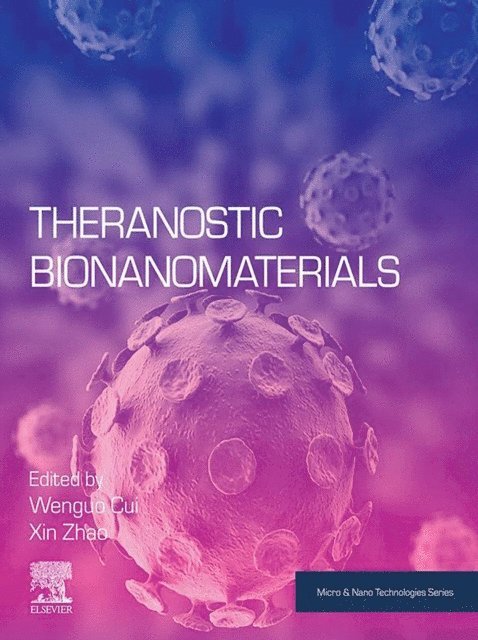
Theranostic Bionanomaterials is an invaluable study of recent advances and trends in the development and application of functional bionanomaterials for theranostic applications. This book describes the design and characterization of nanomaterials which exhibit distinctive physical, chemical and biological properties and discusses how these functional nanomaterials enable the precise manipulation of architectural, physical and biochemical cell microenvironments in vitro. In addition, it covers how they can act as the carriers of diagnostic or therapeutic agents, thus providing new pathways or strategies for disease diagnosis and treatment. Specific chapters discuss protein delivery, drug delivery, tissue regeneration, bioimaging, biodetection, and much more.
This book will be a critical resource for those involved in cutting-edge research in theranostics bionanomaterial.
Focuses on nanofabrication methods of bionanomaterials Reviews the application of bionanomaterials, with a focus on drug delivery and diagnosis Describes the design and characterization of nanomaterials which exhibit distinctive physical, chemical and biological properties3 204 kr
Läs direkt efter köp
2 429 kr
Skickas inom 11-20 vardagar
1 413 kr
Skickas
3 357 kr
Läs direkt efter köp
A comprehensive overview of biofabrication techniques for orthopedics and their novel applications
With an ever-increasing global population and the rise in the occurrence of orthopedic diseases amongst an aging population, it is essential for technological advances to meet this growing medical need. Orthopedic biofabrication is a cutting-edge field that seeks to produce novel clinical solutions to this mounting problem, through the incorporation of revolutionary technologies that have the potential to not only transform healthcare, but also provide highly automated and personalized patient solutions. With the advances in the discipline, there is a significant growing interest in biofabrication for orthopedics in research activity geared towards routine clinical use.
Ideal for a broad readership amongst medical practitioners and scientists, Biofabrication for Orthopedics summarizes all aspects of the topic: detailed information on the technology, along with advanced developments, research progress, and future perspectives on biofabrication for orthopaedics—particularly on the potential applications for tissue engineering technologies. In doing so, the book describes the various biomaterials—natural and synthetic—use for orthopedics and discusses the many ways in which these materials can be used in all parts of the body. As such, it offers detailed information on a wide range of applications in the fields of biology and clinical and industrial manufacturing.
Biofabrication for Orthopedics readers will also find:
Insights into the applications of biofabrication technologies in various bodily functions Thorough discussion of different biofabrication techniques used in creating orthopedic products, like stereolithography, cell sheet and organ bioprinting, electrospinning, and microfluidics Discussion of a wide range of diverse functions, such as bone implants, skin regeneration, vascularization, meniscus remodeling, and moreBiofabrication for Orthopedics is a useful reference for those in a variety of research fields like medical-related practitioners and scientists, materials science, medicine, and manufacturing, as well as the libraries who support them.
3 239 kr
Läs direkt efter köp
A comprehensive overview of biofabrication techniques for orthopedics and their novel applications
With an ever-increasing global population and the rise in the occurrence of orthopedic diseases amongst an aging population, it is essential for technological advances to meet this growing medical need. Orthopedic biofabrication is a cutting-edge field that seeks to produce novel clinical solutions to this mounting problem, through the incorporation of revolutionary technologies that have the potential to not only transform healthcare, but also provide highly automated and personalized patient solutions. With the advances in the discipline, there is a significant growing interest in biofabrication for orthopedics in research activity geared towards routine clinical use.
Ideal for a broad readership amongst medical practitioners and scientists, Biofabrication for Orthopedics summarizes all aspects of the topic: detailed information on the technology, along with advanced developments, research progress, and future perspectives on biofabrication for orthopaedics—particularly on the potential applications for tissue engineering technologies. In doing so, the book describes the various biomaterials—natural and synthetic—use for orthopedics and discusses the many ways in which these materials can be used in all parts of the body. As such, it offers detailed information on a wide range of applications in the fields of biology and clinical and industrial manufacturing.
Biofabrication for Orthopedics readers will also find:
Insights into the applications of biofabrication technologies in various bodily functions Thorough discussion of different biofabrication techniques used in creating orthopedic products, like stereolithography, cell sheet and organ bioprinting, electrospinning, and microfluidics Discussion of a wide range of diverse functions, such as bone implants, skin regeneration, vascularization, meniscus remodeling, and moreBiofabrication for Orthopedics is a useful reference for those in a variety of research fields like medical-related practitioners and scientists, materials science, medicine, and manufacturing, as well as the libraries who support them.
1 725 kr
Läs direkt efter köp
Develop natural solutions to biomedical problems with this introduction
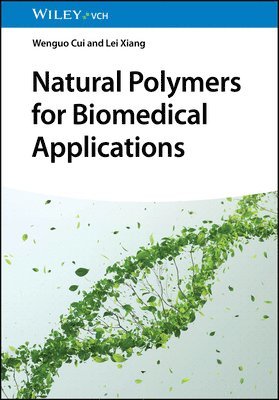
A natural polymer is one that forms from biosynthetic or biochemical processes typically found in nature, with corresponding advantages in biocompatibility and biodegradability. These advantages give natural polymers a range of applications, from the use of polysaccharides as structural components to the use of polyphenols as antioxidant active ingredients. In biomedical engineering they are clearly preferable to synthetic polymers in numerous cases, and their applications are more numerous every day.
Natural Polymers for Biomedical Applications offers a comprehensive summary of these polymers and their biomedical applications. It covers the sources, structures, and properties of polysaccharides, polyphenols, and polypeptides, as well as analyzing the latest advances in polymer-based biomedical technologies. The result has ramifications in a vast range of industries and research areas.
In Natural Polymers for Biomedical Applications readers will also find:
Applications including drug and cell delivery, cell and organoid cultures, tissue regeneration, and moreDetailed analysis of alginate, cellulose, quercetin, silk fibroin, and many othersA logical, easy-to-use structure to facilitate rapid access to pertinent informationNatural Polymers for Biomedical Applications is ideal for materials scientists, polymer chemists, biochemists, and any researcher or professional in biomedical or pharmaceutical industries.
1 725 kr
Läs direkt efter köp
Develop natural solutions to biomedical problems with this introduction
A natural polymer is one that forms from biosynthetic or biochemical processes typically found in nature, with corresponding advantages in biocompatibility and biodegradability. These advantages give natural polymers a range of applications, from the use of polysaccharides as structural components to the use of polyphenols as antioxidant active ingredients. In biomedical engineering they are clearly preferable to synthetic polymers in numerous cases, and their applications are more numerous every day.
Natural Polymers for Biomedical Applications offers a comprehensive summary of these polymers and their biomedical applications. It covers the sources, structures, and properties of polysaccharides, polyphenols, and polypeptides, as well as analyzing the latest advances in polymer-based biomedical technologies. The result has ramifications in a vast range of industries and research areas.
In Natural Polymers for Biomedical Applications readers will also find:
Applications including drug and cell delivery, cell and organoid cultures, tissue regeneration, and moreDetailed analysis of alginate, cellulose, quercetin, silk fibroin, and many othersA logical, easy-to-use structure to facilitate rapid access to pertinent informationNatural Polymers for Biomedical Applications is ideal for materials scientists, polymer chemists, biochemists, and any researcher or professional in biomedical or pharmaceutical industries.