• Fri frakt över 249 kr
  • •
  • Snabba leveranser
  • •
  • Billiga böcker
Kundservice

Du är på sajten för privatpersoner.

Företag, bibliotek eller offentlig verksamhet?

Du handlar på classic.bokus.com, där alla dina funktioner finns intakta.
Till classic.bokus.com
Bokus logotyp. Gå till startsidan.
  • Erbjudanden
  • Nyheter
  • Student
  • Topplistor
  • Barn & ungdom
  • Bokus Play
  • E-böcker
  • Pocketböcker
  • Spel & pussel

Må bättre, för mindre! Upp till 50% rabatt på hälsoböcker

Sidfot

Mina sidor

    Hjälp

    • Kundservice
    • Vanliga frågor och svar
    • Frakt och leverans
    • Retur vid ångerrätt
    • Reklamera vara
    • Betalning
    • Köpvillkor
    • Allmänna villkor
    • Information om webbplatsens tillgänglighet

    Om Bokus

    • Om oss
    • Pressrum
    • För studenter
    • För företag
    • För bibliotek och offentlig verksamhet
    • För leverantörer
    • Hållbarhet

    Populärt

    • Aktuella erbjudanden
    • Presentkort
    • Studentlitteratur
    • Nya böcker
    • Topplistor
    • Signerade böcker
    • Engelska böcker

    Inspiration

    • Boktips
    • BookTok
    • Populära bokserier
    • Barnbokskaraktärer
    • Populära författare
    Logotyp för Bokus
    Följ oss på Facebook (extern länk)Följ oss på Instagram (extern länk)Följ oss på YouTube (extern länk)Följ oss på TikTok (extern länk)
    bokus @ CookiesAnpassa cookiesIntegritetspolicyKöpvillkor
    Till Citymail hemsida (extern länk)Till Budbee hemsida (extern länk)Till Postnord hemsida (extern länk)Till Schenker hemsida (extern länk)Till Early Bird hemsida (extern länk)Till Walleys hemsida (extern länk)
    1. Samhälle och politik
    2. Sociologi och antropologi
    3. Sociologi

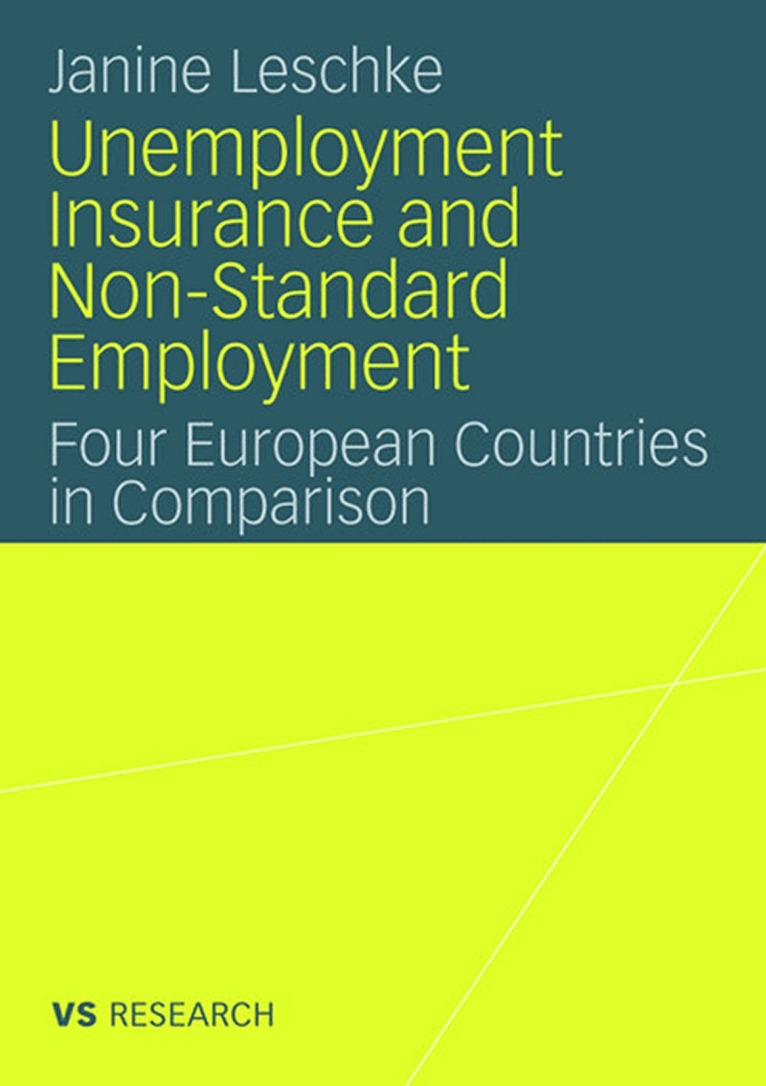
    Unemployment Insurance and Non-Standard Employment

    Four European Countries in Comparison

    AvJanine Leschke

    Häftad, Engelska, 2008

    547 kr

    Beställningsvara. Skickas inom 10-15 vardagar. Fri frakt över 249 kr.

    Fler format och utgåvor

    E-bok

    712 kr

    Beskrivning

    The importance of non-standard employment forms has increased over the last decades. Janine Leschke addresses two important questions in this regard. First, do workers with part-time and temporary contracts face greater risks of becoming unemployed than those with regular contracts? Secondly, how far are they disadvantaged in terms of access to and level of unemployment benefits? The author compares the design of unemployment benefit systems in Denmark, Germany, Spain, and the United Kingdom. After discussing the development and role of non-standard employment in these countries, she examines the relevant features of unemployment insurance systems such as hours and earning thresholds and minimum contribution requirements. Her empirical analysis shows that non-standard workers are more likely to become unemployed or inactive and are disadvantaged in their entitlements to unemployment benefits.

    Produktinformation

    • Utgivningsdatum:2008-09-29
    • Mått:148 x 210 x 17 mm
    • Vikt:387 g
    • Format:Häftad
    • Språk:Engelska
    • Antal sidor:250
    • Upplaga:2008
    • Förlag:Springer Fachmedien Wiesbaden
    • ISBN:9783531159928

    Utforska kategorier

    • Sociologi inom Samhälle och politik
    • Statsvetenskap och politisk teori inom Samhälle och politik
    • Sociala grupper och identitet inom Samhälle och politik

    Mer om författaren

    Dr. Janine Leschke completed her doctoral studies under the supervision of Prof. Dr. Günther Schmid at the Otto-Suhr-Institute of Political Sciences at the Freie Universität in Berlin. She does research on employment and social policy at the European Trade Union Institute for Research, Education and Health and Safety in Brussels.

    Innehållsförteckning

    • Theoretical background.- Labour market indicators and the occurrence of non-standard employment.- Regulation of temporary and part-time employment and reasons for using them.- Are unemployment insurance systems adapting to non-standard employment?.- Risk of job loss and the insurance situation of non-standard workers.- Conclusion.