Inbunden, Engelska, 2015
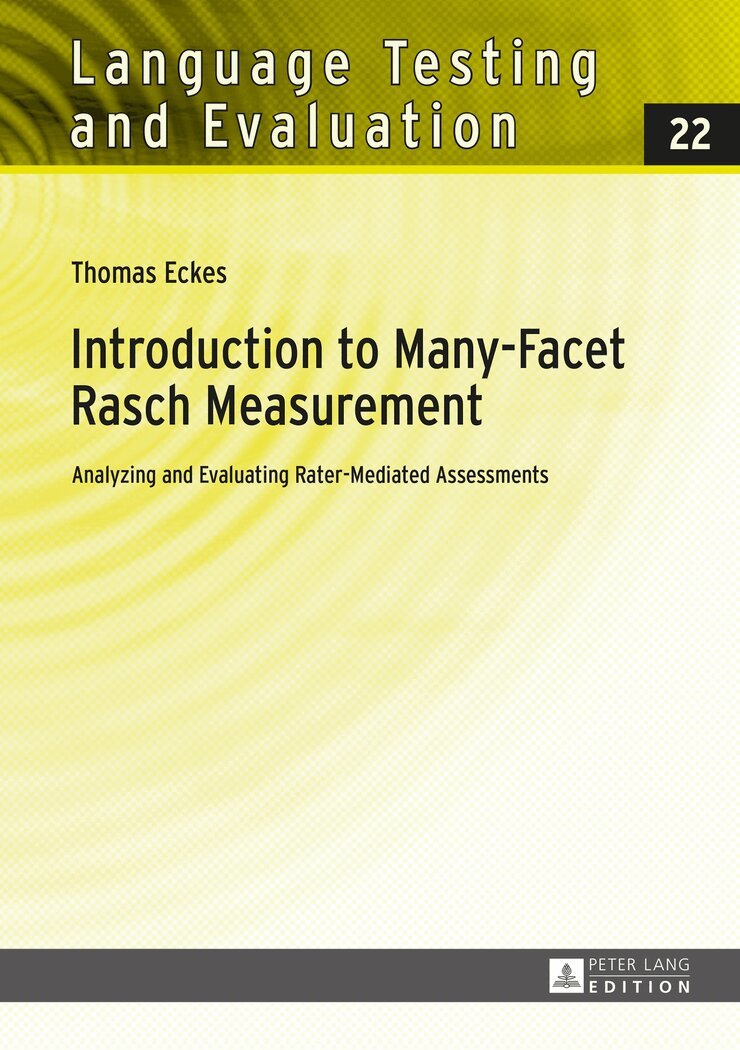
Introduction to Many-Facet Rasch Measurement
Analyzing and Evaluating Rater-Mediated Assessments. 2nd Revised and Updated Edition
Av Thomas Eckes
Del 22 i serien Language Testing and Evaluation
708 kr
Beställningsvara. Skickas inom 5-8 vardagar. Fri frakt över 249 kr.
Beskrivning
Produktinformation
- Utgivningsdatum: 2015-09-16
- Mått: 148 x 210 x 19 mm
- Vikt: 420 g
- Format: Inbunden
- Språk: Engelska
- Serie: Language Testing and Evaluation
- Antal sidor: 241
- Upplaga: 2
- Förlag: Peter Lang AG
- ISBN: 9783631656150
Utforska kategorier
Mer om författaren
Thomas Eckes is Head of the Psychometrics and Research Methodology Department, TestDaF Institute, University of Bochum, Germany. His research interests include language testing, multivariate data analysis, large-scale assessments, psychometric modeling of language competencies, and web-based testing.
Recensioner i media
«[…] this book covers a diverse array of both basic and important topics related to Rasch measurement, providing insights into complexities and intricacies involved in rater-mediated performance assessment. This books is highly recommended to researchers, practitioners, and other stakeholders who are interested in Rasch measurement, but only have a limited understanding of Rasch modeling. The book is also suitable for advanced learners and applied researchers who could consult advanced modeling techniques discussed in Chapters 8 and 9.»(Chao Han, Measurement: Interdisciplinary Research and Perspectives, 2019, Vol. 17, N° 2)«The strengths of this book are numerous. Discussing the MFRM approach in the context of language testing can make the concept of facets (raters, students, etc.) and their associated issues (e.g., rater variability) appealing to educators. The book discusses the limitations of standard approaches in reducing between-rater variation and shows how the MFRM approach can be used to regulate error proneness of human ratings that is inherent in such ratings. The author’s broad perspective on psychometric argument of fair scores can be used with an eye toward equity in human ratings of students’ performance. The quality of the examples in the book is impressive. It provides an understanding of the potential in using the MFRM approach in the broader fields of education, human health sciences, and many other fields»(Daeryong Seo & Husein Taherbhai, Applied Psychological Measurement, 2013, 37(2))
Betyg & recensioner
0 recensioner
Inga recensioner tillgängliga.