• Fri frakt över 249 kr
  • •
  • Snabba leveranser
  • •
  • Billiga böcker
Kundservice

Du är på sajten för privatpersoner.

Företag, bibliotek eller offentlig verksamhet?

Du handlar på classic.bokus.com, där alla dina funktioner finns intakta.
Till classic.bokus.com
Bokus logotyp. Gå till startsidan.
  • Erbjudanden
  • Nyheter
  • Student
  • Topplistor
  • Barn & ungdom
  • Bokus Play
  • E-böcker
  • Pocketböcker
  • Spel & pussel

10% rabatt på allt med kod NYSTART10 →

Sidfot

Mina sidor

    Hjälp

    • Kundservice
    • Vanliga frågor och svar
    • Frakt och leverans
    • Retur vid ångerrätt
    • Reklamera vara
    • Betalning
    • Köpvillkor
    • Allmänna villkor
    • Information om webbplatsens tillgänglighet

    Om Bokus

    • Om oss
    • Pressrum
    • För studenter
    • För företag
    • För bibliotek och offentlig verksamhet
    • För leverantörer
    • Hållbarhet

    Populärt

    • Aktuella erbjudanden
    • Presentkort
    • Studentlitteratur
    • Nya böcker
    • Topplistor
    • Signerade böcker
    • Engelska böcker

    Inspiration

    • Boktips
    • BookTok
    • Populära bokserier
    • Barnbokskaraktärer
    • Populära författare
    Logotyp för Bokus
    Följ oss på Facebook (extern länk)Följ oss på Instagram (extern länk)Följ oss på YouTube (extern länk)Följ oss på TikTok (extern länk)
    bokus @ CookiesAnpassa cookiesIntegritetspolicyKöpvillkor
    Till Citymail hemsida (extern länk)Till Budbee hemsida (extern länk)Till Postnord hemsida (extern länk)Till Schenker hemsida (extern länk)Till Early Bird hemsida (extern länk)Till Walleys hemsida (extern länk)
    1. Historia och arkeologi
    2. Historia
    3. Europas historia

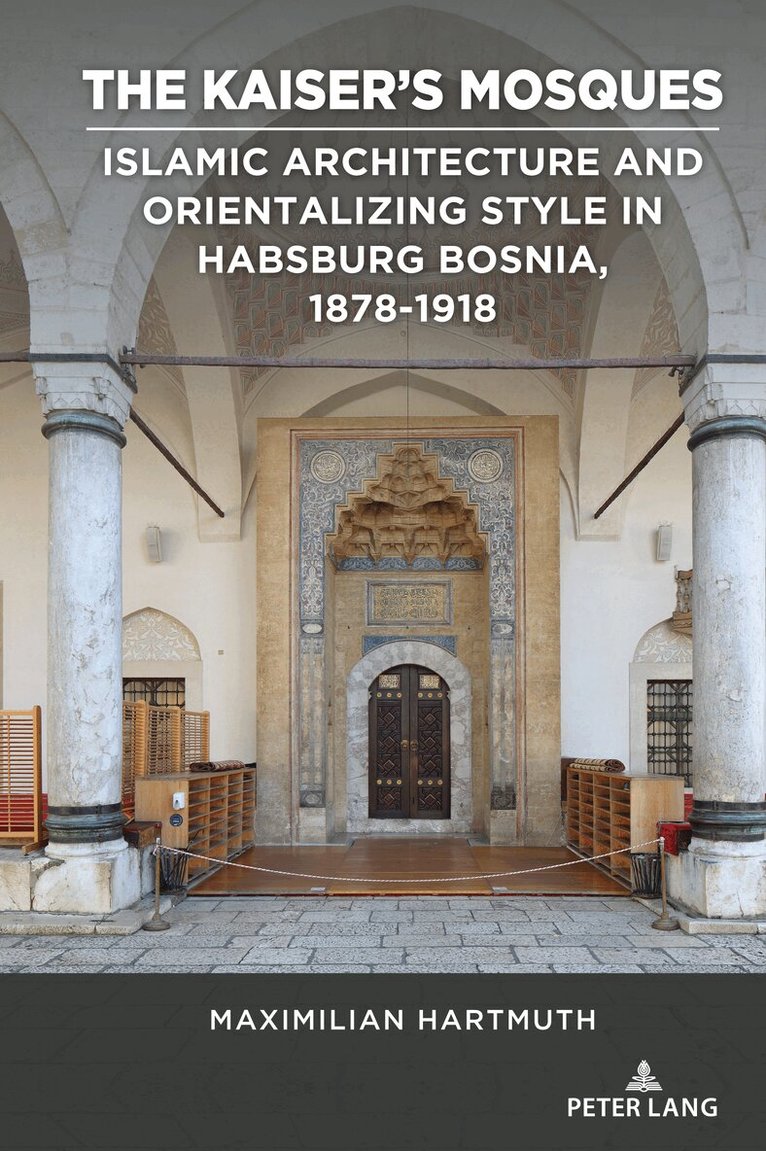
    Kaiser’s Mosques

    Islamic Architecture and Orientalizing Style in Habsburg Bosnia, 1878–1918

    AvMaximilian Hartmuth,Margarete Lamb-Faffelberger

    Inbunden, Engelska, 2025

    Del 4 i serien Studies in Central European Culture

    587 kr

    Tillfälligt slut

    Beskrivning

    This book highlights an understudied experiment at the intersection of 19th-century European and Islamic architectural histories. It draws attention to a body of buildings designed by architects trained in Central Europe for use by Muslims in Habsburg-ruled Bosnia-Herzegovina (1878–1918). They include mosques, madrasas, and other buildings corresponding to a traditional Islamic formal and functional typology. The composition and decoration, however, is the product of 19th-century European Historicist conduct. It became a prominent style for town halls and private residences; on occasion, it was also used for railway stations, schools, or hotels. The spread and concentration of buildings in this style in Bosnia is extraordinary. This monography not only fills a gap in an art history that has long turned a blind eye to Europe’s Southeast but also contributes to our understanding of European powers’ historical responses to the challenge of cultural diversity in territories under their control.

    Produktinformation

    • Utgivningsdatum:2025-01-27
    • Mått:152 x 229 x 0 mm
    • Vikt:656 g
    • Format:Inbunden
    • Språk:Engelska
    • Serie:Studies in Central European Culture
    • Antal sidor:274
    • Förlag:Peter Lang AG
    • ISBN:9783631909850

    Utforska kategorier

    • Europas historia inom Historia och arkeologi
    • Arkitekturhistoria inom Kultur
    • Konsthistoria inom Kultur

    Mer om författaren

    Maximilian Hartmuth (PhD 2011, Sabancı University, Istanbul) is an architectural historian focused on Central and Southeast Europe. Since 2012 he is employed with the University of Vienna’s Department of Art History (since 2017 as a permanent post-doctoral faculty member), teaching and researching in his area of expertise. Between 2018 and 2023 he directed an ERC Starting Grant project (GA 758099), of which this monograph is the central outcome.

    Innehållsförteckning

    • I. Introduction - II. Alterity as novelty: The multi-sited history of Bosnia’s ‘colonial style’ and the patterns of Orientalist appropriation - III. Monumental transitions: Building meaning and ‘meaning buildings’ on a former frontier - IV. Muslim but not Islamic? Habsburg Sarajevo’s new landmarks and the evolution of an Orientalizing aesthetic - V. Furnishing a foreign home: Topographies and typologies in flux - VI. Making heritage knowable: Bosnia’s Muslim tradition in the late Habsburg imaginary - VII. General conclusion - VIII. Glossary - IX. Works cited and abbreviations.