E-bok, Engelska, 2010
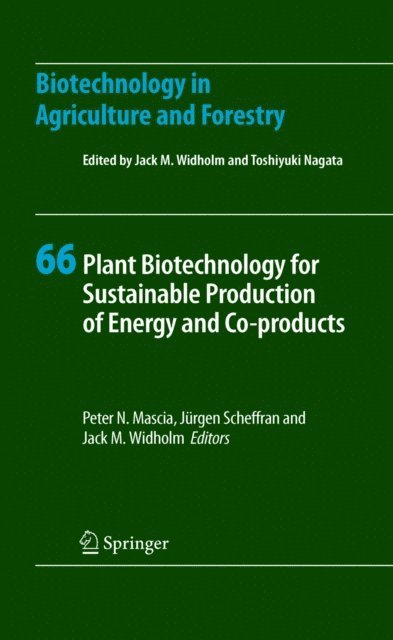
Plant Biotechnology for Sustainable Production of Energy and Co-products
Av Jack M. Widholm, Jurgen Scheffran, Peter N. Mascia
2111 kr
Läs direkt i Bokus Reader – eller ladda ned till din enhet (PDF kräver ofta zoom och scroll på små skärmar).
Beskrivning
This book is a collection of chapters concerning the use of biomass for the sustainable production of energy and chemicals–an important goal that will help decrease the production of greenhouse gases to help mitigate global warming, provide energy security in the face of dwindling petroleum reserves, improve balance of payment problems and spur local economic development. Clearly there are ways to save energy that need to be encouraged more. These include more use of energy sources such as, among others, manure in anaerobic digesters, waste wood in forests as fuel or feedstock for cellulosic ethanol, and conservation reserve program (CRP) land crops that are presently unused in the US. The use of biofuels is not new; Rudolf Diesel used peanut oil as fuel in the ?rst engines he developed (Chap. 8), and ethanol was used in the early 1900s in the US as automobile fuel [Songstad et al. (2009) Historical perspective of biofuels: learning from the past to rediscover the future. In Vitro Cell Dev Biol Plant 45:189–192). Brazil now produces enough sugar cane ethanol to make up about 50% of its transportation fuel needs (Chap. 4). The next big thing will be cellulosic ethanol. At present, there is also the use of Miscanthus x giganteous as fuel for power plants in the UK (Chap. 2), bagasse (sugar cane waste) to power sugar cane mills (Chap. 4), and waste wood and sawdust to power sawmills (Chap. 7).
Produktinformation
- Utgivningsdatum: 2010-09-15
- Språk: Engelska
- Filformat: PDF
- Kopieringsskydd: LCP
- ISBN: 9783642134401
- Förlag: Springer Berlin Heidelberg
Utforska kategorier
Betyg & recensioner
0 recensioner
Inga recensioner tillgängliga.