• Fri frakt över 249 kr
  • •
  • Snabba leveranser
  • •
  • Billiga böcker
Kundservice

Du är på sajten för privatpersoner.

Företag, bibliotek eller offentlig verksamhet?

Du handlar på classic.bokus.com, där alla dina funktioner finns intakta.
Till classic.bokus.com
Bokus logotyp. Gå till startsidan.
  • Erbjudanden
  • Nyheter
  • Student
  • Topplistor
  • Barn & ungdom
  • Bokus Play
  • E-böcker
  • Pocketböcker
  • Spel & pussel

10% rabatt på allt med kod NYSTART10 →

Sidfot

Mina sidor

    Hjälp

    • Kundservice
    • Vanliga frågor och svar
    • Frakt och leverans
    • Retur vid ångerrätt
    • Reklamera vara
    • Betalning
    • Köpvillkor
    • Allmänna villkor
    • Information om webbplatsens tillgänglighet

    Om Bokus

    • Om oss
    • Pressrum
    • För studenter
    • För företag
    • För bibliotek och offentlig verksamhet
    • För leverantörer
    • Hållbarhet

    Populärt

    • Aktuella erbjudanden
    • Presentkort
    • Studentlitteratur
    • Nya böcker
    • Topplistor
    • Signerade böcker
    • Engelska böcker

    Inspiration

    • Boktips
    • BookTok
    • Populära bokserier
    • Barnbokskaraktärer
    • Populära författare
    Logotyp för Bokus
    Följ oss på Facebook (extern länk)Följ oss på Instagram (extern länk)Följ oss på YouTube (extern länk)Följ oss på TikTok (extern länk)
    bokus @ CookiesAnpassa cookiesIntegritetspolicyKöpvillkor
    Till Citymail hemsida (extern länk)Till Budbee hemsida (extern länk)Till Postnord hemsida (extern länk)Till Schenker hemsida (extern länk)Till Early Bird hemsida (extern länk)Till Walleys hemsida (extern länk)
    1. Naturvetenskap och teknik
    2. Matematik och naturvetenskap
    3. Biologi
    4. Biokemi

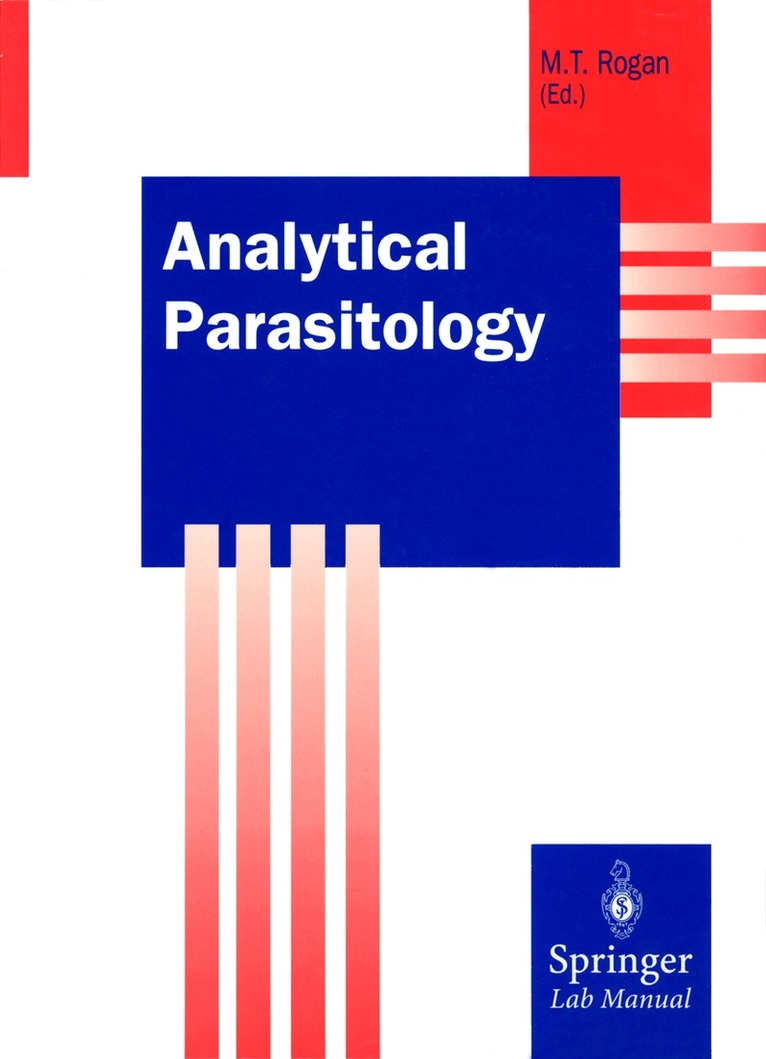
    Analytical Parasitology

    AvMichael T. Rogan

    Häftad, Engelska, 2013

    Del i serien Springer Lab Manuals

    1 118 kr

    Beställningsvara. Skickas inom 10-15 vardagar. Fri frakt över 249 kr.

    Beskrivning

    Parasitic diseases still affect millions of people every year, especially in the tropics, causing considerable morbidity or death. Such infections within livestock are probably an even bigger problem, leading to poorer productivity, condemna­ tion of infected meat and considerable economic loss. Para­ sitological research has, however, helped the situation in some cases and the development of novel drugs, vaccines and diagnostics has improved our chances of controlling these diseases. Research into parasitic infections is, therefore, often goal­ orientated. However, the study of parasites and host/parasite relationships still remains one of the most exciting and in­ teresting aspects of biology. Scientists, from undergraduate students to research professors, frequently ponder over how endoparasitic organisms can survive within the most alien of environments - inside another organism. The nutritional, reproductive and survival strategies which have evolved within each group of parasites have allowed the development of highly specific host-parasite relationships and allow the successful transmission of the parasite from one host to an­ other. A considerable amount of research is therefore direc­ ted at improving our understanding of various aspects of parasite biology.

    Produktinformation

    • Utgivningsdatum:2013-11-13
    • Mått:155 x 235 x 21 mm
    • Vikt:581 g
    • Format:Häftad
    • Språk:Engelska
    • Serie:Springer Lab Manuals
    • Antal sidor:365
    • Upplaga:1997
    • Förlag:Springer-Verlag Berlin and Heidelberg GmbH & Co. KG
    • ISBN:9783642478109

    Utforska kategorier

    • Biokemi inom Naturvetenskap och teknik
    • Patologi inom Medicin
    • Onkologi inom Medicin

    Recensioner i media

    "All the chapters are well written and provide volumes of information on practical procedures in experimental parasitology. In conclusion, this is an excellent laboratory manual." FEMS Immunology and Medical Microbiology "Described as a laboratory manual, this book is much more than a collection of protocols. I would thoroughly recommend this book." The Journal of Medical Microbiology

    Innehållsförteckning

    • 1 Biochemical Pathways in Parasites.- 1.1 Introduction.- 1.2 Preparation of Enzyme Fractions.- 1.3 Enzyme Assays.- 1.4 Metabolite Measurements.- 1.5 Use of Inhibitors.- References.- 2 Electrophoresis of Parasite Proteins.- 2.1 Introduction.- 2.2 Lysis of Parasites and Extraction of Proteins.- 2.3 SDS-PAGE.- 2.4 Modifications of Standard Method.- 2.5 Applications of SDS-PAGE to the Characterisation of Individual Polypeptides.- References.- 3 Molecular Techniques in Analytical Parasitology.- 3.1Introduction.- 3.2 Isolation of Parasite Nucleic Acid.- 3.3 Gel Electrophoresis and Blotting of Nucleic Acid.- 3.4 Labelling and Hybridisation of DNA Probes.- References.- 4 The Production and Analysis of Helminth Excretory-Secretory (ES) Products.- 4.1 Introduction.- 4.2 Collection of Excretory-Secretory (ES) Products.- 4.3 Acetylcholinesterase.- 4.4 Proteolytic Enzymes.- 4.5 Anticoagulants, Blood Coagulation Assays.- 4.6 Potential Immunomodulators.- 4.7 Concluding Remarks.- References.- 5 Parasite Proteinases.- 5.1 Introduction.- 5.2 Sample Preparation.- 5.3 Substrates and Proteinase Assays.- 5.4 Proteinase Inhibitors.- 5.5 Electrophoretic Methods.- 5.6 Purification Methods.- 5.7 Endogenous Inhibitors.- 5.8 Final Comments.- References.- 6 Neurobiology of Helminth Parasites.- 6.1 Introduction.- 6.2 Immunocytochemical Localisation of Neuroactive Substances in Helminth Parasites.- 6.3 Characterisation and Purification of Neuropeptides.- 6.4 Physiological Action of Transmitters and Drug Assessment In Vitro.- References.- 7 Electron Microscopy in Parasitology.- 7.1 Introduction.- 7.2 Preparation for Transmission Electron Microscopy (TEM).- 7.3 Cytochemistry and Staining Protocol in TEM.- 7.4 Preparation for Scanning Electron Microscopy (SEM).- 7.5 Immunogold-Labelling Techniques.- References.- 8 Studies of the Surface Properties, Lipophilic Proteins and Metabolism of Parasites by the Use of Fluorescent and “Caged” Compounds.- 8.1 Introduction.- 8.2 Incorporation of Fluorescent Compounds into Membranes.- 8.3 Using Fluorescent Techniques to Measure Membrane Fluidity.- 8.4 Distribution of Actin.- 8.5 Assessment of Parasite Membrane Damage.- 8.6 Localisation of Probes in Organelles.- 8.7 Measurement of pH at the Surface of Parasites and Intracellular pH.- 8.8 The Use of Caged Compounds.- 8.9 Use of Fluorescent Probes in the Analysis of Parasite Proteins.- References.- 9 Detection and Identification of Parasite Surface Carbohydrates by Lectins.- 9.1 Introduction.- 9.2 Lectin-Mediated Trypanosomatid Parasite Agglutination.- 9.3 Fluorescein-Isothiocyanate (FITC)-Conjugated Lectins.- 9.4 Peroxidase-Labelled Lectins.- 9.5 Biotinylated Lectins.- 9.6 Fixatives and Enzymatic Treatments.- 9.7 Histological Sections.- 9.8 Controls.- References.- 10 Immunological Analysis of Parasite Molecules.- 10.1 Introduction.- 10.2 Parasite Extracts.- 10.3 Production of Antibodies to Parasite Molecules.- 10.4 Enzyme Linked Immunosorbent Assays (ELISA).- 10.5 Immunoblotting.- 10.6 Affinity Chromatography.- References.