
• Fri frakt över 249 kr
  • •
  • Snabba leveranser
  • •
  • Billiga böcker
Kundservice

Du är på sajten för privatpersoner.

Företag, bibliotek eller offentlig verksamhet?

Du handlar på classic.bokus.com, där alla dina funktioner finns intakta.
Till classic.bokus.com
Bokus logotyp. Gå till startsidan.
  • Erbjudanden
  • Nyheter
  • Student
  • Topplistor
  • Barn & ungdom
  • Bokus Play
  • E-böcker
  • Pocketböcker
  • Spel & pussel

10% rabatt på allt med kod: NYSTART10 →

Sidfot

Mina sidor

    Hjälp

    • Kundservice
    • Vanliga frågor och svar
    • Frakt och leverans
    • Retur vid ångerrätt
    • Reklamera vara
    • Betalning
    • Köpvillkor
    • Allmänna villkor
    • Information om webbplatsens tillgänglighet

    Om Bokus

    • Om oss
    • Pressrum
    • För studenter
    • För företag
    • För bibliotek och offentlig verksamhet
    • För leverantörer
    • Hållbarhet

    Populärt

    • Aktuella erbjudanden
    • Presentkort
    • Studentlitteratur
    • Nya böcker
    • Topplistor
    • Signerade böcker
    • Engelska böcker

    Inspiration

    • Boktips
    • BookTok
    • Populära bokserier
    • Barnbokskaraktärer
    • Populära författare
    Logotyp för Bokus
    Följ oss på Facebook (extern länk)Följ oss på Instagram (extern länk)Följ oss på YouTube (extern länk)Följ oss på TikTok (extern länk)
    bokus @ CookiesAnpassa cookiesIntegritetspolicyKöpvillkor
    Till Citymail hemsida (extern länk)Till Budbee hemsida (extern länk)Till Postnord hemsida (extern länk)Till Schenker hemsida (extern länk)Till Early Bird hemsida (extern länk)Till Walleys hemsida (extern länk)
    1. Naturvetenskap och teknik
    2. Matematik och naturvetenskap
    3. Biologi
    4. Biokemi

    Environmental Physiology and Biochemistry of Insects

    AvK. H. Hoffmann

    Häftad, Engelska, 2011

    1 086 kr

    Beställningsvara. Skickas inom 10-15 vardagar. Fri frakt över 249 kr.
    Beskrivning

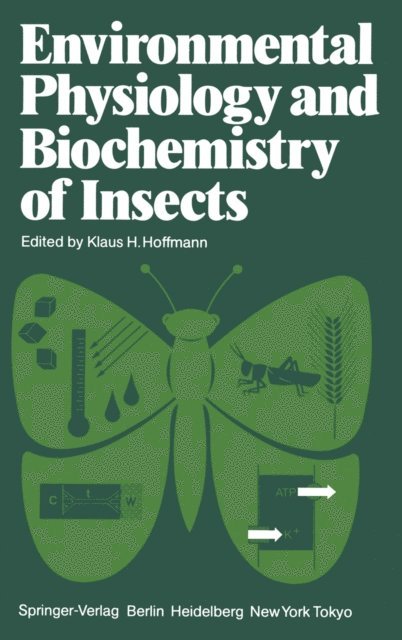
    Of all the zoological classes the insects are the most numerous in species and the most varied in structure. Estimates of the number 18 of species vary from 1 to 10 million, and 10 individuals are es­ timated to be alive at any given moment. In their evolution, in­ sects are relatively ancient and, therefore, they have proved to be a phenomenally successful biological design which has survived unchanged in its basic winged form during the last 300 m. y. In­ sects were the first small animals to colonize the land with full suc­ cess. Their small size opened many more ecological niches to them and permitted a greater diversification than the vertebrates. What is it about this design that has made insects so successful in habitats stretching from arid deserts to the Arctic and Antarctic and from freshwater brooks to hot springs and salines? Is it due to the adapta­ bility of their behavior, physiology, and biochemistry to changing environmental conditions? Three features of insects are of particular importance in determin­ ing their physiological relationship with the environment: their small size, as mentioned above, the impermeability and rigidity of their exoskeleton, and their poikilothermy. Of course, as with any other animals, the insects' success in its environment depends on its ability to maintain its internal state within certain tolerable limits of temperature, osmotic pressure, pH or oxygen concentra­ tion (homoeostasis).

    Produktinformation

    • Utgivningsdatum:2011-12-06
    • Mått:156 x 244 x 17 mm
    • Vikt:497 g
    • Format:Häftad
    • Språk:Engelska
    • Antal sidor:298
    • Förlag:Springer-Verlag Berlin and Heidelberg GmbH & Co. KG
    • ISBN:9783642700224

    Utforska kategorier

    • Biokemi inom Naturvetenskap och teknik
    • Cellbiologi inom Naturvetenskap och teknik
    • Biovetenskap inom Naturvetenskap och teknik

    Innehållsförteckning

    • 1 Metabolic and Enzyme Adaptation to Temperature.- 2 Temperature and Insect Development.- 3 Environmental Aspects of Insect Dormancy.- 4 Metabolic Energy Expenditure and Its Hormonal Regulation.- 5 Anaerobic Energy Metabolism.- 6 Respiration and Respiratory Water Loss.- 7 Water and Salt Relations.- 8 Color and Color Changes.- 9 Environmental Aspects of Insect Bioluminescence.- Final Remarks.- References.- Taxonomic Index.