• Fri frakt över 249 kr
  • •
  • Snabba leveranser
  • •
  • Billiga böcker
Kundservice

Du är på sajten för privatpersoner.

Företag, bibliotek eller offentlig verksamhet?

Du handlar på classic.bokus.com, där alla dina funktioner finns intakta.
Till classic.bokus.com
Bokus logotyp. Gå till startsidan.
  • Erbjudanden
  • Nyheter
  • Student
  • Topplistor
  • Barn & ungdom
  • Bokus Play
  • E-böcker
  • Pocketböcker
  • Spel & pussel

10% rabatt på allt med kod NYSTART10 →

Sidfot

Mina sidor

    Hjälp

    • Kundservice
    • Vanliga frågor och svar
    • Frakt och leverans
    • Retur vid ångerrätt
    • Reklamera vara
    • Betalning
    • Köpvillkor
    • Allmänna villkor
    • Information om webbplatsens tillgänglighet

    Om Bokus

    • Om oss
    • Pressrum
    • För studenter
    • För företag
    • För bibliotek och offentlig verksamhet
    • För leverantörer
    • Hållbarhet

    Populärt

    • Aktuella erbjudanden
    • Presentkort
    • Studentlitteratur
    • Nya böcker
    • Topplistor
    • Signerade böcker
    • Engelska böcker

    Inspiration

    • Boktips
    • BookTok
    • Populära bokserier
    • Barnbokskaraktärer
    • Populära författare
    Logotyp för Bokus
    Följ oss på Facebook (extern länk)Följ oss på Instagram (extern länk)Följ oss på YouTube (extern länk)Följ oss på TikTok (extern länk)
    bokus @ CookiesAnpassa cookiesIntegritetspolicyKöpvillkor
    Till Citymail hemsida (extern länk)Till Budbee hemsida (extern länk)Till Postnord hemsida (extern länk)Till Schenker hemsida (extern länk)Till Early Bird hemsida (extern länk)Till Walleys hemsida (extern länk)
    1. Data och IT
    2. Systemvetenskap och AI

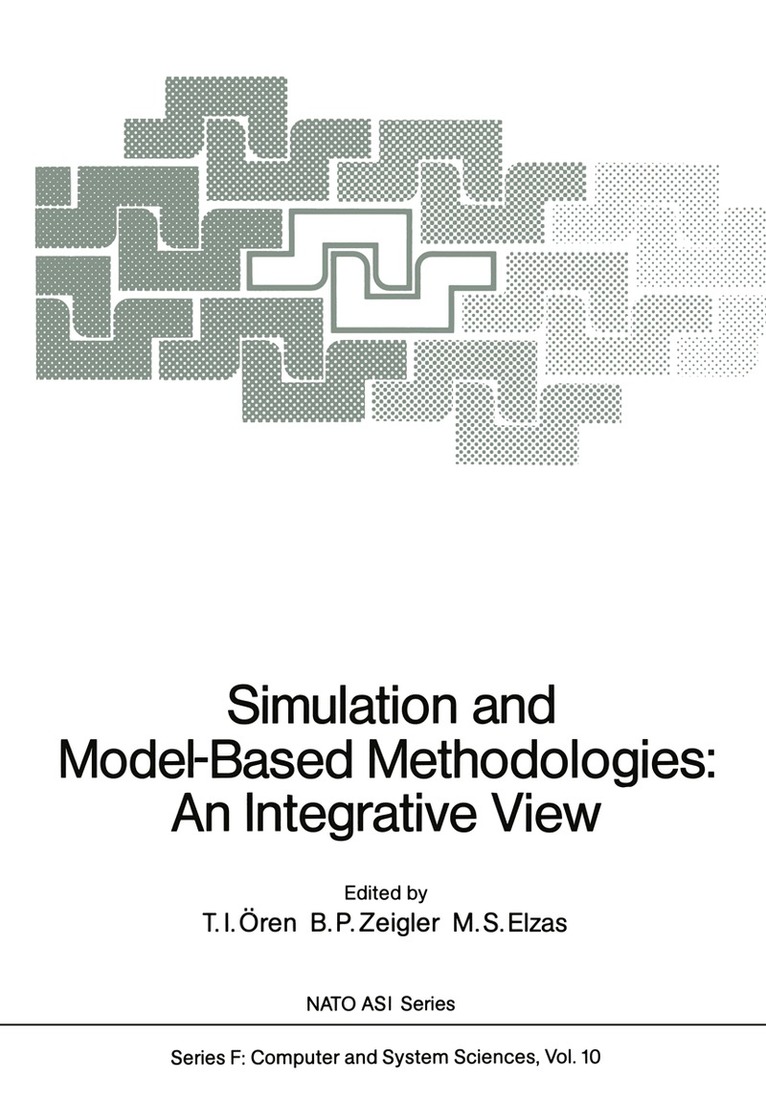
    Simulation and Model-Based Methodologies: An Integrative View

    AvTuncer I. Ören,B.P. Zeigler

    Häftad, Engelska, 2011

    Del i serien NATO ASI Subseries F:

    1 117 kr

    Beställningsvara. Skickas inom 10-15 vardagar. Fri frakt över 249 kr.

    Beskrivning

    Simulation, like a gem, is multi-faceted. Several subfields of simulation have emerged based on the characteristics of models used in a simulation study, on the nature and the generation characteristics of model behavior, also on the agent soch as a computer which generates model behavior. For example, one distinguishes: - deterministic simulation, stochastic simulation, stiff simulation based on functional rela- tionships of descriptive vuriables of models used; - combined simulation, continuous simulation, discrete simulation, process simulation, dis- crete event simulation, activity-scanning simulation based on characteristics of descrip- tive variables of modelS; variable topology simulation soch as moving boundary simulation, cellular simulation and fixed topology simulation soch as boundary-value simulation and network simulation (network flow simulation, Petri-net simulation, bond-graph simulation) based on spatial distribution of models; - simulation with fixed organization models (soch as simulation with hierarchical models) and simulation with variable organization models (i.e., autopoietic simulation) soch as metamorphic simulation, simulation with self-organizating models, simulation with self- learning models, evolutionary simulation based on orgCl"lization of component models; - state-maintaining simulation, behaviorally adaptive simulation, goal-seeking simulation, purposive simulation, purposeful simulation, ideal-seeking simulation based on goal(s) to be pursued by the model; - trajectory simulation, stroctural simulation, real-time simulation, predictive simulation, prescriptive simulation, intermittent simulation (such as regenerative simulation, opti- mizing simulation, gaming simulation, conferencing simulation, on-line simulation) based on nature md generation characteristics of model behavior; and - simulators such as aircraft simulator, earthquake simulator where physical analog can be

    Produktinformation

    • Utgivningsdatum:2011-12-08
    • Mått:170 x 244 x 36 mm
    • Vikt:1 140 g
    • Format:Häftad
    • Språk:Engelska
    • Serie:NATO ASI Subseries F:
    • Antal sidor:654
    • Förlag:Springer-Verlag Berlin and Heidelberg GmbH & Co. KG
    • ISBN:9783642821462

    Utforska kategorier

    • Systemvetenskap och AI inom Data och IT
    • Programvaruutveckling inom Data och IT

    Innehållsförteckning

    • Section 1: Conceptual Bases for System Modelling and Design.- 1: Model-Based Activities: A Paradigm Shift.- 2: System Paradigms as Reality Mappings.- 3: General Systems Framework for Inductive Modelling.- 4: System Theoretic Foundations of Modelling and Simulation.- 5: The Tricotyledon Theory of System Design.- 6: Concepts for Model-Based Policy Construction.- Section 2: Model-Based Simulation Architecture.- 7: Structures for Model-Based Simulation Systems.- 8: Symbolic Manipulation of System Models.- 9: Concepts for an Advanced Parallel Simulation Architecture.- Section 3: Impact of Formalisms on Model Specification.- 10: GEST—A Modelling and Simulation Language Based on System Theoretic Concepts.- 11: Continuous and Discontinuous-Change Models: Concepts for Simulation Languages.- 12: Discrete Event Formalism and Simulation Model Development.- Section 4: Model Identification, Reconstruction, and Optimization.- 13: Structure Characterization for I11-Defined Systems.- 14: Reconstructability Analysis: An Overview.- 15: SAPS—A Software System for Inductive Modelling.- 16: Optimization in Simulation Studies.- Section 5: Quality Assurance in Model-Based Activities.- 17: Quality Assurance in Modelling and Simulation: A Taxonomy.- 18: How to Enhance the Robustness of Simulation Software.- 19: Simulation Model Validation.- 20: Critical Issues in Evaluating Socio-Economic Models.- Section 6: Contributed Workshop Presentations.- Group 1: Model-Based Simulation Architecture.- Group 2: Impact of Formalisms on Model Specification.- Group 3: Model Identification, Reconstruction, and Optimization.- Group 4: Quality Assurance in Model-Based Activities.