• Fri frakt över 249 kr
  • •
  • Snabba leveranser
  • •
  • Billiga böcker
Kundservice

Du är på sajten för privatpersoner.

Företag, bibliotek eller offentlig verksamhet?

Du handlar på classic.bokus.com, där alla dina funktioner finns intakta.
Till classic.bokus.com
Bokus logotyp. Gå till startsidan.
  • Erbjudanden
  • Nyheter
  • Student
  • Topplistor
  • Barn & ungdom
  • Bokus Play
  • E-böcker
  • Pocketböcker
  • Spel & pussel

10% rabatt på allt med kod: NYSTART10 →

Sidfot

Mina sidor

    Hjälp

    • Kundservice
    • Vanliga frågor och svar
    • Frakt och leverans
    • Retur vid ångerrätt
    • Reklamera vara
    • Betalning
    • Köpvillkor
    • Allmänna villkor
    • Information om webbplatsens tillgänglighet

    Om Bokus

    • Om oss
    • Pressrum
    • För studenter
    • För företag
    • För bibliotek och offentlig verksamhet
    • För leverantörer
    • Hållbarhet

    Populärt

    • Aktuella erbjudanden
    • Presentkort
    • Studentlitteratur
    • Nya böcker
    • Topplistor
    • Signerade böcker
    • Engelska böcker

    Inspiration

    • Boktips
    • BookTok
    • Populära bokserier
    • Barnbokskaraktärer
    • Populära författare
    Logotyp för Bokus
    Följ oss på Facebook (extern länk)Följ oss på Instagram (extern länk)Följ oss på YouTube (extern länk)Följ oss på TikTok (extern länk)
    bokus @ CookiesAnpassa cookiesIntegritetspolicyKöpvillkor
    Till Citymail hemsida (extern länk)Till Budbee hemsida (extern länk)Till Postnord hemsida (extern länk)Till Schenker hemsida (extern länk)Till Early Bird hemsida (extern länk)Till Walleys hemsida (extern länk)
    1. Medicin
    2. Klinisk medicin och internmedicin
    3. Sjukdomar och rubbningar
    4. Onkologi

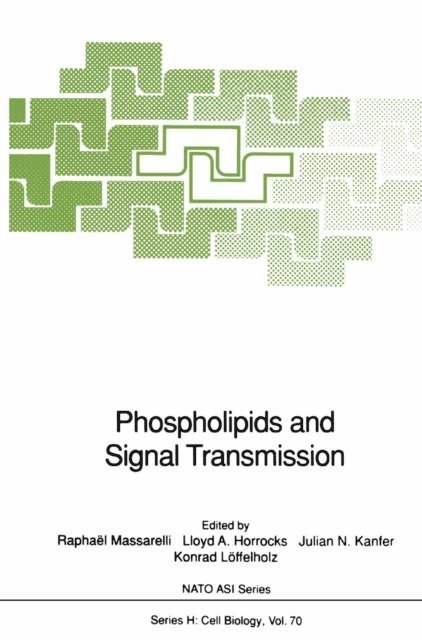
    Phospholipids and Signal Transmission

    AvKonrad Loffelholz,Julian N. Kanfer

    E-bok
    PDF, Engelska, 2013

    732 kr

    Läs direkt i Bokus Reader – eller ladda ned till din enhet (PDF kräver ofta zoom och scroll på små skärmar).

    Beskrivning

    Once Nietzsche said that human beings may be divided into two categories: Apollonians and Dionysians*. By this the philosopher meant that there are human beings a) who know what they are going to do in the long-term future (what we now call the grant application for the next 5 years), i. e. , Apollonians, and b) who barely know what they are going to do tomorrow morning before breakfast, i. e. , Dionysians. ** To organize a symposium, this symposium in particular, a committee had to be formed either of individuals sharing both Nietzschean characteristics or of individuals possessing either characteristic. Considering the rarity of the former type of subject, this organizing committee was spontaneously formed by a typical sample of both types of individuals. We first met in Perugia in 1988. Those of us who were Apollonians had thus a chance to organize a programme. The Dionysians knew what was going to happen to them, but, of course, did not know yet how to cope with it. They duly did so every day of the meeting, after breakfast. The organizers decided that it would be a useful exercise to assemble experts having different perspectives but all pursuing a very rapidly developing aspect of cell biology. They also hoped that these selected Apollonians and Dionysians would not merely recount their results but try to project the future through active interchanges of ideas and opinions with other attendees.

    Produktinformation

    • Utgivningsdatum:2013-06-29
    • Språk:Engelska
    • Filformat:PDF
    • Kopieringsskydd:LCP
    • ISBN:9783662029220
    • Förlag:Springer Berlin Heidelberg

    Utforska kategorier

    • Onkologi inom Medicin
    • Farmakologi inom Medicin
    • Biovetenskap inom Naturvetenskap och teknik