• Fri frakt över 249 kr
  • •
  • Snabba leveranser
  • •
  • Billiga böcker
Kundservice

Du är på sajten för privatpersoner.

Företag, bibliotek eller offentlig verksamhet?

Du handlar på classic.bokus.com, där alla dina funktioner finns intakta.
Till classic.bokus.com
Bokus logotyp. Gå till startsidan.
  • Erbjudanden
  • Nyheter
  • Student
  • Topplistor
  • Barn & ungdom
  • Bokus Play
  • E-böcker
  • Pocketböcker
  • Spel & pussel

10% studentrabatt med kod TERM26

Sidfot

Mina sidor

    Hjälp

    • Kundservice
    • Vanliga frågor och svar
    • Frakt och leverans
    • Retur vid ångerrätt
    • Reklamera vara
    • Betalning
    • Köpvillkor
    • Allmänna villkor
    • Information om webbplatsens tillgänglighet

    Om Bokus

    • Om oss
    • Pressrum
    • För studenter
    • För företag
    • För bibliotek och offentlig verksamhet
    • För leverantörer
    • Hållbarhet

    Populärt

    • Aktuella erbjudanden
    • Presentkort
    • Studentlitteratur
    • Nya böcker
    • Topplistor
    • Signerade böcker
    • Engelska böcker

    Inspiration

    • Boktips
    • BookTok
    • Populära bokserier
    • Barnbokskaraktärer
    • Populära författare
    Logotyp för Bokus
    Följ oss på Facebook (extern länk)Följ oss på Instagram (extern länk)Följ oss på YouTube (extern länk)Följ oss på TikTok (extern länk)
    bokus @ CookiesAnpassa cookiesIntegritetspolicyKöpvillkor
    Till Citymail hemsida (extern länk)Till Budbee hemsida (extern länk)Till Postnord hemsida (extern länk)Till Schenker hemsida (extern länk)Till Early Bird hemsida (extern länk)Till Walleys hemsida (extern länk)
    1. Medicin
    2. Andra medicinska specialiteter
    3. Olycksfalls- och akutmedicin

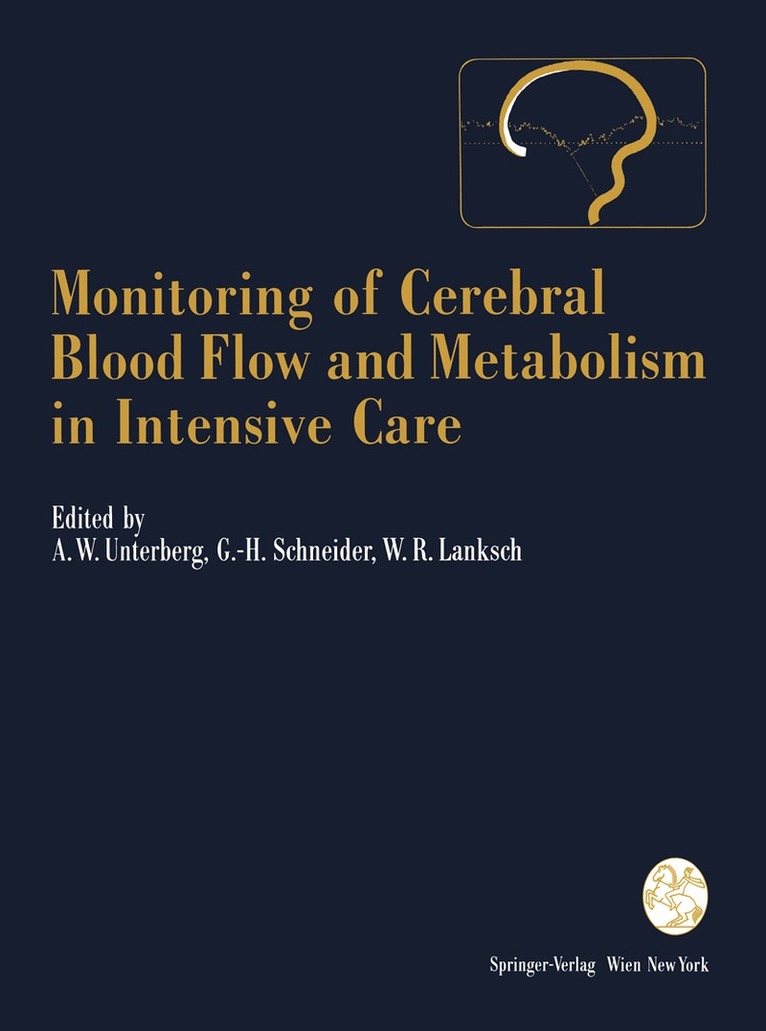
    Monitoring of Cerebral Blood Flow and Metabolism in Intensive Care

    AvAndreas W. Unterberg,Gerd-Helge Schneider

    Häftad, Engelska, 2012

    Del 59 i serien Acta Neurochirurgica Supplement

    563 kr

    Beställningsvara. Skickas inom 10-15 vardagar. Fri frakt över 249 kr.

    Beskrivning

    Until recently, monitoring of cerebral blood flow and metabolism was an unattained goal. Determination of cerebral blood flow was limited to intermittent measurements and particularly difficult to perform in critically ill patients. Meanwhile there are techniques available, however, to monitor cerebral blood flow and cerebral oxygenation, both globally and regionally. Therefore we thought it worthwhile to discuss these new continuous techniques and to compare them with well-known techniques which discontinuously measure CBF. For that purpose, an international workshop with some leading experts in the field was held in October 1992 in Berlin. The workshop consisted of about 20 lectures, either reviews on a special topic, or latest results. These contributions were given by invitation and were extensively discussed. Unfortunately it is impossible to reproduce the discussions. On the other hand, all speakers delivered a manuscript promptly after the meeting so that we were able to edit them within a short time. Since monitoring of cerebral blood flow in intensive care is a rapidly growing and changing topic, the written contributions should be quickly available. Authors, editors and publishers have tried to come close to this ideal. As editors we would like to thank the authors and the publishers who enabled us to come out with this volume of the proceedings as early as possible.

    Produktinformation

    • Utgivningsdatum:2012-02-28
    • Mått:210 x 279 x 8 mm
    • Vikt:361 g
    • Format:Häftad
    • Språk:Engelska
    • Serie:Acta Neurochirurgica Supplement
    • Antal sidor:125
    • Förlag:Springer Verlag GmbH
    • ISBN:9783709193044

    Utforska kategorier

    • Olycksfalls- och akutmedicin inom Medicin
    • Smärta och smärtbehandling inom Medicin
    • Neurokirurgi inom Medicin

    Innehållsförteckning

    • Physiology and Pathophysiology of Cerebral Blood Flow and Metabolism.- Regulation of Cerebral Blood Flow — A Brief Review.- Relationship of Cerebral Blood Flow Disturbances with Brain Oedema Formation.- Measurement of Vascular Reactivity in Head Injured Patients.- Intermittent Measurements of Cerebral Blood Flow and Metabolism in Intensive Care.- Measurements of Cerebral Blood Flow and Metabolism in Severe Head Injury Using the Kety-Schmidt-Technique.- Xenon 133 — CBF Measurements in Severe Head Injury and Subarachnoid Haemorrhage.- Evaluation of Regional Cerebral Blood Flow in Acute Head Injury by Stable Xenon-Enhanced Computerized Tomography.- Continuous Monitoring of Cerebral Blood Flow and Metabolism in Intensive Care.- Thermodiffusion.- Cerebral Blood Flow (CBF) Monitoring in Intensive Care by Thermal Diffusion.- Monitoring of Regional Cerebral Blood Flow (CBF) in Acute Head Injury by Thermal Diffusion.- Tissue pO2.- Monitoring Cerebral Oxygenation: Experimental Studies and Preliminary Clinical Results of Continuous Monitoring of Cerebrospinal Fluid and Brain Tissue Oxygen Tension.- Studies of Tissue PO2 in Normal and Pathological Human Brain Cortex.- Laser-Doppler Flowmetry.- Applicability of Laser-Doppler Flowmetry for Cerebral Blood Flow Monitoring in Neurological Intensive Care.- Assessment of Cerebral Haemodynamics in Comatose Patients by Laser-Doppler Flowmetry — Preliminary Observations.- Near Infrared Spectroscopy.- Measurement of Adult Cerebral Haemodynamics Using Near Infrared Spectroscopy.- Transcranial Doppler Sonography.- Transcranial Doppler-Sonography in Severe Head Injury.- Jugular-Venous Oximetry.- Cerebral Oxygenation. Monitoring and Management.- Technical Considerations in Continuous Jugular Venous Oxygen Saturation Measurement.-Desaturation Episodes after Severe Head Injury: Influence on Outcome.- Monitoring of Jugular Oxygen Saturation in Comatose Patients with Subarachnoid Haemorrhage and Intracerebral Haematomas.- Influence of Body Position on Jugular Venous Oxygen Saturation, Intracranial Pressure and Cerebral Perfusion Pressure.- Continuous Monitoring of Jugular Bulb Oxygen Saturation and the Effect of Drugs Acting on Cerebral Metabolism.- Consequences for Clinical Management.- Early and Late Systemic Hypotension as a Frequent and Fundamental Source of Cerebral Ischemia Following Severe Brain Injury in the Traumatic Coma Data Bank.