• Fri frakt över 249 kr
  • •
  • Snabba leveranser
  • •
  • Billiga böcker
Kundservice

Du är på sajten för privatpersoner.

Företag, bibliotek eller offentlig verksamhet?

Du handlar på classic.bokus.com, där alla dina funktioner finns intakta.
Till classic.bokus.com
Bokus logotyp. Gå till startsidan.
  • Erbjudanden
  • Nyheter
  • Student
  • Topplistor
  • Barn & ungdom
  • Bokus Play
  • E-böcker
  • Pocketböcker
  • Spel & pussel

Må bättre, för mindre! Upp till 50% rabatt på hälsoböcker

Sidfot

Mina sidor

    Hjälp

    • Kundservice
    • Vanliga frågor och svar
    • Frakt och leverans
    • Retur vid ångerrätt
    • Reklamera vara
    • Betalning
    • Köpvillkor
    • Allmänna villkor
    • Information om webbplatsens tillgänglighet

    Om Bokus

    • Om oss
    • Pressrum
    • För studenter
    • För företag
    • För bibliotek och offentlig verksamhet
    • För leverantörer
    • Hållbarhet

    Populärt

    • Aktuella erbjudanden
    • Presentkort
    • Studentlitteratur
    • Nya böcker
    • Topplistor
    • Signerade böcker
    • Engelska böcker

    Inspiration

    • Boktips
    • BookTok
    • Populära bokserier
    • Barnbokskaraktärer
    • Populära författare
    Logotyp för Bokus
    Följ oss på Facebook (extern länk)Följ oss på Instagram (extern länk)Följ oss på YouTube (extern länk)Följ oss på TikTok (extern länk)
    bokus @ CookiesAnpassa cookiesIntegritetspolicyKöpvillkor
    Till Citymail hemsida (extern länk)Till Budbee hemsida (extern länk)Till Postnord hemsida (extern länk)Till Schenker hemsida (extern länk)Till Early Bird hemsida (extern länk)Till Walleys hemsida (extern länk)
    1. Medicin
    2. Kirurgi

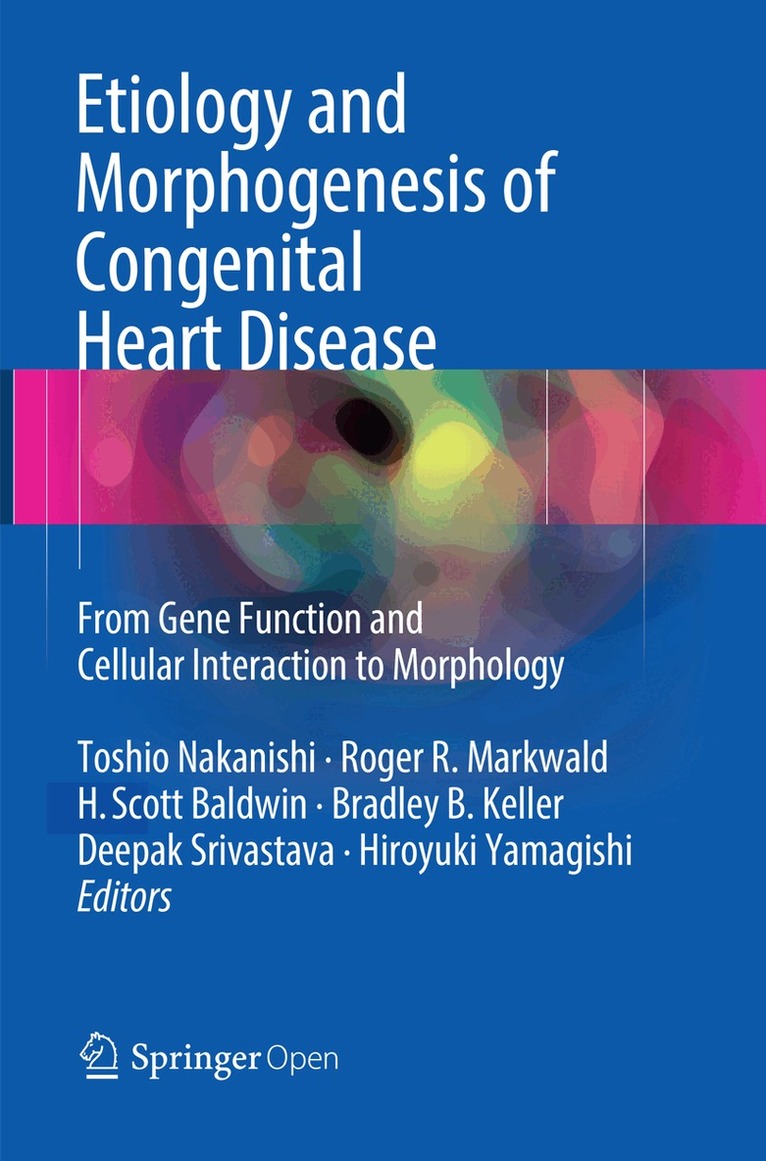
    Etiology and Morphogenesis of Congenital Heart Disease

    From Gene Function and Cellular Interaction to Morphology

    AvToshio Nakanishi,Roger R. Markwald

    Häftad, Engelska, 2018

    563 kr

    Beställningsvara. Skickas inom 10-15 vardagar. Fri frakt över 249 kr.

    Beskrivning

    This volume focuses on the etiology and morphogenesis of congenitalheart diseases. It reviews in detail the early development and differentiation ofthe heart, and later morphologic events of the cardiovascular system, coveringa wide range of topics such as gene functions, growth factors, transcriptionfactors and cellular interactions that are implicated in cardiac morphogenesisand congenital heart disease. This book also presents recent advances in stemcell and cell sheet tissue engineering technologies which have the potential toprovide novel in vitro disease models and to generate regenerative paradigmsfor cardiac repair and regeneration.   Thisis the ideal resource for physician scientists and investigators looking forupdates on recent investigations on the origins of congenital heart disease andpotential future therapies.

    Produktinformation

    • Utgivningsdatum:2018-06-07
    • Mått:155 x 235 x 20 mm
    • Vikt:670 g
    • Format:Häftad
    • Språk:Engelska
    • Antal sidor:383
    • Förlag:Springer Verlag, Japan
    • ISBN:9784431566335

    Utforska kategorier

    • Kirurgi inom Medicin
    • Biologi inom Naturvetenskap och teknik
    • Hjärt- och kärlsjukdomar inom Medicin

    Innehållsförteckning

    • PartI. From Molecular Mechanism to Intervention for Congenital Heart Diseases, Nowand Future .- Reprogramming Approaches toCardiovascular Disease: From Developmental Biology to Regenerative Medicine.- The arterial epicardium, a developmental approach to cardiac diseaseand repair.- Cell sheet tissue engineering for heart failure.- Future treatment of heart failure and pathophysiological analysis ofvarious heart diseases using human iPS cell-derived cardiomyocytes.- Congenital heart disease: in search of remedial etiologies.- Part II. Left-Right Axis andHeterotaxy Syndrome.- Left-rightAsymmetry and Human Heterotaxy Syndrome.- Roles of motileand immotile cilia in left-right symmetry breaking.- Role of ciliaand left-right patterning in congenital heart disease.- Pulmonaryarterial hypertension in patients with heterotaxy /polysplenia syndrome.- Part III. Cardiomyocyte and MyocardialDevelopment.- Single Cell Expression Analyses ofEmbryonic Cardiac Progenitor Cells.- Meis1 Regulates Post-Natal CardiomyocyteCell Cycle Arrest.- Intercellular signalling in cardiac development anddisease: NOTCH.- The epicardium in ventricular septation during evolutionand development.- S1P-S1p2 signaling in cardiac precursor cells migration.- Myogenic progenitor cell differentiation is dependent on modulation ofmitochondrial biogenesis through autophagy.- The role of thethyroid in the developing heart.-Part IV. Valve Development and Diseases.- Atrioventricular valve abnormalities: From molecular mechanismsunderlying morphogenesis to clinical perspective.- MolecularMechanisms of Heart Valve Development and Disease.- A novel role forendocardium in perinatal valve development: Lessons learned from tissuespecific gene deletion of the Tie1 receptor tyrosine kinase.- The Role of the Epicardium in the Formation of the Cardiac Valves inthe Mouse.- TMEM100, a novel intracellular transmembrane proteinessential for vascular development and cardiac morphogenesis.- Cell autonomous regulation of BMP-2 in endocardial cushion cells duringAV valvuloseptal morphogenesis.-Part V. The Second Heart Field and Outflow Tract.- Properties of cardiac progenitor cells in the second heart field.- Nodal signaling and congenital heart defects.- UtilizingZebrafish to Understand Second Heart Field Development.- A history andinteraction of outflow progenitor cells implicated in “Takao syndrome”.- The loss of Foxc2 expression in the outflow tract links the interruptedarch in the conditional Foxc2 knockout mouse.- Environmentalmodification for phenotype of truncus arteriosus in Tbx1 hypomorphic mice.- Part VI. Vascular Development andDiseases.- Extracellular matrix remodeling invascular development and disease.- The “cardiac neural crest” conceptrevisited.- Roles of endothelial Hrt genes for vascular development.- Placental Expression of Type 1 and 3 Inositol Trisphosphate Receptorsis Required for the Extra-embryonic Vascular Development.- Tissue Remodeling in Vascular Wall in Kawasaki Disease-relatedVasculitis Model Mice.- PartVII. Ductus Arteriosus.- Progerinexpression during normal closure of the human ductus arteriosus: A case ofpremature ageing?.- The multiple roles of prostaglandin E2 in the regulation ofthe ductus arteriosus.- Developmental Differences in the Maturation of SarcoplasmicReticulum and Contractile Proteins in Large Blood Vessels Influences TheirContractility.- Fetal and Neonatal Ductus Arteriosus is Regulated withATP-sensitive Potassium Channel.-Part VIII. Conduction System and Arrhythmia.- Regulation of vertebrate conduction system development.- Cardiac Pacemaker Development from a Tertiary Heart Field.- Endothelin receptor type A expressing cell population in the inflowtract contributes to chamber formation.- Specific isolation of HCN4 positivecardiac pace-making cells derived from embryonic stem cell.- Part IX. Current Molecular Mechanismin Cardiovascular Development.- Combinatorialfunctions of transcription factorsand epigenetic factors in heart developmentand disease.- Pcgf5 contributes to PRC1 (Polycomb repressive complex 1)in developing cardiac cells.-non-coding RNAs in cardiovascular disease.- Part X. iPS Cells and Regeneration inCongenital Heart Diseases.- Humanpluripotent stem cells to model congenital heart disease.- Engineered cardiac tissues generated from immature cardiac andstem-cell derived cells: Multiple approaches and outcomes.- Dissecting the left heart hypoplasia by pluripotent stem cells.- Lentiviral gene transfer to iPS cells; toward the cardiomyocytedifferentiation of Pompe disease-specific iPS cells.- Molecularanalysis of long-term cultured cardiac stem cells for cardiac regeneration.- Epicardial contribution in neonatal heart regeneration.- Part XI. Current Genetics inCongenital Heart Diseases.- Geneticdiscovery for congenital heart defects.- Evidence that deletion of ETS-1, agene in the Jacobsen syndrome (11q-) cardiac critical region, causes congenitalheart defects through impaired cardiac neural crest cell function.- Notch signaling in aortic valve development and disease.- To detect and explore mechanism of CITED2 mutation and methylation inchildren with congenital heart disease.