• Fri frakt över 249 kr
  • •
  • Snabba leveranser
  • •
  • Billiga böcker
Kundservice

Du är på sajten för privatpersoner.

Företag, bibliotek eller offentlig verksamhet?

Du handlar på classic.bokus.com, där alla dina funktioner finns intakta.
Till classic.bokus.com
Bokus logotyp. Gå till startsidan.
  • Erbjudanden
  • Nyheter
  • Student
  • Topplistor
  • Barn & ungdom
  • Bokus Play
  • E-böcker
  • Pocketböcker
  • Spel & pussel

10% rabatt på allt med kod: NYSTART10 →

Sidfot

Mina sidor

    Hjälp

    • Kundservice
    • Vanliga frågor och svar
    • Frakt och leverans
    • Retur vid ångerrätt
    • Reklamera vara
    • Betalning
    • Köpvillkor
    • Allmänna villkor
    • Information om webbplatsens tillgänglighet

    Om Bokus

    • Om oss
    • Pressrum
    • För studenter
    • För företag
    • För bibliotek och offentlig verksamhet
    • För leverantörer
    • Hållbarhet

    Populärt

    • Aktuella erbjudanden
    • Presentkort
    • Studentlitteratur
    • Nya böcker
    • Topplistor
    • Signerade böcker
    • Engelska böcker

    Inspiration

    • Boktips
    • BookTok
    • Populära bokserier
    • Barnbokskaraktärer
    • Populära författare
    Logotyp för Bokus
    Följ oss på Facebook (extern länk)Följ oss på Instagram (extern länk)Följ oss på YouTube (extern länk)Följ oss på TikTok (extern länk)
    bokus @ CookiesAnpassa cookiesIntegritetspolicyKöpvillkor
    Till Citymail hemsida (extern länk)Till Budbee hemsida (extern länk)Till Postnord hemsida (extern länk)Till Schenker hemsida (extern länk)Till Early Bird hemsida (extern länk)Till Walleys hemsida (extern länk)
    1. Medicin
    2. Medicin: allmänt
    3. Medicinhistoria

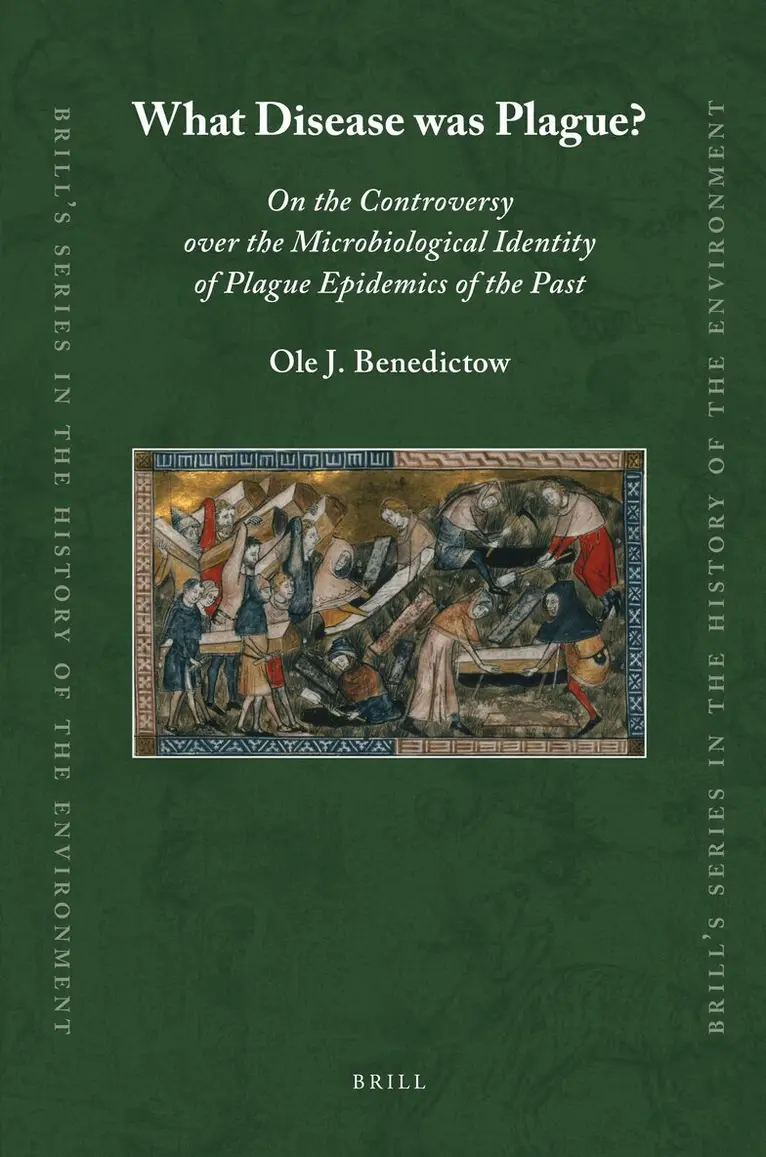
    What Disease was Plague?

    On the Controversy over the Microbiological Identity of Plague Epidemics of the Past

    AvOle Benedictow

    Inbunden, Engelska, 2011

    Del 2 i serien Brill's Series in the History of the Environment

    4 877 kr

    Beställningsvara. Skickas inom 5-8 vardagar. Fri frakt över 249 kr.

    Beskrivning

    In recent decades, alternatives to the established bubonic-plague theory have been presented as to the microbiologcal identity and mechanism(s) of spread of historical plague epidemics. In this monograph, the six important alternative theories are intensively discussed in the light of the historical sources, the central primary studies and standard works on bubonic plague and the alternative microbiological agents, insofar as they are testable. These seven theories are incompatible and at least six of them must be untenable. In the author’s opinion, the arguments against the bubonic-plague theory and for all alternative theories are untenable. This monograph therefore also has been written also as a standard work on bubonic plague, giving a broad and in-depth presentation of the medical, epidemiological and historical evidence and the methodological tenets for identification of historical diseases by comparison with modern medical knowledge.

    Produktinformation

    • Utgivningsdatum:2011-01-07
    • Mått:155 x 235 x 49 mm
    • Vikt:1 279 g
    • Format:Inbunden
    • Språk:Engelska
    • Serie:Brill's Series in the History of the Environment
    • Antal sidor:746
    • Förlag:Brill
    • ISBN:9789004180024

    Utforska kategorier

    • Medicinhistoria inom Medicin
    • Historia inom Historia och arkeologi
    • Naturvetenskapens historia inom Naturvetenskap och teknik

    Mer om författaren

    Ole J. Benedictow, Cand. Philol. in History (1961), University of Oslo, Emeritus Professor of History at the University of Oslo. He has published extensively on historical plague epidemics and medieval demography including The Black Death 1346-1353. The Complete History (Boydell&Brewer 2004), The Black Death and Later Plague Epidemics in Norway (in Norwegian, Unipub 2002), and The Medieval Demographic System of the Nordic Countries (Middelalderforlaget, 2nd ed. 1996).

    Recensioner i media

    "En líneas generales, Benedictow articula el libro en torno a tres ejes principales. Así, en el primero se encarga de definir las condiciones básicas para el desarrollo de la plaga bubónica en la Europa medieval, en el segundo pormenoriza las características definitorias de la epidemia y por último, una vez perfilado el cuadro de qué es y qué sabemos de la Peste Negra, se lanza a desmontar las teorías alternativas que han ido surgiendo en los últimos años, señalando sus defectos de forma y contenido." - Alberto Reche (IEM), Medievalia, 2012, No. 15, 366-368 pp.

    Innehållsförteckning

    • List of Figures and Tables xiiiPreface xvPART ONE: THE ISSUE1. The Issue and the Problems 3Introduction 3The Human-Flea Theory of Plague Epidemiology 9The Revisionists 16PART TWO: HOW S.K. COHN MAKES PHYSICIANS AND HISTORIANS “SQUARE THE CIRCLE”2. The Ethics of Scholarly Work 25Introduction 25How Cohn Makes Medical Scientists “Square the Circle” 26Hankin 1: Cohn’s Attack on Hankin’s Observation of Inverse Correlation between Mortality and Population Density 34Hankin 2: A Brief Study of Cohn’s Technique of Argument 38“The Ugly Americans” 44Cohn’s Accusations of Racism against J. Ashburton Thompson and L.F. Hirst 46How Cohn Makes “Historians Square the Circle” 54The Attack on Schofi eld (and Benedictow and L. Bradley) 62PART THREE: BASIC CONDITIONS FOR BUBONIC PLAGUE IN MEDIEVAL EUROPE3. Rats 73Introduction: How to Study Rats in History 73The Nature of Rats and the Frame of Reference of the Medieval Mind 78The Question of the Presence of Rats and the Methodological Fallacy of Inference ex silentio 85Ars Moriendi Rattorum: Where Have all the Dead Rats Gone? 91Zoobiological and Zoogeographical Arguments on the Question of Signifi cant Presence of Black Rats in Medieval Europe 98The Signifi cance of Evolutionary Th eory and Adaptation by Selection 116Rat Bones: Material Evidence of the Presence of Rats in the Middle Ages 122Sociology of Rat-Based Plague 1424. The Spread of Bubonic Plague over Distances 151Contiguous Spread and Metastatic Spread 1515. Mortality in India 194Effects of the Anti-epidemic Eff orts by British Colonial Authorities 1946. Was Historical Plague a Viral or Bacterial Disease? The Question of Immunity 205Introduction 205Re-infection or Immunity? 212Did Plague Become a Child Disease aft er the Black Death? 218Plague according to Social Class, Age and Gender 235A Demographic Case Study: Th e Necrology of the Monastery of San Domenico in Camporegio 245The Real Problem and its Solution: Marriage Rates and Fertility Rates aft er the Black Death 268PART FOUR: DEFINING FEATURESIntroduction: Concept of Defining Feature 2777. Defining Feature 1: Latency Periods 2798. Defining Feature 2: Inverse Correlation between Mortality Rate and Population Density 289Introduction 289More Data on the Inverse Correlation in India and Historical Europe 291Scott and Duncan and the Correlation between Population Density and Mortality 301Epilogue: Sweating Sickness and the Inverse Correlation 3119. Defining Feature 3: Buboes as a Normal Clinical Feature in Epidemics 312General Introduction 312Contemporary Notions and Observations of Buboes (and Associated Secondary Clinical Manifestations) 322Scott and Duncan: The Problem of Buboes 334Cohn: The Problem of Buboes 340Cohn and Boccaccio: Buboes, Pustules and Spots 35910. Defining Feature 4: DNA of Yersinia pestis from Plague Graves 38111. Defining Feature 5: Seasonality of Bubonic Plague 396Introduction: Bubonic Plague’s Association with Moderately Warm Temperatures and Seasons 396Seasonality of Historical Bubonic-Plague Epidemics with Emphasis on the Transseasonal Form 398The Seasonality of Plague and Mortality in England 1340–1666 420Duration of Vacancies in Parish Benefices during the Black Death 436Temporal Relationship between the Territorial Spread of the Black Death and Increase in Institutions 463Summary and Conclusion 482PART FIVE: THE ALTERNATIVE THEORIESIntroduction: The History and Essence of the Alternative Theories 48712. The Beginning: Th e Alternative Theories of Shrewsbury and Morris 489Shrewsbury: the Composite, Low-Intensity Theory 489Morris: The Primary Pneumonic Theory 49113. Gunnar Karlsson’s Alternative Theory: That Historical Plague was Pure Epidemics of Primary Pneumonic Plague 493Introduction 493Karlsson and Benedictow 495Could Plague Have Come to Iceland from Anywhere? 502Pure Epidemics of Primary Pneumonic Plague: Fact or Fiction? 511Primary Pneumonic Plague in Manchuria: A Model for Iceland? 514The Spontaneous Decline of Epidemics of Primary Pneumonic Plague 518The Icelandic Climatic Th eory of Primary Pneumonic Plague 528Mortality Rate of the Purported Plague Epidemics in Iceland 530Summary: Why There Never Was a Plague Epidemic in Iceland 533Was the Black Death in Bergen (Norway) 1349 Primary Pneumonic Plague? 536Summary and Conclusion 55014. Twigg’s Alternative Theory 553Introduction 553Th e Alternative Theory of Anthrax 555Th e Historical Basis: The Use of Obsolete and Peripheral Studies 560Th e Telluric-Miasmatic Th eory of Anthrax 562Th e Pace of Spread of Plague 566Anthrax and the Name Black Death 571Anthrax’s Historical Association with Other Epizootics among Domestic Animals and Plague 574Th e Black Death’s Origin and Spread and the Anthrax Theory 580Twigg’s Demographic Argument 595Concluding Remarks 60815. The Alternative Theory of Scott and Duncan 610Introduction 610Disparaging Views of Historians and Physicians: Motive and Objective 611The Material Scholarly Basis of Scott and Duncan’s Alternative Theory 615The Demography of Historical Plague 628The Reed-Frost Theory of Epidemiology 633The Filoviridal Theory of Historical Plague: A Study in Academic Fiction 636The Significance of Autopsies 653Th e African Confinement 661Summary and Conclusion 66216. Cohn’s Alternative Theory 664Epilogue 673Appendix 1 Black Death Mortality in Siena: The Material Provided by the Necrology of the Monastery of San Domenico in Camporegio andSummarized in Table 5 675Appendix 2 Th e Accounts of the Icelandic Epidemics of 1402–4 and 1494–5 Given in Icelandic Annals 680Appendix 3 Th e Extrinsic Incubation Period and the Structure and Composition of the Latency Period 682Glossary 688Bibliography 693Index of Subjects 717Index of Geographical Names and People 730Index of Names 740