• Fri frakt över 249 kr
  • •
  • Snabba leveranser
  • •
  • Billiga böcker
Kundservice

Du är på sajten för privatpersoner.

Företag, bibliotek eller offentlig verksamhet?

Du handlar på classic.bokus.com, där alla dina funktioner finns intakta.
Till classic.bokus.com
Bokus logotyp. Gå till startsidan.
  • Erbjudanden
  • Nyheter
  • Student
  • Topplistor
  • Barn & ungdom
  • Bokus Play
  • E-böcker
  • Pocketböcker
  • Spel & pussel

10% studentrabatt med kod TERM26

Sidfot

Mina sidor

    Hjälp

    • Kundservice
    • Vanliga frågor och svar
    • Frakt och leverans
    • Retur vid ångerrätt
    • Reklamera vara
    • Betalning
    • Köpvillkor
    • Allmänna villkor
    • Information om webbplatsens tillgänglighet

    Om Bokus

    • Om oss
    • Pressrum
    • För studenter
    • För företag
    • För bibliotek och offentlig verksamhet
    • För leverantörer
    • Hållbarhet

    Populärt

    • Aktuella erbjudanden
    • Presentkort
    • Studentlitteratur
    • Nya böcker
    • Topplistor
    • Signerade böcker
    • Engelska böcker

    Inspiration

    • Boktips
    • BookTok
    • Populära bokserier
    • Barnbokskaraktärer
    • Populära författare
    Logotyp för Bokus
    Följ oss på Facebook (extern länk)Följ oss på Instagram (extern länk)Följ oss på YouTube (extern länk)Följ oss på TikTok (extern länk)
    bokus @ CookiesAnpassa cookiesIntegritetspolicyKöpvillkor
    Till Citymail hemsida (extern länk)Till Budbee hemsida (extern länk)Till Postnord hemsida (extern länk)Till Schenker hemsida (extern länk)Till Early Bird hemsida (extern länk)Till Walleys hemsida (extern länk)
    1. Ekonomi och Ledarskap
    2. Industrier och branscher
    3. Lantbruk, fiske och skogsbruk

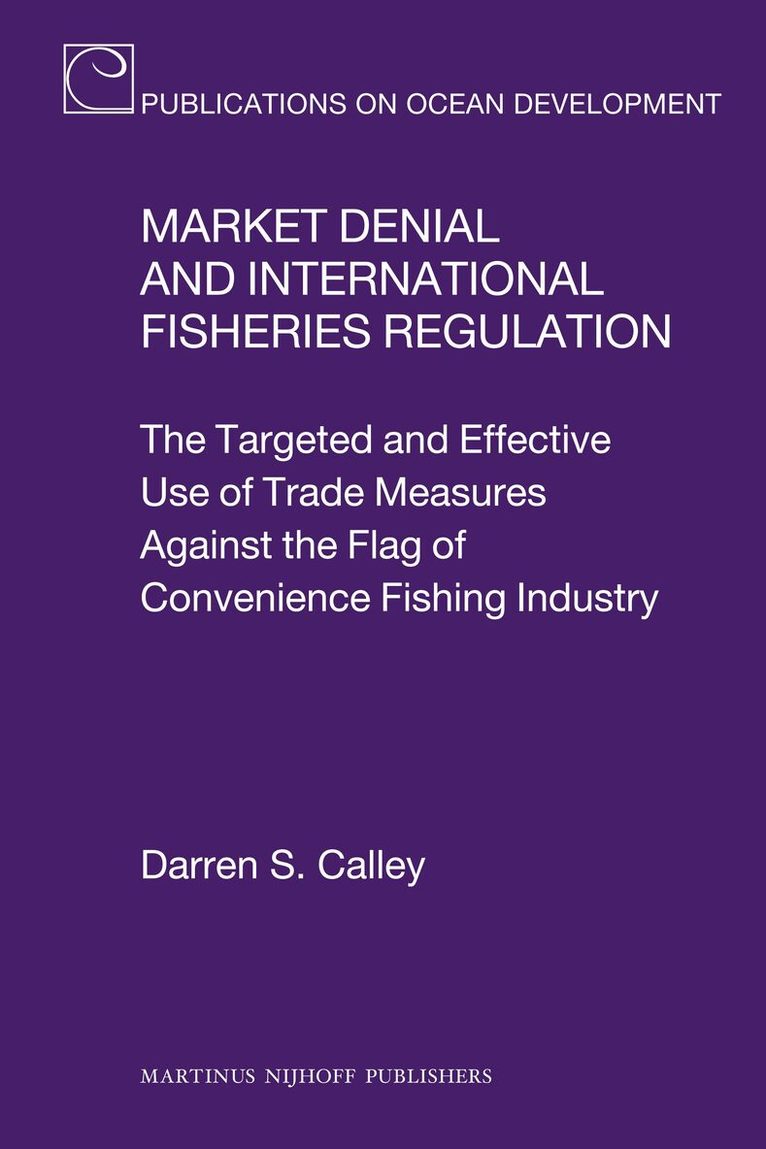
    Market Denial and International Fisheries Regulation

    The Targeted and Effective Use of Trade Measures Against the Flag of Convenience Fishing Industry

    AvDarren S. Calley

    Inbunden, Engelska, 2011

    Del 70 i serien Publications on Ocean Development

    2 266 kr

    Beställningsvara. Skickas inom 5-8 vardagar. Fri frakt över 249 kr.

    Beskrivning

    Flag of convenience fishing seriously undermines efforts to protect the marine environment. To counter this threat, Market Denial and International Fisheries Regulation rests on the logic of the most basic tenet of economics: if no market exists for a product then producers will cease to produce. Denying market access to the flag of convenience fishing fleet should significantly reduce instances of illegal, unreported and unregulated (IUU) fishing. In areas beyond national jurisdiction not only is market denial the most effective means of undermining the IUU fleet, it is, for most practical purposes, the only way to do so. To what extent, however, do the laws of the sea and international trade allow groups of States to close their markets to non-compliant fishing vessels?

    Produktinformation

    • Utgivningsdatum:2011-10-14
    • Mått:160 x 240 x 23 mm
    • Vikt:660 g
    • Format:Inbunden
    • Språk:Engelska
    • Serie:Publications on Ocean Development
    • Antal sidor:286
    • Förlag:Brill
    • ISBN:9789004202788

    Utforska kategorier

    • Lantbruk, fiske och skogsbruk inom Ekonomi och Ledarskap
    • Miljö-, transport- och planeringsrätt inom Juridik

    Mer om författaren

    Darren S. Calley is a Lecturer of Laws at the University of Essex, United Kingdom.

    Innehållsförteckning

    • Chapter One: IntroductionChapter Two: The Flag of Convenience Industry: Its Historical and Economic Pedigree, Contemporary Context and Relationship to High Seas FishingChapter Three: The Consequences of Flag of Convenience Fisheries on the Marine Environment and Fisheries SectorChapter Four: The Law of the Sea – The Legal Vacuum that has Created the Flag of Convenience Industry and the Attempt to Create a Genuine LinkChapter Five: The Growing Use of Market Denial Strategies by Regional Fisheries Management Organisations Chapter Six: Multilateral Trade Measures: How CITES Could be Used in the Fight Against IUU FishingChapter Seven: International Trade Law: The WTO, GATT and Regional Free Trade Chapter Eight: ConclusionsBibliographyIndex