• Fri frakt över 249 kr
  • •
  • Snabba leveranser
  • •
  • Billiga böcker
Kundservice

Du är på sajten för privatpersoner.

Företag, bibliotek eller offentlig verksamhet?

Du handlar på classic.bokus.com, där alla dina funktioner finns intakta.
Till classic.bokus.com
Bokus logotyp. Gå till startsidan.
  • Erbjudanden
  • Nyheter
  • Student
  • Topplistor
  • Barn & ungdom
  • Bokus Play
  • E-böcker
  • Pocketböcker
  • Spel & pussel

10% rabatt på allt med kod: NYSTART10 →

Sidfot

Mina sidor

    Hjälp

    • Kundservice
    • Vanliga frågor och svar
    • Frakt och leverans
    • Retur vid ångerrätt
    • Reklamera vara
    • Betalning
    • Köpvillkor
    • Allmänna villkor
    • Information om webbplatsens tillgänglighet

    Om Bokus

    • Om oss
    • Pressrum
    • För studenter
    • För företag
    • För bibliotek och offentlig verksamhet
    • För leverantörer
    • Hållbarhet

    Populärt

    • Aktuella erbjudanden
    • Presentkort
    • Studentlitteratur
    • Nya böcker
    • Topplistor
    • Signerade böcker
    • Engelska böcker

    Inspiration

    • Boktips
    • BookTok
    • Populära bokserier
    • Barnbokskaraktärer
    • Populära författare
    Logotyp för Bokus
    Följ oss på Facebook (extern länk)Följ oss på Instagram (extern länk)Följ oss på YouTube (extern länk)Följ oss på TikTok (extern länk)
    bokus @ CookiesAnpassa cookiesIntegritetspolicyKöpvillkor
    Till Citymail hemsida (extern länk)Till Budbee hemsida (extern länk)Till Postnord hemsida (extern länk)Till Schenker hemsida (extern länk)Till Early Bird hemsida (extern länk)Till Walleys hemsida (extern länk)
    1. Historia och arkeologi
    2. Historia

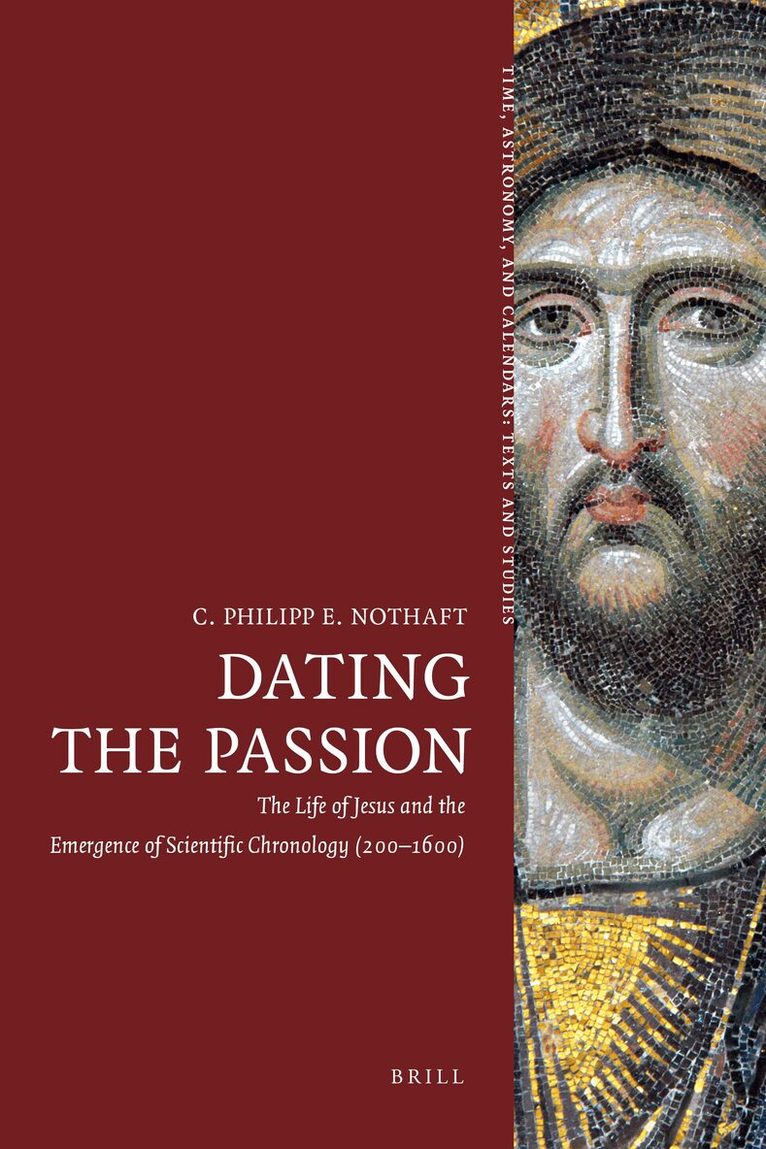
    Dating the Passion

    The Life of Jesus and the Emergence of Scientific Chronology (200–1600)

    AvC. Philipp E. Nothaft

    Inbunden, Engelska, 2011

    Del 1 i serien Time, Astronomy, and Calendars

    2 711 kr

    Beställningsvara. Skickas inom 5-8 vardagar. Fri frakt över 249 kr.

    Beskrivning

    The beginnings of scientific chronology are usually associated with the work of the great Renaissance philologist Joseph Scaliger (1540–1609), but this perspective is challenged by the existence of a vivid pre-modern computistical tradition, in which technical chronological questions, especially regarding the life of Jesus, played an essential role. Christian scholars such as Roger Bacon made innovative breakthroughs in the field of historical dating by applying astronomical calculations, critical exegesis, and the study of the Jewish calendar to chronological problems. Drawing on a wide selection of sources that range from late antiquity to 1600, this book uses the history of the date of Christ’s Passion to shed new light on the medieval contribution to science and scholarship.

    Produktinformation

    • Utgivningsdatum:2011-10-06
    • Mått:155 x 235 x 24 mm
    • Vikt:648 g
    • Format:Inbunden
    • Språk:Engelska
    • Serie:Time, Astronomy, and Calendars
    • Antal sidor:322
    • Förlag:Brill
    • ISBN:9789004212190

    Utforska kategorier

    • Historia inom Historia och arkeologi
    • Naturvetenskapens historia inom Naturvetenskap och teknik
    • Religion: allmänt inom Filosofi och religion

    Mer om författaren

    C. Philipp E. Nothaft, Ph.D. (2011) in History, University of Munich, is a research assistant at the Department of Hebrew & Jewish Studies, University College, London. He has published several articles on the history of scholarship and chronology.

    Innehållsförteckning

    • Chapter One: From Astronomy to the Crucifixion and BackChapter Two: The Origins of Computistical ChronographyChapter Three: The Crisis of Computistical Chronography in the Early Middle AgesChapter Four: All Coherence Restored? The Age of the Critical ComputistsChapter Five: New Foundations: Chronology and the Twelfth-Century RenaissanceChapter Six: A Science of Time: Roger Bacon and his SuccessorsChapter Seven: Time for Controversy: Catholic Chronologers and the Date of the Passion in the Fifteenth and Sixteenth CenturyChapter Eight: The Life of Jesus and the Emergence of Scientific Chronology